
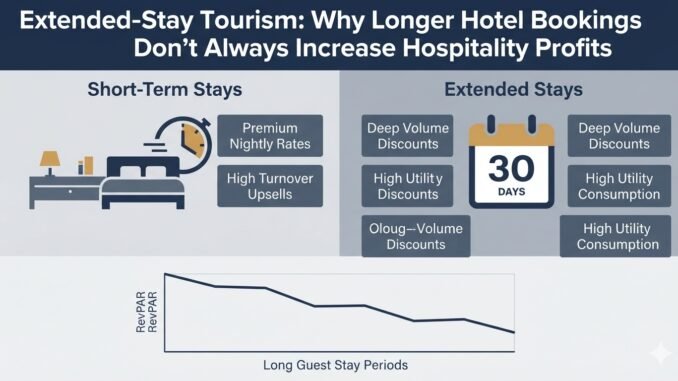
Nov 09: A guest booking a hotel room for two weeks may seem like good news for any hotel owner. The booking guarantees occupancy for several nights, reduces the effort involved in finding new customers and provides an opportunity to sell additional services.
But does a longer booking always mean more money for the hotel?
Not necessarily.
As travellers explore longer holidays, remote-working breaks and extended stays in different destinations, hotels, resorts, serviced apartments and homestays are looking at ways to attract this customer segment. However, discounted room rates, utility bills, housekeeping and maintenance expenses can affect the actual earnings from each reservation.
For India’s hospitality industry, the opportunity is worth exploring, but the business model needs careful planning. The objective should not simply be to keep rooms occupied for longer. It should be to make every booking commercially worthwhile.
Why Extended-Stay Tourism Is Attracting Attention
Travel is no longer limited to short holidays and weekend breaks. Some visitors want to spend more time exploring a destination, while others combine travel with remote work, family visits, wellness programmes or personal commitments.
This has created demand for accommodation that offers greater flexibility. Serviced apartments, holiday rentals, boutique hotels and homestays can appeal to travellers looking for spacious rooms, kitchen facilities, laundry services and reliable internet access.
In India, destinations such as Goa, Jaipur, Rishikesh, Coorg and the Himalayan towns can appeal to different types of longer-stay visitors, depending on their accessibility, accommodation options and available experiences.
For hospitality businesses, this opens up opportunities to develop packages for families, remote workers, wellness travellers and visitors who want to explore a destination at a slower pace.
However, attracting these customers requires more than offering a discounted monthly rate. Properties need to provide the facilities and services that make an extended stay comfortable.
International Hotel Research Shows the Business Potential
The growing importance of extended-stay accommodation is reflected in international hospitality research.
JLL’s U.S. Select-Service and Extended-Stay Hotel Outlook 2025 reported that revenue per available room (RevPAR) in the US select-service and extended-stay hotel segment reached a record US$78 in 2024, 14% above its 2019 level. Demand also increased by 232,000 room nights year-on-year.
The findings point to the commercial potential of accommodation designed around longer bookings and changing traveller requirements.
An HVS analysis, Extended-Stay Profitability Face-Off: Economy vs. Midscale, also highlights how operating models influence profitability. Its analysis found that economy extended-stay properties recorded average gross operating profit margins in the mid-50% range, compared with the mid-40% range for midscale properties.
The difference underlines an important point: properties with simpler facilities and leaner operating structures may have an advantage when serving longer-stay guests.
These findings are based on the US hospitality market, not India. Nevertheless, they offer useful lessons for Indian hotel operators considering extended-stay packages.
More Occupied Nights Do Not Always Mean Higher Profits
Consider a hypothetical hotel that normally charges ₹5,000 per night.
A guest booking 14 nights at the regular rate would generate ₹70,000 in room revenue. However, to secure the longer reservation, the hotel may offer a discounted rate of ₹4,000 per night. The total booking value then falls to ₹56,000.
The hotel has secured a longer reservation, but it has also reduced its room revenue by ₹14,000 compared with the regular rate.
That discount may still make commercial sense if the rooms would otherwise remain empty. It may also reduce marketing and booking-related costs.
However, during a busy holiday period, the hotel could potentially sell those rooms to short-term guests at higher rates. Accepting a discounted long-stay booking might then reduce its earning potential.
This is why hotel owners need to consider the timing of a reservation, the expected demand and the cost of servicing the guest before offering a discount.
Occupancy is important, but it should not be the only measure of business performance.
The Hidden Costs of Longer Hotel Stays
Longer bookings can increase certain operating expenses. Electricity, water consumption, laundry, cleaning and maintenance all contribute to the cost of accommodating guests.
The type of property also makes a difference.
A conventional hotel may provide daily housekeeping, restaurant services and regular linen changes. A serviced apartment may offer kitchen facilities and laundry access, while a homestay may operate with a smaller team.
Each model has a different cost structure.
For Indian hospitality businesses, one practical approach is to design packages with clearly defined services. A weekly rate could include scheduled housekeeping, while additional laundry, meals, airport transfers and local transport could be offered separately.
This gives guests flexibility while allowing the property to manage expenses more carefully.
The aim should be to maintain service quality without providing costly services that guests may not necessarily need every day.
Not Every Traveller Needs the Same Extended-Stay Package
A family spending two weeks in Goa will have different requirements from a professional working remotely from Bengaluru or a visitor attending a wellness retreat in Rishikesh.
Remote workers may prioritise dependable Wi-Fi, quiet workspaces and comfortable seating. Families may look for larger rooms, kitchen facilities and access to supermarkets and restaurants. Wellness travellers may be interested in yoga sessions, healthy meals and recreational activities.
Hotels and serviced apartments can use these differences to create more relevant packages.
For example, a resort could combine accommodation with wellness sessions and guided local experiences. A serviced apartment could offer workspace facilities and laundry services. A homestay could organise regional food experiences and local excursions.
Such packages can make the stay more attractive while creating additional revenue opportunities.
Longer Stays Can Support Local Tourism Businesses
The financial value of an extended holiday is not limited to the accommodation provider.
A visitor staying for seven or fourteen days may spend money on restaurants, local transport, shopping, guided tours, cultural activities and outdoor experiences.
This creates opportunities for businesses across the destination.
Hotels can partner with local restaurants and tour operators. Homestays can organise cooking sessions, village visits and cultural experiences. Travel companies can develop weekly packages that combine sightseeing, regional food and outdoor activities.
For destinations that want to attract longer-stay visitors, these partnerships can make a significant difference. A guest is more likely to extend a holiday when there are enough interesting experiences and convenient services available.
It also allows smaller local businesses to benefit from visitor spending rather than concentrating tourism revenue only within large hotels.
Seasonality Makes Pricing Even More Important
Extended-stay bookings can be useful during periods when hotels and resorts struggle to fill their rooms.
For example, a property in a seasonal destination may find that offering a weekly package during a quieter period is better than leaving rooms vacant. The same discount, however, may not make sense during a festival or peak holiday season when demand is stronger.
Hotels need to understand their booking patterns before deciding how much to reduce their rates.
Flexible pricing, seasonal packages and minimum-stay requirements during high-demand periods can help properties balance long-term reservations with short-term bookings.
The right approach will depend on the destination, customer segment and operating costs.
Technology Can Help Hotels Improve Revenue Decisions
Managing extended stays involves more than changing the duration of a reservation.
Hotels need to understand room availability, booking patterns, operating expenses and customer preferences. Property management and revenue management systems can help businesses monitor reservations, adjust room rates and plan availability.
Customer relationship management tools can also help identify returning guests and provide relevant offers.
For example, a hotel could create customised packages for professionals who regularly visit a city for work. A resort could offer returning guests a longer holiday package during its quieter months.
Technology can support these decisions, but hotel operators still need to examine the actual profitability of each booking category.
A high occupancy rate may look encouraging, but the revenue remaining after operating expenses is what ultimately matters.
What Indian Hospitality Businesses Should Focus On
For extended-stay tourism to become a sustainable business segment, hotels, resorts, homestays and serviced apartment operators need to look beyond room occupancy.
Some practical measures include:
- Developing weekly and monthly packages with clearly defined services.
- Creating separate offerings for families, remote workers and wellness travellers.
- Providing optional housekeeping, laundry, meals and transport services.
- Partnering with local restaurants, tour operators and activity providers.
- Adjusting prices according to seasonal demand and room availability.
- Monitoring operating expenses and revenue per occupied room.
- Encouraging repeat bookings through good service and personalised offers.
These steps can help businesses attract longer-stay visitors without compromising their margins.
The Future of Extended-Stay Tourism Depends on Profitable Bookings
Longer holidays can give travellers more time to explore destinations and enjoy a relaxed travel experience. For India’s hotels, resorts, serviced apartments and homestays, they can also create opportunities for more consistent bookings and stronger customer relationships.
But a longer reservation is not automatically a better business deal. Discounts, operating expenses, seasonal demand and the cost of additional services all influence the final return.
The international hospitality research shows that extended-stay accommodation can be commercially successful when its operating model is designed around the needs of longer-stay guests.
For Indian hospitality businesses, the opportunity lies in finding the right balance between competitive pricing, quality service and cost management.
Ultimately, the goal should not be to maximise the number of nights a guest stays. It should be to maximise the value of each booking while giving travellers a reason to stay longer, spend locally and return.
