

Mumbai, May 11: Indian benchmark equity indices witnessed sharp declines in early trade on Monday as escalating tensions between the United States and Iran triggered a spike in global crude oil prices, dampening investor sentiment across sectors.
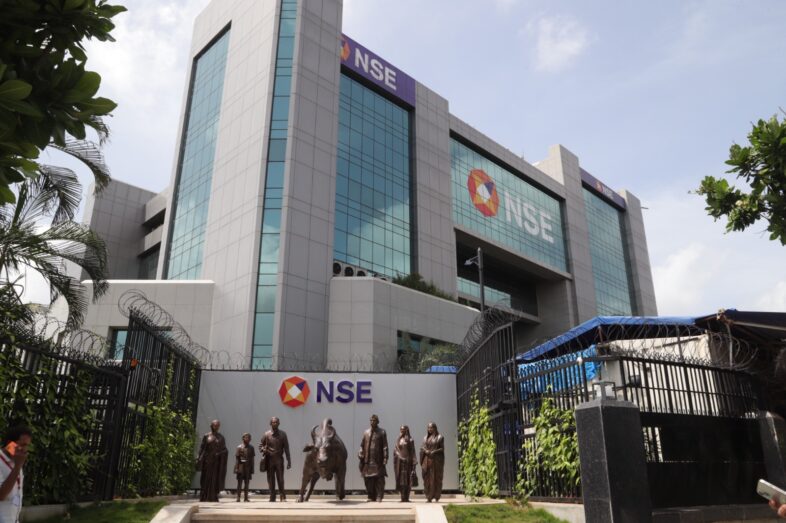
The BSE Sensex fell nearly 943 points, or 1.22 per cent, to touch an intraday low of 76,384, while the NSE Nifty dropped 280 points, or 1.15 per cent, to 23,897 during morning trading hours.
Broad-based selling pressure was observed across key sectors, including consumer durables, automobiles, banking, oil & gas, and chemicals. Major laggards on the Nifty included Titan, IndiGo, Mahindra & Mahindra, Maruti Suzuki, Bajaj Auto, Bharti Airtel, and Dr. Reddy’s Laboratories.
Market volatility also edged higher, with India VIX rising nearly 2 per cent, reflecting heightened investor caution amid global uncertainty.
The market downturn followed renewed geopolitical concerns after US President Donald Trump reportedly rejected Iran’s response to a proposed peace initiative concerning the ongoing West Asia conflict. The development weakened hopes of an early resolution and raised concerns over disruptions in global oil supply routes, particularly through the Strait of Hormuz.
Reacting to the geopolitical uncertainty, Brent crude prices surged 4.41 per cent to $105.76 per barrel, while US West Texas Intermediate (WTI) crude climbed 5.12 per cent to $100.31 per barrel.
Market analysts noted that elevated crude oil prices could intensify pressure on India’s current account deficit and weigh on economic growth prospects. Concerns also emerged after Prime Minister Narendra Modi urged citizens to reduce consumption of fuel, gold, fertilisers, and edible oil, while discouraging non-essential foreign travel as part of broader economic prudence measures.
Experts believe sectors linked to petroleum, aviation, hospitality, fertilisers, and precious metals may continue to face pressure if oil prices remain elevated, whereas defensive sectors such as pharmaceuticals could demonstrate relative resilience.
In the broader Asian market, trading remained mixed. Japan’s Nikkei and Hong Kong’s Hang Seng indices traded lower, while South Korea’s KOSPI posted strong gains.