

As summer travel season begins, India is promoting a different kind of holiday message this year — explore India before travelling abroad. Prime Minister Narendra Modi’s recent appeal urging citizens to reconsider overseas vacations and destination weddings has sparked a wider conversation around tourism, economic responsibility and local spending during a period of global uncertainty.
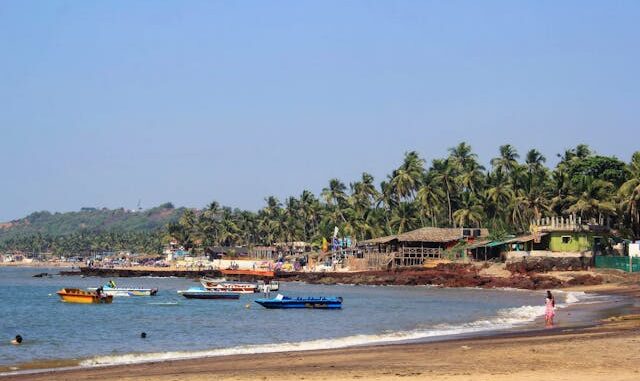
With rising oil prices, geopolitical tensions and growing pressure on foreign exchange reserves, the government is positioning domestic tourism as more than leisure — it is being seen as a tool to support local businesses, generate employment and strengthen regional economies. From the beaches of Goa to the mountains of Ladakh, India is encouraging travellers to rediscover the economic and cultural value of travelling within the country.
Why This Appeal Matters Economically
India is one of the world’s fastest-growing outbound travel markets. Every year, Indian tourists spend billions of dollars on:
- International vacations
- Luxury shopping
- Destination weddings
- Overseas entertainment and hospitality
- Foreign airline and hotel bookings
Popular destinations such as Thailand, United Arab Emirates, Singapore and Switzerland benefit heavily from Indian spending.
While global tourism is important, large outbound spending also means substantial foreign exchange outflow from India’s economy. During periods of high crude oil prices and global financial uncertainty, conserving foreign exchange reserves becomes increasingly important for economic stability.
India imports a major portion of its crude oil requirements. Rising oil prices increase the country’s import bill, place pressure on the rupee and contribute to inflation. In such conditions, reducing non-essential foreign currency outflows becomes economically significant.
The government’s message is therefore not anti-travel — it is about redirecting a portion of discretionary spending back into the domestic economy.
Domestic Tourism Creates Local Economic Multipliers
One of the biggest advantages of domestic tourism is that money circulates within the country instead of flowing abroad.
When a family spends on a holiday in Himachal Pradesh, Varanasi, Kerala or Rajasthan, the economic benefits spread across multiple sectors:
- Hotels and resorts
- Restaurants and cafés
- Airlines and railways
- Taxi operators and local transport
- Handicrafts and local markets
- Tour guides and photographers
- Event management and hospitality services
- Small businesses and informal workers
Economists call this the “multiplier effect” — where one traveller’s spending generates income for many layers of the economy.
In emerging economies like India, tourism is particularly important because it creates employment quickly across both skilled and unskilled sectors.
Tourism as a Tool for Economic Resilience
Globally, many countries are now strengthening domestic tourism to protect their economies from external shocks.
After the pandemic and recent geopolitical disruptions, governments worldwide realised that relying too heavily on international tourism can make economies vulnerable. Domestic tourism helps stabilise demand during periods of global slowdown.
For India, stronger local tourism can help:
- Generate employment at scale
- Strengthen regional economies
- Support MSMEs and small entrepreneurs
- Reduce pressure on foreign exchange reserves
- Encourage infrastructure investment
- Increase aviation and hospitality demand
- Promote balanced regional development
Tourism is also one of the few sectors where growth directly reaches grassroots communities.
A tourist spending in rural or remote regions often creates income opportunities where industrial development may still be limited.

Why Destination Weddings Matter Economically
The government’s focus on destination weddings is also economically significant.
In recent years, affluent Indian families have increasingly hosted weddings in destinations such as Thailand, Dubai and European luxury resorts.
These events involve enormous spending on:
- Hotels
- Event planners
- Catering
- Decorations
- Entertainment
- Luxury hospitality
- Travel and logistics
When such celebrations happen abroad, much of that economic value leaves India.
However, India itself offers globally competitive wedding destinations:
- Udaipur palaces
- Goa beach resorts
- Kashmir valleys
- Kerala backwaters
- Heritage hotels in Rajasthan
- Eco-resorts in Northeast India
Keeping wedding spending within India supports thousands of local service providers and strengthens the domestic hospitality industry.
Domestic Tourism Is Becoming Aspirational
Another major shift is changing consumer behaviour.
Earlier, international travel was often viewed as a status symbol, while domestic travel was seen as secondary. That mindset is evolving rapidly.
Today, younger Indian travellers increasingly prioritise:
- Authentic experiences
- Wellness tourism
- Sustainability
- Adventure tourism
- Cultural immersion
- Nature-focused travel
- Spiritual and mindfulness retreats
Luxury resorts in Rajasthan, wellness retreats in Kerala, adventure tourism in Ladakh and boutique stays in Northeast India are attracting premium domestic travellers who previously preferred only overseas holidays.
This transformation is helping Indian tourism evolve from “budget travel” to “experience-driven tourism.”
Infrastructure Growth Is Supporting the Shift
India’s tourism push is also backed by major infrastructure improvements.
The government has invested heavily in:
- Airports
- Highways
- Railway modernisation
- Digital ticketing systems
- Religious tourism corridors
- Regional air connectivity
Destinations such as Ayodhya, Kedarnath, Varanasi and the Statue of Unity have witnessed significant tourism growth due to better connectivity and infrastructure development.
Improved accessibility is making domestic travel more attractive and competitive.
A Broader Message About Responsible Economic Participation
The appeal to “holiday at home” reflects a larger economic philosophy emerging in India during uncertain global conditions.
Recent public messaging around:
- Fuel conservation
- Local manufacturing
- Reduced import dependence
- Domestic tourism
- Responsible spending
shows an effort to encourage citizens to participate more consciously in national economic stability.
The idea is simple: millions of individual spending decisions collectively shape the direction of the economy.
Choosing to spend within India may appear to be a personal travel choice, but at scale it supports jobs, businesses, tax revenues and local development.
Rediscovering India
Beyond economics, the campaign is also about rediscovering India’s own diversity.
India offers an extraordinary range of travel experiences:
- Himalayan mountains
- Tropical coastlines
- Dense forests and wildlife
- Ancient temples and spiritual centres
- Desert landscapes
- Tribal cultures
- River tourism
- Culinary diversity
- Heritage architecture
- Wellness and yoga tourism
Few countries combine such geographical, cultural and spiritual diversity within a single national boundary.
As global uncertainty reshapes travel behaviour and economic priorities, India is positioning domestic tourism not merely as an alternative to international travel, but as a strategic pillar of economic growth, cultural confidence and national development.
This summer, the message is becoming increasingly clear: before looking abroad, India wants its citizens to rediscover the opportunities, experiences and economic potential within their own country.