

Sanctoria, June 17: As Prime Minister Narendra Modi surpassed 4,399 days in office to become India’s longest-serving continuously elected leader, state-run Eastern Coalfields Ltd. (ECL) is intensifying its role in translating the Centre’s “Naya Bharat Nirman” vision into measurable development outcomes across eastern India’s coal belt.
The Coal India Ltd. subsidiary has sharpened its community investment strategy, directing nearly 80% of its corporate social responsibility (CSR) spend into areas within a 25-kilometre radius of its mining operations, an approach aligned with the government’s push for hyper-local, last-mile delivery.
ECL spent approximately ₹8.82 crore on CSR in FY 2025–26 against a budget of ₹7.51 crore, achieving 117% utilisation. The spending was primarily directed towards healthcare, nutrition, and skill development—key sectors aligned with the Modi administration’s inclusive growth agenda. Health and nutrition alone accounted for the largest share, followed by livelihood-linked skilling initiatives aimed at improving employability among underprivileged and project-affected populations.
The company’s interventions span healthcare access, vocational training and rural infrastructure creation, including irrigation restoration and water-body rejuvenation, efforts that are beginning to reshape local economic ecosystems in mining-dominated districts of West Bengal and Jharkhand.
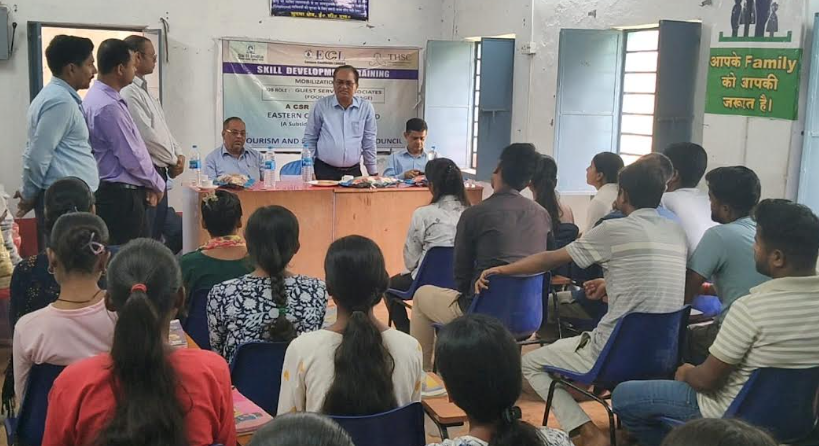
ECL’s development model mirrors the Centre’s broader policy pivot from welfare distribution to capacity creation. Its skill development programmes, particularly those targeting marginalised youth and SC/ST communities, are designed to integrate local populations into formal economic activity, supporting the government’s employment and self-reliance goals.
At the same time, environmental sustainability has emerged as a parallel priority, with the company linking CSR initiatives to ecological restoration and responsible mining practices, an increasingly critical area amid rising regulatory and climate scrutiny.
The regional distribution of CSR expenditure underscores a balanced approach, with roughly equal allocation between West Bengal and Jharkhand, reinforcing ECL’s role as a key development anchor across eastern India’s resource belt.
Internal impact assessments cited in company reports point to improvements in healthcare access, education outcomes and livelihood generation, indicating a shift from input-based spending to outcome-driven development.
With a multi-tier governance framework, ranging from board-level oversight to decentralised implementation, ECL has institutionalised its CSR operations, enabling scale and accountability in line with public sector reform priorities.
As the Modi government doubles down on infrastructure-led growth and social inclusion, ECL’s evolving CSR strategy highlights how state-owned enterprises are being leveraged not just as economic engines but as instruments of grassroots transformation, embedding the “Naya Bharat” vision within India’s industrial heartlands.