

For many years, Honey presented itself as the internet’s most frictionless shortcut — a browser extension that searched for coupon codes at checkout and saved users money, all apparently at no cost. That narrative began to fall apart in December 2024 and has not recovered since.
The probe was initiated by YouTuber MegaLag, who, after spending months reviewing documents and the communications between Honey and its merchant partners, published a very detailed exposé on December 22, 2024.
The key point was this: if a person clicked on an affiliate link provided by a content creator and then reached the checkout page, Honey would silently replace the creator’s tracking cookie with its own. The sale would still go through, but the commission would go to Honey rather than the creator.
The mechanism was designed to avoid detection: its targeting logic operated on remote servers rather than within the extension.
As a result, Honey was able to increase or decrease the number of users affected without having to release a traceable update. Independent researcher Jelte provided estimates of the scale of the system’s activity in MegaLag’s follow-up video on August 11, 2026.
There was another issue, discussed less often but potentially just as damaging to Honey’s core proposition: the extension was also said to filter coupon results to favor retailer-preferred codes rather than the best available offers. Users believed that the tool was working for them. In some cases, it was arguably working against them.
PayPal, which acquired Honey for about $4 billion in 2020, disputed the investigation’s account and timeline. The company stated that the relevant code predated the acquisition, had already been disabled, and had affected less than 0.1% of traffic.
It also said that last-click attribution — the industry practice of giving credit to the last trackable referrer before a purchase — was standard practice. Nevertheless, neither argument prevented the fallout that followed.
The drop in users was rapid. Honey lost roughly three million Chrome users within a couple of weeks of the first video, and by July 2025, the extension had slipped from a peak of more than 20 million users to around 14 million. The decline has continued since.
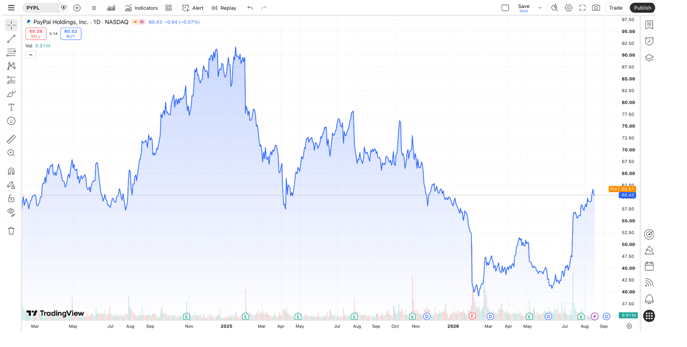
At the same time, the number of stores in Honey’s network dropped significantly. In December 2024, it stood at about 35,000, but by mid-2026, it had fallen to just over 28,000, a decline of more than 7,000 merchants. Meanwhile, PayPal’s stock price rose slightly over the period, even ranking among market and premarket gainers at times.
Then, in January 2026, Rakuten Advertising ended its relationship with Honey, which in practice cut off access to roughly 2,000 retailers, including Walmart, Sephora, and Dyson. Awin Group said that Honey had violated its publisher policies and therefore suspended payments.
In March 2025, Google responded by amending its Chrome Web Store rules to specifically ban extensions from inserting affiliate links unless they provide the user with a direct and transparent benefit, a change that followed the behavior documented by MegaLag.
The legal aspect could prove the most significant in the long term. On December 29, 2024, a class action was filed by content creators, including YouTubers and the tech website GamersNexus.
In November 2025, a federal court denied PayPal’s motion to compel arbitration. The first amended complaint was dismissed with leave to amend, and in January 2026, a second amended complaint, running 101 pages and naming ten plaintiffs, was filed. The case remains ongoing.
Honey’s business model depended on the trust of two groups simultaneously. Users trusted it to find them the best savings, while creators trusted affiliate systems to properly credit their work. One investigative video gave both groups reasons to question that trust.
The consequences were swift: users left, merchants severed ties, and platforms changed their policies. Nearly two years after questions first emerged around PayPal’s $4 billion acquisition, the fallout continues, with no end yet in sight — and its potential impact on PayPal could eventually show up on the stock heatmap.