
Choosing a school involves looking beyond academic performance. For parents comparing the top 5 schools in Airoli, the range of sports and physical activities available can be an equally important consideration. Regular participation in sports can help children develop fitness, coordination, discipline, teamwork, and confidence while giving them opportunities to discover interests beyond the classroom. Modern schools are increasingly recognising that a well-rounded education should provide students with meaningful opportunities to participate in different sporting activities.
From cricket and football to tennis, basketball, skating, gymnastics, and indoor games, diverse sports programmes can make school life more engaging while supporting students’ physical and personal development.
Why Sports Matter in School Education
Sports are more than recreational activities. They provide children with practical experiences that complement classroom learning. Following rules, working with teammates, responding to setbacks, and practising consistently can help students develop habits that are valuable in both academic and personal settings.
Physical activity can also contribute to healthier routines. Children who participate regularly in sports have opportunities to improve endurance, strength, balance, coordination, and motor skills. At the same time, team-based activities can encourage communication and cooperation.
A diverse sports programme is particularly valuable because every child has different interests and abilities. While one student may enjoy cricket, another may prefer tennis, skating, swimming, basketball, or gymnastics. Providing several choices allows students to explore different activities rather than being limited to a single sporting discipline.
Exploring Different Sports Opportunities
Cricket and Football
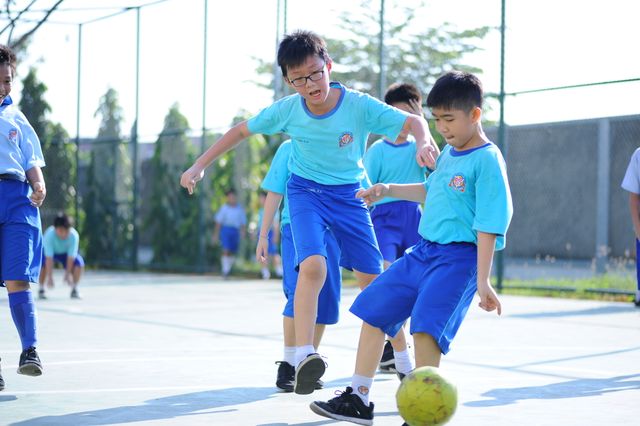
Cricket and football remain popular choices among school students. Both involve physical movement, strategic thinking, communication, and teamwork. Cricket can encourage concentration, patience, coordination, and decision-making, while football promotes agility, endurance, spatial awareness, and collaboration.
Structured coaching and regular practice can also help students understand the importance of preparation and consistency.
Tennis and Basketball
Tennis offers opportunities to develop hand-eye coordination, movement, concentration, and individual decision-making. Because players need to respond quickly to changing situations, the sport can also encourage alertness and adaptability.
Basketball, meanwhile, combines speed, coordination, tactical thinking, and teamwork. Passing, defending, positioning, and communicating with teammates create a dynamic environment in which students learn to contribute to a shared objective.
Skating, Gymnastics, and Swimming
Sports that focus on balance, flexibility, and coordination can complement traditional team games. Skating can develop balance and body control, while gymnastics can encourage flexibility, strength, coordination, and spatial awareness.
Swimming provides another form of physical activity and can help students develop endurance and confidence in the water. Offering different types of sports enables children to experience varied forms of movement and identify activities they genuinely enjoy.
Indoor and Skill-Based Activities
A comprehensive sports programme does not have to be limited to outdoor games. Activities such as table tennis and martial arts can provide additional avenues for physical development and concentration.
Table tennis requires quick reactions, coordination, and precision. Martial arts can introduce students to structured practice, controlled movement, focus, and discipline. Such activities can be valuable alternatives for children who may not naturally gravitate towards conventional team sports.
What Parents Should Look for in a School Sports Programme
When comparing schools, parents should consider more than the number of sports listed in a brochure. The quality of the overall programme matters.
Variety of activities: A wider selection can give students more opportunities to find an activity suited to their interests and abilities.
Suitable facilities: Safe, appropriately maintained spaces and equipment are important for productive participation.
Qualified guidance: Coaching and supervision can influence how effectively students learn techniques, follow safety practices, and build confidence.
Opportunities for participation: Regular practice, school-level events, competitions, and inter-school activities can make sports more meaningful.
Inclusivity: A good programme should encourage participation across different ability levels rather than focusing exclusively on highly competitive athletes.
For parents exploring the top CBSE schools in Yelahanka, these factors can provide a useful framework for evaluating how seriously a school approaches sports as part of student development.
Creating a Balance Between Academics and Athletics
A strong sports programme should complement academics rather than compete with them. Effective school schedules can give students time for classroom learning, physical activity, creative pursuits, and rest.
Sports can also reinforce qualities that support academic development. Students may learn to set goals, manage time, practise deliberately, respond constructively to mistakes, and remain committed to gradual improvement. These habits can extend beyond the playing field.
Schools can further strengthen this balance by treating sports as an important component of overall education rather than an occasional extracurricular activity. When physical activity is integrated thoughtfully into school life, students can experience a broader and more varied educational journey.
Helping Children Discover Their Sporting Interests
Children’s sporting preferences may change as they grow. A student who initially enjoys cricket may later become interested in tennis, while another may discover a passion for skating, swimming, or basketball.
This is why exposure matters. Schools that offer multiple activities create opportunities for students to experiment, develop new skills, and understand their strengths. Parents can support this process by encouraging children to explore different sports without placing unnecessary pressure on them to excel immediately.
The objective should be to help children develop a positive relationship with physical activity. Enjoyment, consistency, participation, and gradual improvement can be more meaningful indicators of success than winning every competition.
Final Thoughts
Sports can play an important role in creating a balanced school experience. From cricket and football to tennis, basketball, skating, gymnastics, swimming, and indoor activities, varied sporting opportunities allow children to develop physical abilities while building confidence, discipline, teamwork, and resilience. For families evaluating the top 5 schools in Airoli, examining the depth and quality of a school’s sports programme can therefore be an important part of the decision-making process.
For parents looking for an educational environment where academics can be complemented by opportunities for broader student development, EuroSchool is worth exploring as part of the school-selection journey.