
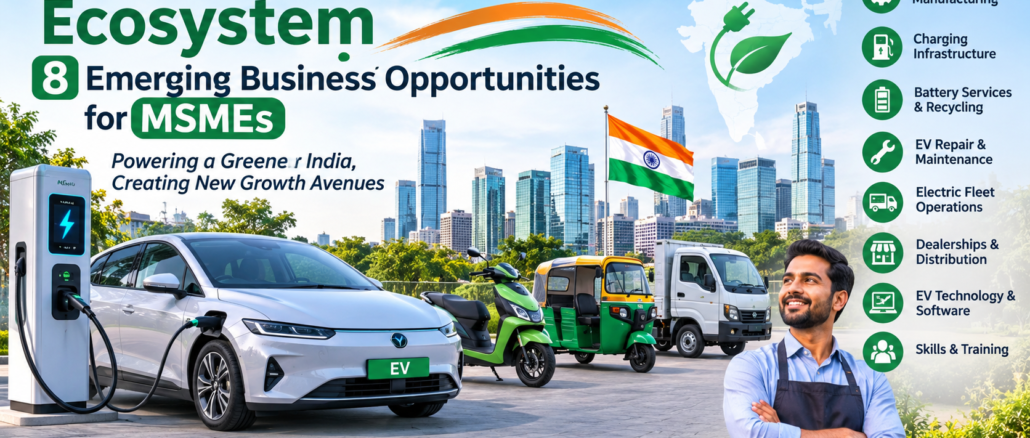
India’s electric vehicle ecosystem is opening new opportunities for small businesses as the country gradually shifts towards cleaner and more cost-efficient transportation. The growth of electric two-wheelers, three-wheelers, passenger vehicles and commercial fleets is creating demand for an entire network of supporting businesses. For micro, small and medium enterprises (MSMEs), this means opportunities in manufacturing, maintenance, infrastructure, logistics and specialised services.
India recorded approximately 26.6 lakh electric vehicle sales in FY2025–26, reflecting the growing acceptance of electric mobility across different vehicle categories. Two-wheelers and three-wheelers continue to play a significant role, particularly in personal transportation, passenger mobility and last-mile delivery.
The business opportunity, however, extends well beyond selling electric vehicles. As the number of vehicles increases, manufacturers, fleet operators and consumers will need dependable suppliers, charging facilities, trained technicians and battery-related services. This creates space for smaller enterprises to become part of India’s expanding electric mobility supply chain.
8 Business Opportunities Emerging from India’s EV Ecosystem
1. EV Component Manufacturing: Becoming Part of the Supply Chain
Electric vehicles require specialised components and electronic systems, creating opportunities for small manufacturing units with engineering and production capabilities.
- Potential business areas: Wiring harnesses, connectors, battery enclosures, chassis components, metal fabrication and precision-engineered parts.
- Market opportunity: Vehicle manufacturers and larger component suppliers need reliable domestic partners for selected parts and assemblies.
- MSME advantage: Existing automobile component manufacturers can diversify into EV-related products by upgrading machinery and technical capabilities.
- Business requirement: Quality control, product testing, production consistency and compliance with automotive standards.
For traditional auto-component businesses, this transition offers an opportunity to develop new product lines and build relationships with manufacturers entering the electric mobility market.
2. EV Charging Infrastructure: Building Local Mobility Networks
As electric vehicle ownership expands, convenient charging facilities will become increasingly important. Charging infrastructure offers opportunities for entrepreneurs, electrical contractors and commercial property operators.
- Potential business areas: Public charging stations, workplace charging, residential charging installation and charging equipment maintenance.
- Revenue opportunities: Charging fees, installation services, equipment maintenance and partnerships with charging-network operators.
- Suitable locations: Commercial parking areas, residential complexes, shopping centres, hotels and transport corridors.
- Business requirement: Reliable electricity supply, suitable locations, equipment investment and an assessment of local charging demand.
Small businesses can explore partnerships with established charging operators rather than immediately investing in large independent networks. The commercial viability of each location will depend on vehicle traffic, utilisation and electricity costs.
3. Battery Services and Diagnostics: A Growing Technical Market
Battery performance is central to EV ownership. As more vehicles enter regular use, demand for battery-related inspection and maintenance services is expected to become increasingly important.
- Potential business areas: Battery health assessments, diagnostics, thermal management checks and specialised maintenance.
- Customer segments: Individual EV owners, dealerships, delivery companies and commercial fleet operators.
- Business opportunity: Specialised service centres can address the need for reliable battery inspection and technical support.
- Business requirement: Trained technicians, suitable diagnostic equipment and strict electrical safety procedures.
Battery services require specialised knowledge. Entrepreneurs should invest in technical training and safety systems before entering this segment.
4. Battery Recycling: Turning Waste Management Into a Business Opportunity
The growing number of electric vehicles will eventually increase the volume of batteries reaching the end of their useful service life. Managing these batteries responsibly is becoming an important part of the EV value chain.
- Potential business areas: Battery collection, sorting, authorised recycling partnerships and material recovery.
- Market opportunity: Recycling businesses can support the recovery of valuable materials and strengthen domestic battery supply chains.
- MSME participation: Smaller enterprises can explore collection, logistics and approved processing partnerships.
- Business requirement: Environmental compliance, safe battery handling, specialised infrastructure and appropriate authorisations.
Battery recycling is a technically demanding activity. Businesses must follow applicable battery waste management rules rather than treating used EV batteries as ordinary scrap.
5. EV Repair and Maintenance: Preparing for a New Service Market
The expansion of electric vehicles is changing the requirements of the automobile repair industry. EVs have different maintenance needs from conventional petrol and diesel vehicles, creating demand for specialised service capabilities.
- Potential business areas: Electrical diagnostics, motor and controller inspection, charging-system maintenance and vehicle electronics.
- Customer segments: Private EV owners, dealerships, commercial transport operators and delivery fleets.
- Business opportunity: Existing garages can upgrade their facilities and develop EV-focused service offerings.
- Business requirement: Technician training, diagnostic tools, electrical safety equipment and access to appropriate replacement components.
For local garages, developing EV expertise could help attract a growing customer base as electric mobility expands beyond major cities.
6. Electric Fleet Operations: Opportunities in Last-Mile Delivery
Electric vehicles are gaining attention in commercial mobility because businesses are looking for ways to manage transportation costs and improve delivery efficiency.
- Potential business areas: Electric two-wheeler delivery fleets, cargo three-wheelers, passenger transport and vehicle leasing.
- Customer segments: E-commerce companies, food delivery operators, local logistics businesses and passenger transport providers.
- Revenue opportunities: Delivery contracts, fleet leasing, transportation services and vehicle management.
- Business requirement: Careful vehicle selection, charging access, financing, route planning and regular maintenance.
The profitability of an electric fleet depends on vehicle utilisation, financing costs, battery performance and operating expenses. Entrepreneurs should calculate the total cost of ownership before investing in vehicles.
7. EV Dealerships and Regional Distribution
As more manufacturers introduce electric models, demand for local sales, distribution and customer support networks can create opportunities for regional entrepreneurs.
- Potential business areas: EV dealerships, authorised distribution, micro-showrooms and customer service centres.
- Revenue opportunities: Vehicle sales, accessories, maintenance packages and customer support services.
- Market opportunity: Regional businesses can connect manufacturers with customers in smaller cities and emerging markets.
- Business requirement: Manufacturer partnerships, working capital, suitable locations and trained sales and service personnel.
A strong dealership model should focus on after-sales support and customer confidence, not only vehicle sales.
8. EV Technology, Software and Workforce Training
Electric mobility is increasingly connected with digital technology. Vehicle monitoring, charging management, fleet tracking and electronic diagnostics are creating opportunities for technology-focused businesses.
- Potential business areas: Fleet management software, charging management systems, vehicle monitoring and digital service platforms.
- Training opportunities: EV technician courses, battery safety programmes and specialised maintenance training.
- Customer segments: Fleet operators, charging companies, dealerships and vehicle service networks.
- Business requirement: Technical expertise, software development capabilities and industry partnerships.
For startups and service-based MSMEs, this segment offers an opportunity to participate in the EV ecosystem without investing in large-scale vehicle manufacturing.
Government Support Is Strengthening the EV Business Environment
Government policies are helping shape India’s electric mobility market by supporting vehicle adoption, domestic manufacturing and charging infrastructure.
Important policy measures include:
- PM E-DRIVE scheme: Supports eligible electric vehicle categories and charging infrastructure, subject to scheme conditions and timelines.
- Production Linked Incentive programmes: Encourage domestic manufacturing in the automobile and auto-component sectors, as well as advanced battery manufacturing.
- GST benefits: Electric vehicles and EV chargers attract a 5% GST rate, helping improve affordability and reduce the tax burden.
- State EV policies: Several states offer incentives and support for charging infrastructure, manufacturing and electric mobility adoption under their respective policies.
These measures can improve the business environment for manufacturers, suppliers and service providers. However, MSMEs should verify eligibility, investment conditions and application requirements before making financial commitments.
What MSMEs Should Consider Before Entering the EV Market
The growth of electric mobility offers opportunities, but entering the sector requires proper planning. Small businesses should evaluate the commercial and technical requirements of their chosen segment.
Key considerations include:
- Identify a specific market: Study local demand before deciding whether to enter manufacturing, charging, servicing or fleet operations.
- Assess investment requirements: Calculate machinery, equipment, infrastructure, staffing and working capital costs.
- Develop technical skills: Invest in employee training, particularly in battery technology, electrical systems and diagnostics.
- Build industry partnerships: Connect with manufacturers, distributors, fleet operators and charging-network providers.
- Prioritise safety and compliance: Follow applicable automotive, electrical, environmental and battery-handling requirements.
- Plan for long-term demand: Evaluate operating costs, customer acquisition, maintenance expenses and potential revenue before expanding.
For smaller enterprises, entering through a specialised service or supply-chain partnership may be more practical than investing heavily in a complete EV manufacturing operation.
The Business Opportunity Beyond Vehicle Sales
India’s electric vehicle transition is creating a wider industrial and service economy. The next phase of growth will depend not only on how many electric vehicles are sold but also on how effectively the supporting ecosystem develops.
For MSMEs, opportunities are emerging in component manufacturing, charging infrastructure, battery services, recycling, vehicle maintenance, fleet operations and digital technology. These segments can help smaller businesses diversify, develop technical capabilities and participate in new supply chains.
The opportunity is not without challenges. Investment costs, access to skilled workers, financing, technology changes and competition will influence business success. However, enterprises that understand local demand and build reliable capabilities can find valuable positions in this developing market.
India’s EV ecosystem is creating a new growth avenue for small businesses. Those that focus on quality, technical expertise, safety and practical business models can turn the shift towards electric mobility into a sustainable commercial opportunity.
