

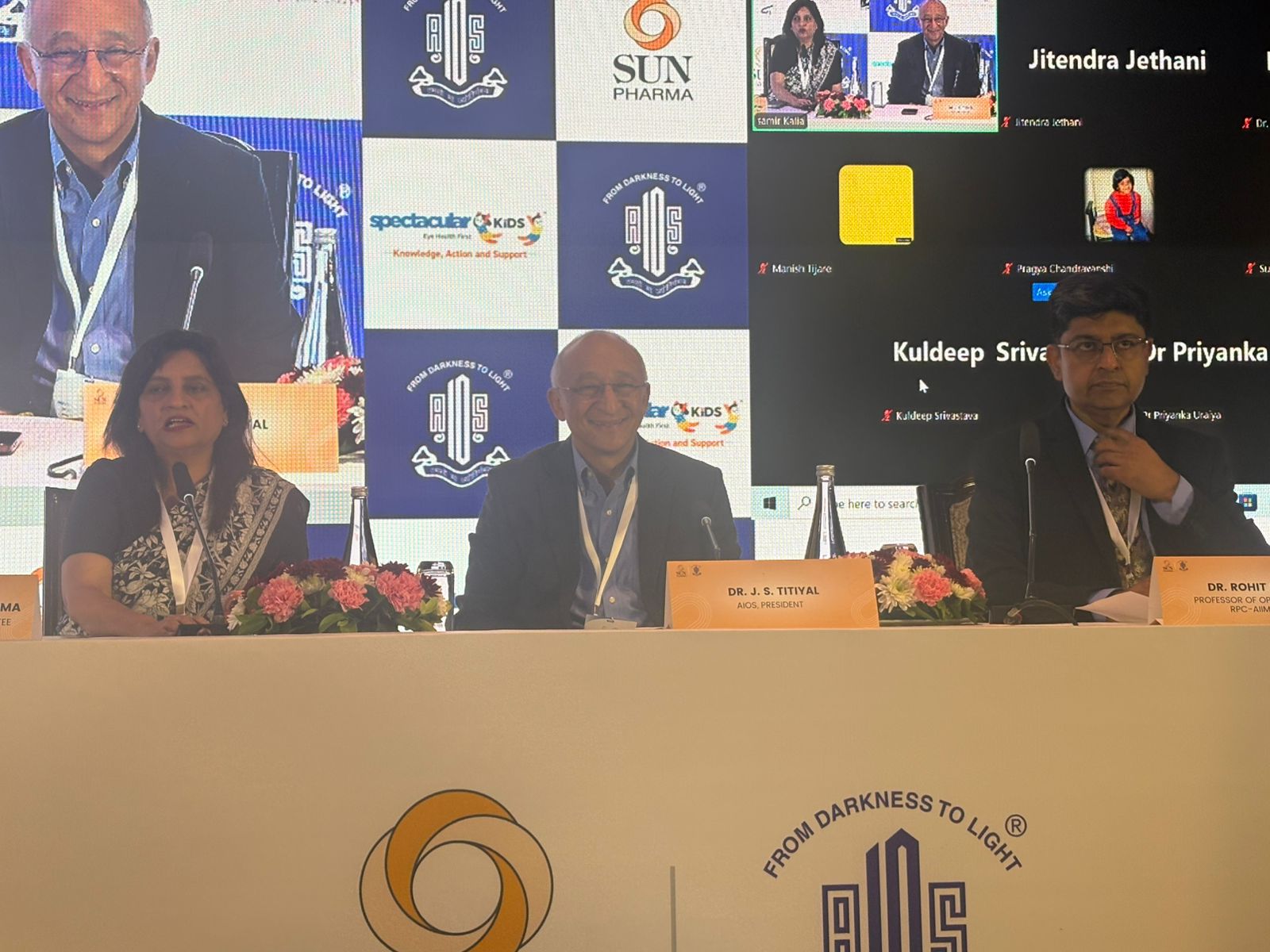
New Delhi, May 19: In response to the alarming rise in childhood myopia across India and globally, the All India Ophthalmological Society (AIOS) has released a comprehensive Consensus Guideline on “Prevention and Management of Childhood Myopia” during World Myopia Week 2026 (18th to 24th May 2026). Developed by leading pediatric ophthalmologists across the country and supported unconditionally by Sun Pharma, the guidelines aim to equip ophthalmologists, parents, educators, and healthcare professionals with evidence-based recommendations to address the growing burden of myopia among children.
The initiative comes amid increasing concerns that childhood myopia is emerging as a major public health challenge. Recent estimates suggest that by 2050, nearly half of the global population may be affected by myopia. In India, prevalence rates among school-going children have risen sharply over the years, with urban studies indicating nearly 14% prevalence, while rural regions have witnessed a rise from 4.6% to 6.8% over the past decade. Findings from school screenings conducted by SunPharma across 13 cities and 12 states among more than one lakh children further highlighted the issue, revealing that approximately 13.6% of screened children were affected by myopia and 27% had abnormal vision requiring attention.
Dr Jeewan Singh Titiyal, President – All India Ophthalmological Society said, “Childhood myopia is no longer just about children needing spectacles earlier in life; it is increasingly becoming a serious long-term eye health concern. High myopia can permanently alter the structure of the eye and significantly increase the risk of retinal detachment, glaucoma, cataract and irreversible vision loss later in life. Unfortunately, many children fail to report blurred vision because they do not realize what normal sight should feel like. Parents, teachers and caregivers must become more observant of behavioural signs and prioritize regular eye examinations to ensure timely intervention.”
Experts attribute the surge in childhood myopia to lifestyle changes accelerated over recent years, including prolonged screen exposure, increasing academic pressure, reduced outdoor activity, and extended periods of near work. The transition toward digital learning environments has further contributed to children spending 4–6 hours or more daily on screens, often with inadequate visual hygiene practices.
The newly released AIOS guidelines strongly emphasize preventive strategies, including annual eye examinations, school vision screenings, limiting recreational screen time, maintaining appropriate reading distance, ensuring adequate lighting during study, and encouraging children to spend at least two hours outdoors daily. The recommendations also reinforce the importance of the widely advocated 20-20-20 rule, encouraging children to take a 20-second break every 20 minutes and focus on an object 20 feet away to reduce eye strain.
Dr Namrata Sharma, All India Ophthalmological Society, Chairman-Scientific Committee said “The prevention and management of childhood myopia require a shift from reactive treatment to proactive prevention. Environmental factors such as prolonged near work, excessive digital exposure and reduced outdoor time are modifiable risks that demand immediate societal attention. Our consensus guidelines provide a structured roadmap for ophthalmologists and stakeholders to implement evidence-based interventions, improve awareness, and encourage timely diagnosis. While anti-myopia therapies may slow progression, prevention through lifestyle modification remains the most powerful strategy.”
The guidelines also provide insights into currently available myopia control interventions, including atropine eye drops, specialized myopia control spectacles, orthokeratology, and soft multifocal contact lenses. However, experts caution that these interventions may help slow progression but do not completely halt myopia and should be undertaken only under professional ophthalmic supervision.
Dr Rohit Saxena, Senior Pediatric Ophthalmologist-RP Singh AIIMS, New Delhi & Program Director – Myopia Guideline said “Combating childhood myopia requires a collective effort involving families, schools, healthcare systems and policymakers. School environments must encourage outdoor exposure and healthier visual habits, while parents need to monitor screen dependency and ensure balanced lifestyles. Equally important is ensuring that adequate sleep, nutrition and physical activity are not compromised. Early diagnosis and timely management can significantly improve outcomes and help protect children from avoidable visual impairment and future sight-threatening complications.”
With the launch of these national guidelines during World Myopia Week 2026, AIOS aims to create a unified approach toward prevention, awareness, and early management of childhood myopia, reinforcing the message: Start early. Protect vision for life.