
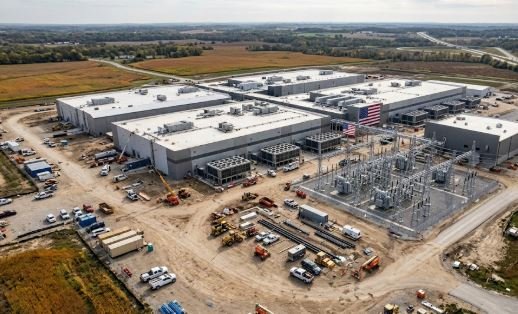
Artificial intelligence is becoming one of the biggest drivers of business investment in the United States, influencing how companies spend capital, build infrastructure and plan for future growth. What initially gained attention as a breakthrough in software and digital services has evolved into a much broader economic transformation. Technology companies are investing heavily in data centres, advanced processors, cloud computing and energy infrastructure, while businesses across industries are exploring ways to incorporate AI into their everyday operations.
This growing investment cycle is creating opportunities far beyond Silicon Valley. From construction companies and semiconductor manufacturers to energy providers, financial institutions and professional service businesses, a wider network of industries is benefiting from the demand generated by artificial intelligence. At the same time, the scale of investment is raising important questions about operating costs, financing, workforce requirements and the returns companies can realistically expect.
Massive Corporate Investments Are Driving the AI Infrastructure Boom
The expansion of artificial intelligence depends on more than software development. Training and operating advanced AI models require enormous computing capacity, specialised chips, high-performance servers and large-scale data centre facilities.
This has encouraged major technology companies to increase their capital expenditure and expand their infrastructure investments. Companies such as Microsoft, Amazon, Google and Meta are directing substantial resources towards data centres, cloud infrastructure and AI computing capabilities.
For businesses, this investment cycle is creating demand across several connected industries. Data centre construction requires land, engineering services, cooling systems, electrical equipment and specialised building materials. Semiconductor manufacturers and hardware suppliers are also benefiting from the growing need for advanced computing components.
The impact extends to smaller businesses as well. Electrical contractors, equipment maintenance companies, industrial suppliers and infrastructure service providers can find new opportunities by supporting the expanding AI ecosystem.
Rising Data Centre Demand Is Reshaping the Energy Industry
One of the most significant economic consequences of the AI investment boom is its growing demand for electricity.
AI data centres operate with large numbers of high-performance processors that require continuous power and advanced cooling systems. As companies expand their computing capacity, electricity availability is becoming an increasingly important factor in deciding where new facilities should be developed.
This is creating fresh business opportunities for electricity producers, grid infrastructure companies, renewable energy developers and energy storage providers.
Utilities are facing pressure to modernise transmission networks and improve their ability to meet large industrial power requirements. Meanwhile, technology companies are exploring long-term energy agreements and alternative power sources to secure reliable electricity for their facilities.
For energy businesses, AI infrastructure is emerging as a significant source of future demand. However, the challenge will be balancing the expansion of electricity supply with affordability, grid reliability and environmental responsibilities.
AI Is Creating New Investment Opportunities Beyond Technology
The commercial impact of artificial intelligence is no longer restricted to companies developing algorithms or manufacturing processors. Its expansion is generating business opportunities across a much wider industrial network.
Some of the most promising areas include:
- Data centre development: Demand for specialised computing facilities is creating opportunities for construction companies, property developers, engineering firms and infrastructure investors.
- Semiconductor manufacturing: Advanced processors, memory chips and specialised electronic components are becoming increasingly important to AI infrastructure.
- Energy and utilities: Electricity generation, grid modernisation, cooling infrastructure and energy storage are gaining importance as data centre demand increases.
- Cloud computing services: Businesses are increasingly relying on external computing infrastructure to develop and operate AI applications without building expensive facilities themselves.
- Cybersecurity and data management: The expansion of AI systems is increasing demand for secure data storage, network protection and enterprise technology services.
This wider investment ecosystem is allowing businesses outside the traditional technology sector to participate in the AI economy.
Businesses Are Reconsidering Their Workforce and Productivity Strategies
Artificial intelligence is also changing how American companies organise their operations and manage employees.
Businesses are introducing AI tools into customer service, financial analysis, software development, marketing, logistics and administrative functions. These applications can reduce repetitive work, improve information processing and help employees make faster decisions.
However, the benefits are not automatic. Companies need to invest in employee training, technology integration and data management before AI can deliver meaningful improvements in productivity.
The employment impact is also more complex than simply replacing human workers. Growing infrastructure requirements are supporting demand for engineers, electricians, construction specialists, data centre technicians and cybersecurity professionals. At the same time, businesses are increasingly looking for employees who can work effectively with AI-powered tools.
For employers, the priority is becoming a combination of technology adoption and workforce development. Companies that successfully integrate human expertise with automation may be better positioned to improve efficiency without compromising service quality.
Small and Medium-Sized Businesses Are Finding New Ways to Compete
Although large technology companies dominate AI infrastructure spending, smaller businesses are also becoming part of the investment story.
Cloud-based AI platforms are making advanced tools more accessible to companies that cannot afford to develop their own systems. Small businesses can use these technologies for customer communication, inventory forecasting, sales analysis, content creation and administrative tasks.
This can help smaller enterprises reduce certain operating expenses and improve their ability to compete with larger organisations.
There are also opportunities for specialised service providers. AI consulting firms, software developers, automation specialists and data management businesses can help traditional companies identify practical applications for the technology.
For small businesses, the commercial advantage will depend less on adopting every new AI product and more on selecting tools that solve specific operational problems and generate measurable returns.
Financial Markets Are Responding to the AI Investment Cycle
The growing scale of AI-related spending is influencing investment decisions across American financial markets. Semiconductor companies, cloud infrastructure providers and technology firms have attracted considerable investor attention as expectations around AI demand continue to shape valuations.
However, the investment boom is also changing how companies finance expansion. Building large data centres and securing advanced computing equipment require significant upfront capital. As a result, businesses are exploring a combination of internal cash flows, debt financing, private credit and long-term infrastructure partnerships.
This creates opportunities for financial institutions and infrastructure investors, but it also introduces risks.
Companies must ensure that the revenue generated from AI services can justify the scale of their capital commitments. If demand grows more slowly than expected or computing infrastructure becomes less profitable, businesses with heavy investment obligations could face financial pressure.
Investors are therefore paying closer attention to actual revenue growth, operating margins, cash flows and the commercial returns from AI-related spending rather than relying entirely on future expectations.
Global Supply Chains Are Becoming More Important
The American AI investment boom is closely connected to international manufacturing and supply networks. Although the United States is attracting substantial investment in computing infrastructure, the production of advanced semiconductors, electronic components and specialised hardware remains dependent on global suppliers.
This creates opportunities for manufacturers, logistics providers and technology companies across different regions. It also highlights the importance of securing reliable supplies of critical components and reducing exposure to production disruptions.
For American businesses, strengthening domestic manufacturing capabilities while maintaining international partnerships is becoming an important strategic consideration.
The expansion of semiconductor facilities, specialised equipment production and supporting industrial infrastructure could also generate longer-term investment opportunities beyond the immediate data centre construction cycle.
High Investment Costs and Infrastructure Constraints Remain Challenges
Despite the enthusiasm surrounding AI, businesses face several practical challenges as they expand their investments.
The cost of advanced processors, data centre construction, electricity and cooling infrastructure can be substantial. Access to suitable land, reliable power connections and skilled workers may also affect project timelines.
Another concern is the gap between AI experimentation and large-scale commercial adoption. While many businesses are testing AI applications, integrating them into core operations requires investment, technical expertise and changes to existing workflows.
Companies also need to address data privacy, cybersecurity, regulatory compliance and the risk of inaccurate AI-generated outputs.
These challenges make careful investment planning essential. Businesses that focus on commercially useful applications and sustainable operating models are more likely to achieve lasting value from AI adoption.
America’s AI Investment Boom Is Creating a Wider Business Transformation
The expansion of artificial intelligence is becoming a defining investment trend in the American economy. Its influence now extends across technology, energy, construction, manufacturing, finance and professional services, creating opportunities for businesses that may have little direct involvement in developing AI systems.
For large corporations, the challenge is to convert significant capital expenditure into profitable services and stronger productivity. For smaller enterprises, the opportunity lies in providing specialised solutions, supporting infrastructure development and using accessible AI tools to improve business performance.
The next phase of growth will depend on how effectively companies turn technological potential into measurable commercial results. As investment continues to reshape infrastructure, supply chains and workforce requirements, artificial intelligence is moving beyond a technology trend and becoming a central force influencing the direction of the US business landscape.
