Amity Institute of Nuclear Science and Technology (AINST), Amity University Uttar Pradesh, Noida, in collaboration with the National Institute of Advanced Studies (NIAS), Bengaluru, is organising the 3rd Edition of the NIAS–AMITY Joint Workshop on “Handling of Nuclear and Other Radioactive Materials” for Indian security agencies, from 11th-15th May 2026.
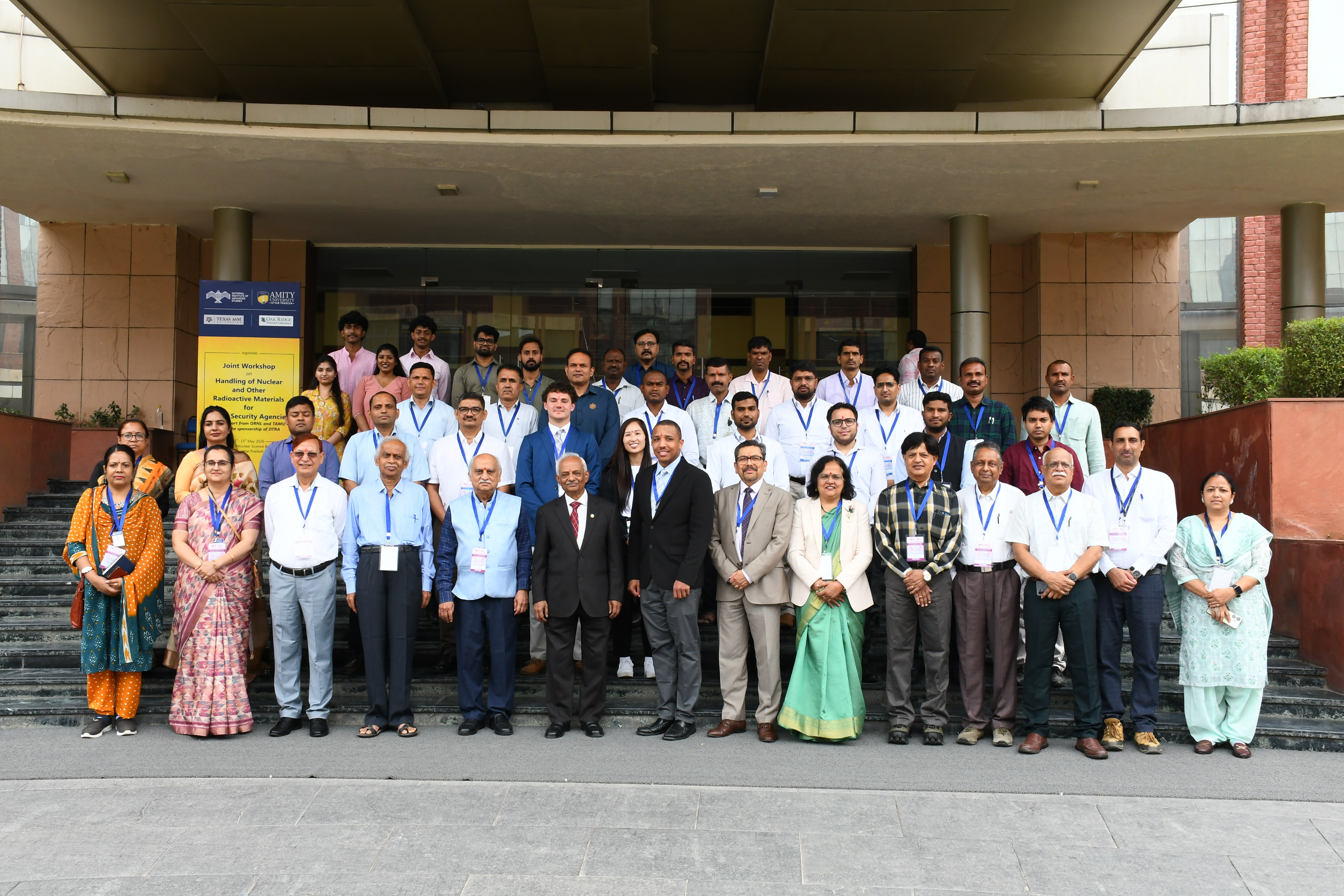
The five-day workshop brings together 25 participants from key national security and emergency response organisations, including the National Disaster Response Force (NDRF), State Disaster Response Force (SDRF), Customs, and the National Academy of Customs, Indirect Taxes and Narcotics (NACIN), with expert resource persons from AINST, Oak Ridge National Laboratory (ORNL), Texas A&M University (TAMU), NIAS and various Department of Atomic Energy (DAE) establishments.
Addressing the participants during the Inaugural Session, Chief Guest, Lt. Col. Gordon Randall, CWMD Planner, DTRA, Virginia USA, averred, “Our objective is to ensure a credible and sound strategic deterrent through nuclear safety, assurance, and crisis response activities. The management of nuclear and other radioactive substances is a joint collaborative effort and through this workshop, participants will gain theoretical and practical knowledge in identifying radioactive substances and developing strategies for emergency situations. Knowledge sharing is essential for innovation, growth, and a more secure future, therefore the participants must share their knowledge with each other.”
Emphasizing upon the importance of structured training and preparedness in Nuclear Security, Prof. M. Sai Baba, Former Director, Resources Management Group, Indira Gandhi Centre for Atomic Research (IGCAR), DAE, Kalpakkam, noted, “Capacity building and preparedness are critical components of nuclear security. Workshops like these provide a valuable platform for strengthening understanding of radiological threats, emergency response mechanisms, and inter-agency coordination. Such collaborative initiatives between academia, research institutions, and international organisations significantly enhance national resilience and ensure safe handling of nuclear and radioactive materials. Participants should actively engage in both theoretical and practical sessions and should not hesitate to seek clarification of their doubts.”
Dr. Balvinder Shukla, Vice Chancellor Amity University Uttar Pradesh said,
“With India’s expanding nuclear energy programme and the increasing use of nuclear science in medicine, agriculture, and industry, the movement and application of nuclear and radioactive materials are expected to grow substantially. This underscores the vital role of national security agencies in effectively handling emergencies such as accidental radiation leaks, illicit trafficking, and the potential misuse of radioactive substances by unauthorised entities. Keeping this in view, the participants will be undergoing specialised training by experts from Amity University and collaborating institutions, through both theoretical sessions and hands-on laboratory-based exercises focused on detection, handling, and emergency response management.”
Stressing upon the importance of sensor-based technologies in radiation detection and operational safety, Dr. Sunil S. Chirayath, Distinguished R&D Scientist, Oak Ridge National Laboratory (ORNL), USA, asserted, “Radioactive materials cannot be detected through human senses and require specialised sensors and detectors. Amity’s advanced laboratory is equipped with a range of detection systems which participants will use during training, thereby enabling them to understand the various functions of detection systems. The fundamental principles of radiation safety include time, distance, and shielding and the participants will be challenged to locate and handle radioactive materials in simulated operational scenarios, which will provide them with great exposure and hands-on experience.”
Highlighting the significance of the Workshop, Dr. W. Selvamurthy, President, Amity Science, Technology & Innovation Foundation (ASTIF), said, “With the increasing applications of nuclear science in medicine, agriculture, and industry, along with India’s growing nuclear energy programme, the movement and use of radioactive materials are expected to rise. This underscores the critical role of national security agencies in responding effectively to emergencies such as accidental releases, illicit trafficking, and potential misuse by unauthorised entities. The workshop will be highly beneficial for the participants, fostering an exchange of knowledge and learning between them.”
Welcoming the guests, Prof. (Dr.) Alpana Goel, Director and Head, Amity Institute of Nuclear Science and Technology, stated,
“The workshop provides valuable insights into the operational requirements of Indian security agencies in radiological aspects. It also enhances the visibility of the Nuclear Security Education Laboratory, including its remotely accessible capabilities, and explores opportunities for collaboration with multiple stakeholders for effective utilisation of the facility.”
During the five-day workshop, Technical Sessions on topics such as “Nuclear Technology for Energy Security and Non-energy Applications”, “Radiation Sources and Biological Effects of Ionizing Radiation”, “The principles of time, distance, and shielding using light/sound”, “Safety and Security During Transport of Nuclear or Radioactive Materials”, and many others will be held.