

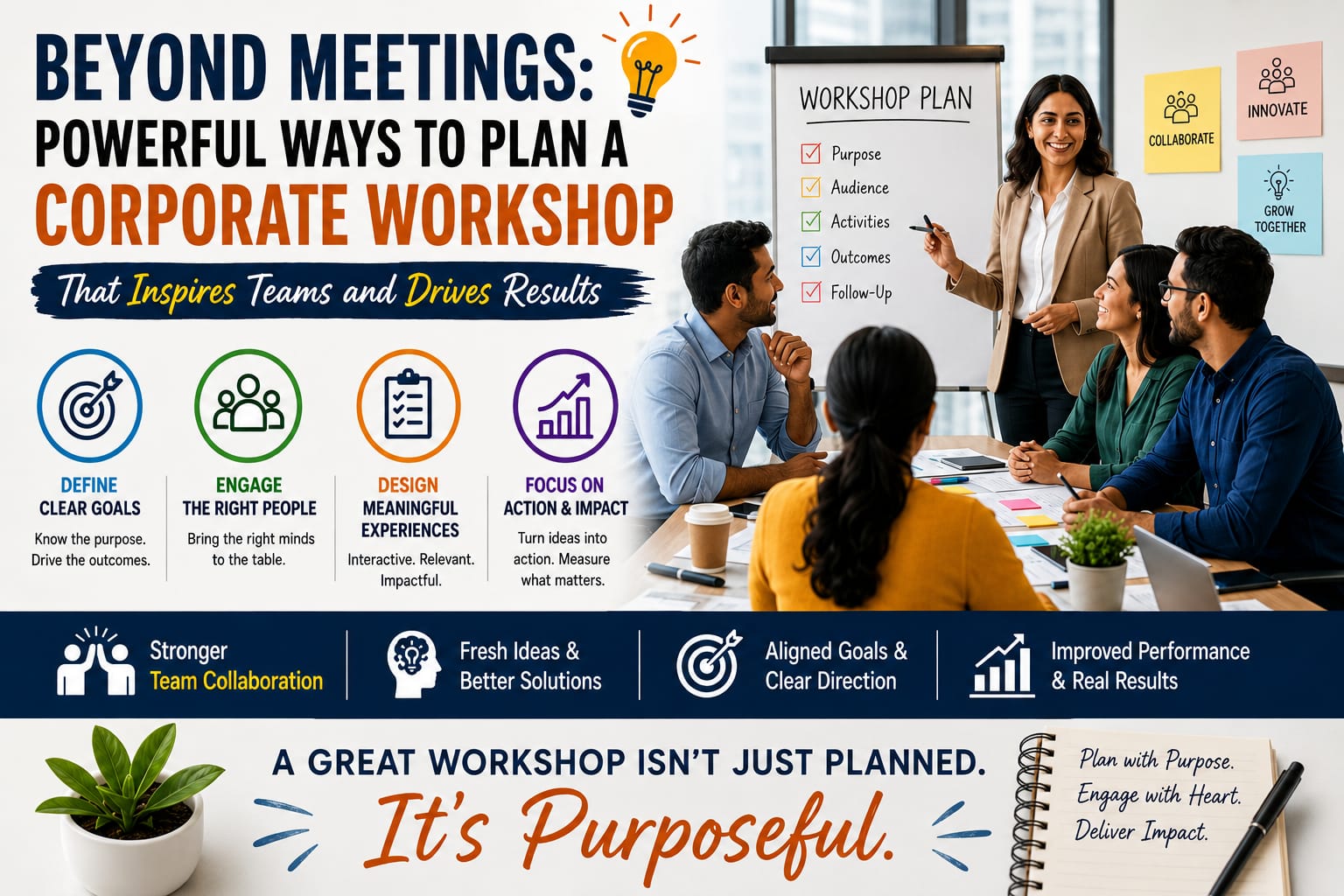
A successful corporate workshop is more than just an event—it is an opportunity to inspire employees, strengthen collaboration, develop leadership skills, and align teams with the company’s long-term vision. Whether you’re organizing a leadership retreat, employee training session, innovation workshop, or strategic planning event, thoughtful planning can transform a routine gathering into a meaningful business experience. From setting clear objectives and choosing the right venue to creating engaging sessions and measuring outcomes, every detail contributes to the overall success of the event.
Here are 15 practical strategies that can help you organize a corporate workshop that delivers lasting value for both your employees and your organization.
1. Start with a Clear Purpose
Every successful workshop begins with a well-defined objective. Before planning the agenda or selecting a venue, identify what you want participants to gain from the experience. Whether your goal is improving collaboration, developing leadership skills, onboarding new employees, or introducing new business strategies, having a clear purpose will guide every planning decision and help measure the workshop’s success.
2. Create a Theme That Brings Everything Together
A strong theme gives your workshop direction and creates excitement among participants. It sets the tone for the event while ensuring that presentations, activities, and discussions remain focused on a common objective. Choose a theme that reflects your organization’s goals and resonates with your audience.
3. Invite the Right Participants
Not every workshop needs to involve the entire organization. Identify who will benefit the most from the event and tailor the content to their roles and responsibilities. A workshop designed for executives will differ greatly from one intended for sales teams or new employees.
4. Select Knowledgeable Speakers
The speakers you choose can significantly influence the overall impact of your workshop. Experienced industry professionals, company leaders, or subject-matter experts can provide practical insights, inspire participants, and encourage meaningful discussions that extend beyond the event itself.
5. Plan Your Budget Carefully
A realistic budget ensures your workshop remains financially manageable without compromising quality. Account for venue costs, catering, technology, transportation, marketing materials, guest speakers, and unexpected expenses. Careful budgeting helps avoid last-minute financial challenges.
6. Choose the Right Date
Selecting the ideal date is often overlooked but can have a major impact on attendance. Avoid public holidays, school vacations, or major industry events that may conflict with participants’ schedules. Planning early also provides greater flexibility when booking venues and services.
7. Find a Venue That Supports Learning
The right environment plays an important role in the overall experience. Look for a venue that offers comfortable meeting spaces, reliable technology, easy accessibility, quality catering, and areas where participants can network and collaborate during breaks.
8. Secure Bookings Early
Once you’ve chosen your venue and service providers, confirm bookings as early as possible. Early reservations often provide better pricing and reduce the risk of last-minute availability issues that can disrupt your plans.
9. Make Transportation Easy
If your workshop takes place away from the office, convenient transportation helps participants arrive on time and without unnecessary stress. Coordinating travel arrangements demonstrates professionalism and improves the overall attendee experience.
10. Build an Engaging Agenda
An effective workshop balances presentations with interactive sessions. Combine keynote speeches, group discussions, hands-on activities, networking opportunities, and regular breaks to maintain energy and encourage participation throughout the day.
11. Test Everything Before the Event
Conducting a final rehearsal allows you to identify technical issues, review presentations, test audio-visual equipment, and confirm the event schedule. Preparation helps ensure the workshop runs smoothly from start to finish.
12. Stay Organized with a Planning Checklist
A detailed checklist keeps every aspect of the event under control. From registrations and catering to speaker coordination and event materials, tracking each task reduces the chances of overlooking important details.
13. Generate Excitement Before the Workshop
Build anticipation by promoting the event well in advance. Share announcements through emails, internal communication platforms, newsletters, and company meetings. Regular reminders encourage participation and keep employees informed.
14. Share the Agenda Early
Providing attendees with the workshop schedule before the event allows them to prepare, manage their time, and understand what to expect. A clear agenda also demonstrates professionalism and helps sessions stay on track.
15. Follow Up After the Workshop
The success of a corporate workshop extends beyond the closing session. Collect participant feedback, evaluate whether objectives were achieved, share key takeaways, and develop action plans based on the discussions. Following up ensures the ideas generated during the workshop lead to meaningful business improvements.
Final Thoughts
Corporate workshops are not simply business gatherings—they are valuable investments in people, innovation, and organizational growth. When thoughtfully planned, they strengthen communication, encourage collaboration, build leadership capabilities, and create stronger connections between employees and the company’s vision. By focusing on meaningful experiences rather than just logistics, organizations can turn every workshop into an opportunity to inspire teams, improve performance, and drive long-term business success.