

New Delhi, Aug 11: India is moving to build a large domestic container manufacturing industry as it seeks to reduce its dependence on imported containers, strengthen supply-chain resilience and create a new manufacturing opportunity linked to the country’s expanding trade.
Pic Credit: Pexel
The government has announced the ₹10,000-crore Container Manufacturing Assistance Scheme (CMAS) over five years to support new manufacturing facilities, expansion of existing plants and the development of testing, skills and other supporting infrastructure.
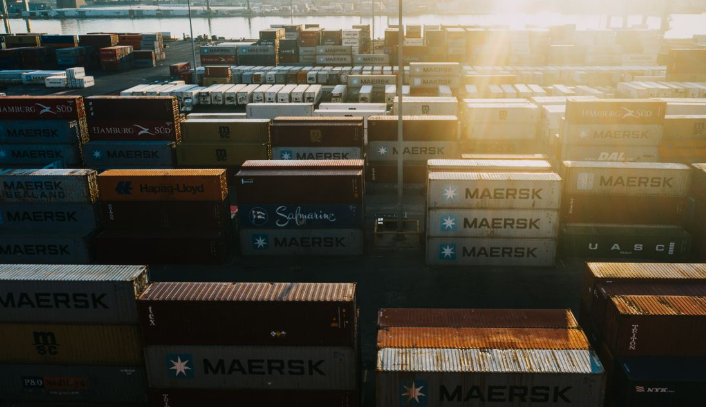
The initiative comes as containerised trade becomes increasingly important to India’s growing export-import activity. Yet the country remains heavily dependent on imported empty containers to meet domestic requirements and reposition equipment across its trade routes. This dependence can expose exporters, importers and logistics companies to global shortages, freight-rate swings and disruptions in shipping networks.
The government’s objective is to create enough domestic capacity to make India a competitive producer of internationally compliant shipping containers.
Under CMAS, India is targeting annual container manufacturing capacity of around 1 million Twenty-foot Equivalent Units (TEUs) over the next decade. The programme is expected to create a market opportunity of about ₹1.07 lakh crore and generate nearly 3,000 direct and more than 50,000 indirect jobs.
The impact is expected to extend across the manufacturing ecosystem. Container production requires specialised steel, corner castings, flooring materials, engineering components and fabrication services, creating opportunities for ancillary manufacturers, MSMEs and skilled workers.
For India’s exporters and importers, a stronger domestic container industry could mean better access to equipment and less exposure to disruptions in international markets. It could also help reduce the time and cost involved in sourcing and repositioning empty containers.
The push is already beginning to show signs of commercial traction. India recently rolled out its first domestically manufactured export-import shipping container for global shipping major A.P. Moller–Maersk at the Maersk-CONCOR Inland Container Depot in Dadri, Uttar Pradesh.
The container was manufactured to international ISO and safety standards, marking an important step in demonstrating that Indian manufacturers can meet the requirements of global shipping companies. Maersk has also placed an order for 1,000 additional India-made containers, providing an early market signal for the country’s emerging manufacturing capability.
The development comes as disruptions to major global shipping routes have highlighted the importance of having reliable access to critical logistics equipment. For a country seeking to become a larger manufacturing and export hub, domestic availability of containers can become an important part of trade infrastructure.
CMAS is also being positioned as part of a wider maritime development strategy. The government is simultaneously working to expand Indian shipping capacity, modernise ports and improve connectivity between ports, industrial centres and inland markets.
The proposed Bharat Container Shipping Line is expected to add another layer to this ecosystem by strengthening India’s presence in container shipping and supporting domestic procurement of containers. Initiatives such as PM Gati Shakti, the National Logistics Policy and the Sagarmala Programme are aimed at improving multimodal connectivity and reducing logistics bottlenecks.
At the infrastructure level, major projects including Vadhavan Port, the International Container Transshipment Port at Galathea Bay, Tuna Tekra Container Terminal and the Outer Harbour Container Terminal at V.O. Chidambaranar Port are expected to add capacity to India’s maritime network.
India’s port performance has also been improving, with three Indian ports featuring among the world’s top 30 in the Container Port Performance Index 2025.
The container manufacturing initiative therefore represents a broader shift in India’s maritime strategy—from expanding ports and shipping capacity to building the industrial ecosystem that supports global trade.
If the planned investments translate into large-scale production, India could gradually reduce its reliance on imported containers while creating a new manufacturing value chain spanning steel, engineering, logistics and maritime services.