

New Delhi, April 30: Deendayal Port Authority (DPA) has signed a Memorandum of Understanding (MoU) with International Council on Clean Transportation (ICCT) to jointly develop strategies aimed at reducing greenhouse gas emissions and air pollution from port and shipping operations at Kandla, Gujarat.
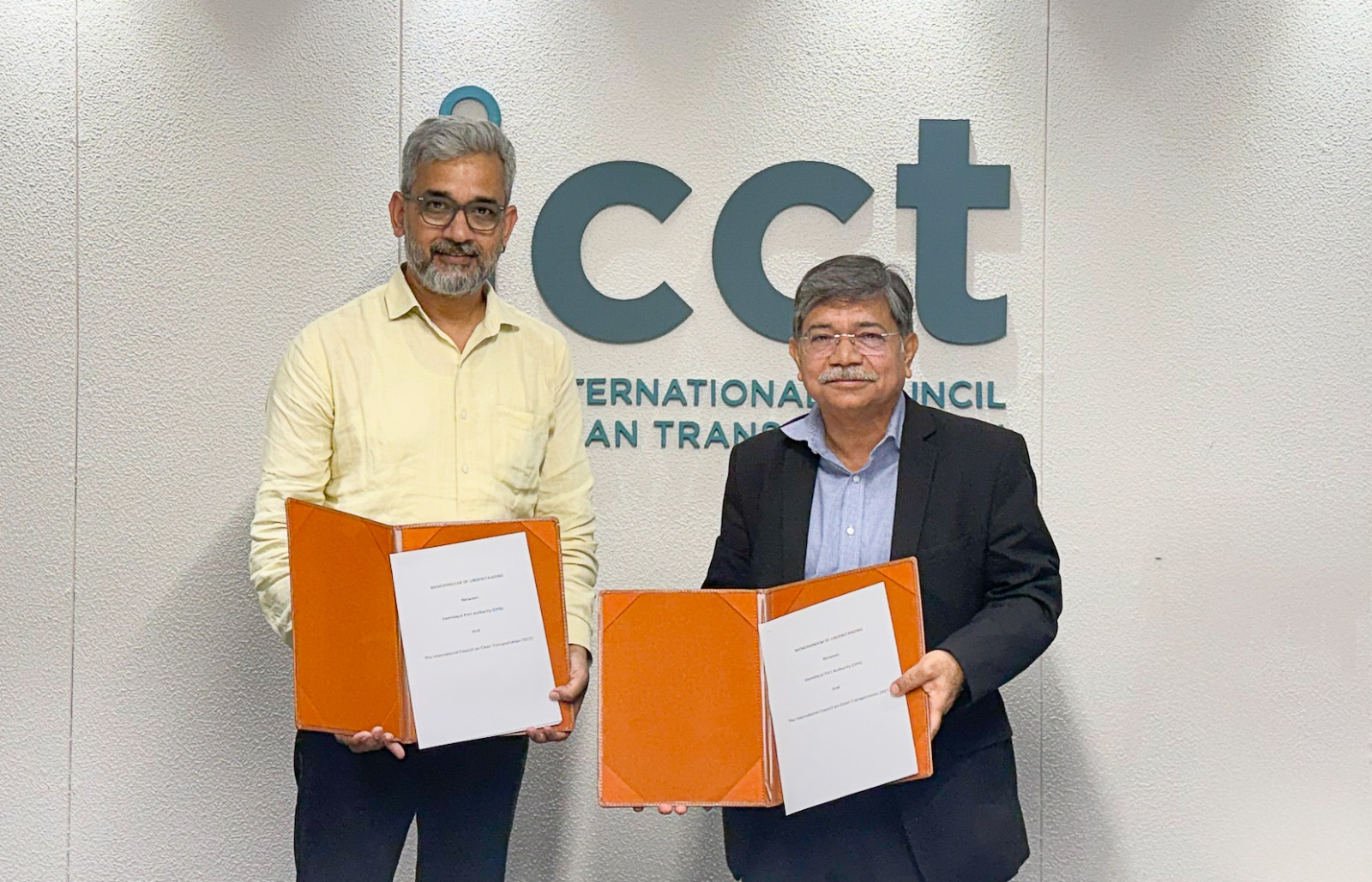
The partnership will focus on advancing research, policy development, and knowledge-sharing to accelerate the transition toward low-emission and sustainable port operations. By combining ICCT’s global technical expertise with DPA’s operational experience, the collaboration aims to create practical, scalable solutions for decarbonizing maritime activities.
Key Focus Areas of the Agreement:
- Identifying high-impact decarbonization measures for maximum emissions reduction
- Exploring opportunities across ships, cleaner fuels, port-linked trucking, and in-port equipment
- Assessing infrastructure, policy, and regulatory requirements to enable large-scale implementation
The initiative is designed to move beyond theoretical research by translating findings into actionable policy recommendations and on-ground implementation strategies.
Leadership Commentary
“Ports and shipping are critical to global trade, but they are also a significant source of greenhouse gas emissions and air pollution. Through this partnership with Deendayal Port Authority, we will identify practical, high-impact solutions, from cleaner marine fuels to electric trucks and zero-emission port equipment that can substantially reduce emissions while enhancing operational efficiency. Our goal is to help Kandla emerge as a leading model for sustainable, future-ready port development in India.” — Amit Bhatt, India Managing Director, ICCT.
“Kandla has long been a gateway for India’s maritime trade. Our partnership with ICCT will help accelerate Deendayal Port’s transition into a future-ready, green port by combining our operational expertise with ICCT’s global technical knowledge. Together, we will identify practical, cutting-edge solutions across vessels, cleaner fuels, cargo handling, and hinterland transport to significantly reduce emissions and improve efficiency. This collaboration will enable Deendayal Port to adopt the technologies and strategies needed to emerge as a leading model for sustainable port development in India and beyond.” — Shri Sushil Kumar Singh, Chairman, Deendayal Port Authority.
Scope of Collaboration
Under the MoU, both organizations will:
- Assess greenhouse gas and air pollution reduction potential across port and shipping activities
- Identify decarbonization opportunities across maritime operations, logistics, and port infrastructure
- Develop scalable strategies considering infrastructure readiness and institutional capacity
- Evaluate policy, regulatory, and market mechanisms required for transitioning to low- and zero-emission systems
The collaboration aims to position Kandla as a leading model for sustainable port development in India and globally, supporting broader efforts to reduce emissions in the maritime sector while maintaining operational efficiency.
International Council on Clean Transportation is an independent research body providing technical and scientific analysis to policymakers worldwide, focusing on decarizing transport systems.
Deendayal Port Authority operates under India’s Ministry of Ports, Shipping and Waterways and plays a vital role in facilitating maritime trade while advancing sustainability initiatives at the port.
