

New design rules for access-controlled highways aim to make high-speed travel safer, smoother and more efficient while strengthening India’s logistics network
Pic Credit: Pexel
India’s highways are changing. As the country builds longer, faster road corridors connecting cities, industrial centres and emerging economic hubs, the focus is gradually shifting from simply building more roads to building safer and smarter roads.
A new set of guidelines from the National Highways Authority of India (NHAI) seeks to bring greater uniformity to the design of access-controlled high-speed national highways. The objective is simple but important: reduce dangerous points of conflict, make driving more predictable and ensure that highways built across different parts of the country follow consistent safety and technical standards.
For motorists, some of the changes may be particularly noticeable.
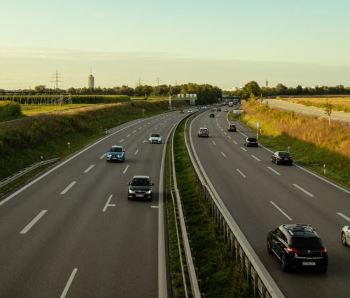
New access-controlled high-speed corridors will not have openings in the median or intersections where vehicles cross each other at road level. This means fewer opportunities for sudden crossings, risky turns and wrong-side movements—situations that can become especially dangerous when vehicles are travelling at speeds of up to 100 kmph.
Designing roads around human behaviour
High-speed driving leaves little room for last-minute decisions. A driver approaching an exit should not have to suddenly brake or change lanes after spotting a sign at the last moment.
The new guidelines therefore provide for advance exit signs at 5 km, 2 km, 1 km and 500 metres before an exit. The idea is to give motorists enough time to understand where they need to go and gradually move into the correct lane.
It is a small design change with a very practical purpose: making the road easier to read for the person behind the wheel.
The guidelines also move away from raised concrete dividers on these corridors. Instead, flush medians with painted centre lanes, thick wire ropes or crash barriers will be used to separate opposing traffic.
Together, these provisions are intended to reduce sudden movements and create a more controlled driving environment.
A more consistent highway experience
India’s road network has expanded rapidly, but different projects have often been planned with different design approaches. The new framework is intended to bring greater consistency to upcoming access-controlled highways.
The guidelines will apply to new four-lane and six-lane greenfield as well as brownfield access-controlled national highways.
This is significant because access-controlled highways that do not fall under the expressway category previously did not have a separate, comprehensive set of planning and design standards.
The new framework fills that gap by laying down common principles for road design, traffic movement, lane configuration and other important infrastructure elements.
Roads planned for tomorrow’s traffic
One of the biggest challenges in highway planning is that traffic does not remain constant.
A road that is adequate today can become heavily congested within a few years as cities expand, industries grow and vehicle ownership increases.
The new guidelines take future traffic into account while deciding lane configuration. Traffic assessments and projections will determine the required capacity, along with factors such as the number of bridges, flyovers and interchanges.
Depending on these requirements, the right of way for such corridors will generally be 60 metres or 70 metres.
This approach could help reduce the need for frequent modifications as traffic volumes rise, allowing infrastructure to be planned with a longer-term perspective.
Why safer highways matter to the economy
A highway is much more than a stretch of asphalt connecting two places. It is part of the country’s economic infrastructure.
For businesses, reliable road connectivity determines how quickly raw materials reach factories, how efficiently finished products reach markets and how easily goods move between production centres, warehouses and ports.
When traffic flows smoothly, trucks spend less time stuck in congestion. Predictable travel times can improve logistics planning and help businesses manage transportation more efficiently.
Better highways can also strengthen connectivity to smaller cities and industrial clusters, creating opportunities for businesses to expand beyond established urban centres.
For farmers and producers, improved road connectivity can make it easier to reach larger markets. For manufacturers, it can strengthen supply chains. For logistics companies, faster and more predictable corridors can improve vehicle utilisation.
In this sense, road safety and economic efficiency are closely connected.
Building a 50,000-km high-speed network
The importance of standardised highway design becomes even clearer when viewed against India’s long-term infrastructure ambitions.
The government has set a target of developing 50,000 km of access-controlled high-speed corridors under its broader Viksit Bharat 2047 vision.
Such a large network will connect different regions and economic centres while supporting the movement of people and goods.
Existing and emerging corridors such as the Delhi-Dehradun Expressway, Ambala-Kotputli corridor and Trans-Haryana corridor represent the growing importance of high-speed road infrastructure in India’s transport system.
But building thousands of kilometres of highways is only one part of the challenge. Making those highways work safely and efficiently for decades is equally important.
The road ahead
India’s highway story is entering a new phase. The emphasis is no longer only on how many kilometres of road are built, but also on how intelligently those kilometres are designed.
Removing median openings, avoiding surface-level intersections, improving exit signage and planning road capacity around future traffic may appear like technical decisions. For everyday motorists, however, they can translate into something much simpler: fewer surprises on the road.
For businesses, the benefits could come through smoother logistics and more reliable connectivity. For the wider economy, an efficient highway network can help connect markets, industries and communities more effectively.
As India builds towards a 50,000-km network of access-controlled high-speed corridors, the real measure of progress will not simply be the speed at which vehicles travel. It will be how safely, predictably and efficiently people and goods can move across the country.