

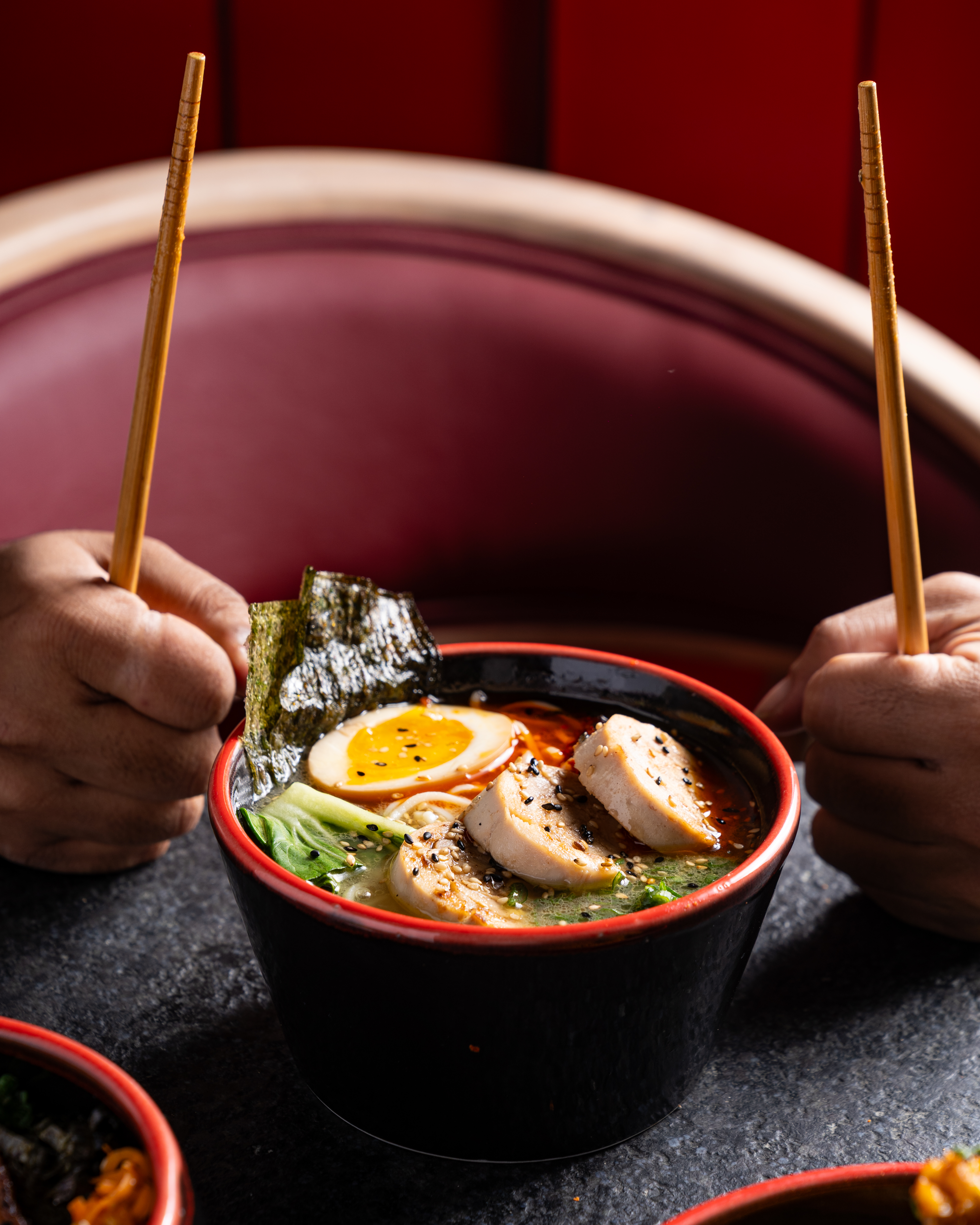
Most Japanese restaurants in Mumbai ask something of you before the food arrives. A booking. An outfit. An evening cleared. Nōdo, the new ramen and donburi counter by Raunak and Digvijay, asks nothing. Opening in Andheri, it brings forward the part of Japanese food the city has barely been shown — the weeknight bowl, the solo lunch, the kind of meal you fall into rather than plan around.
The idea began in traffic. Digvijay was in the car with a friend who was cursing the drive home — she needed to change before a Japanese dinner in town. The maths of it felt off. “She was going to spend more time getting ready for the meal than eating it,” he says. “That stuck with me. Ramen is not formal food. It is comfort food. Somewhere, Mumbai only got shown the expensive, dressed-up version of the cuisine, and people started believing that was all of it.” Raunak puts it more plainly: “A bowl of ramen should feel like a bowl of khichdi. Warm, honest, filling. You don’t plan your day around khichdi.”
Nōdo — a node — is named for how it is meant to sit in your day. Not a destination. A stop. The Andheri space is compact and intentionally so; the room has been built to move at the pace of the food rather than the other way around. There is no soft lighting engineered for date nights, no stacked menu requiring explanation, no host asking if you have a reservation. You walk in, you read a menu that takes a minute, you eat, and you leave. If you want to linger, you can. If you want to be in and out in twenty minutes, the format will let you.
The food is where Raunak and Digvijay are most protective. Nothing has been Indianised. No masala in the broth, no tadka dressed up as a garnish. What has been adapted is the context around the food — the speed, the ease of walking in, the way it fits into a day — not the food itself. “We are not trying to fuse anything,” says Digvijay. “Fusion changes the dish. We are changing the setting.” The menu leans into the everyday end of Japanese cooking: ramen built on long-simmered broths, rice-driven donburi, and small plates that round out your meal without inflating the bill. Each dish is built to stand alone – complete, balanced, self-contained. The kind of meal that does not need a second course to feel finished.
On the menu, the bowls do most of the talking. Tonkotsu ramen built on broths simmered for long hours until the flavour runs thick and deep. Shoyu and miso variations that lean clean rather than heavy. Donburi piled high with slow-cooked proteins over short-grain rice — the kind of meal that ends and leaves you quiet for a minute. Around them sit small plates built to share or pick at: corn ribs charred and lathered with a flavourful miso butter; a cool, crunchy cucumber salad that cuts cleanly against the richer bowls; karaage fried hot and tossed in togarashi. “We are not asking to be a once-in-a-while meal,” Raunak says. “We are asking to be a weekday lunch.”
The space in Andheri holds the same idea. It is compact and deliberately so – warm wood, clean low lighting, an open kitchen where the counter is in view. It sits somewhere between a Tokyo back-alley shop and a neighbourhood café you already know the way to. Solo diners, small groups, large ones — the room is built to hold them all without making any of them feel out of place. The feeling, when it lands, is the feeling of having found the place you were going to come back to anyway. A ramen shop that acts like one — and a quiet statement that the best meals in Mumbai are the ones you did not have to dress for.–
