
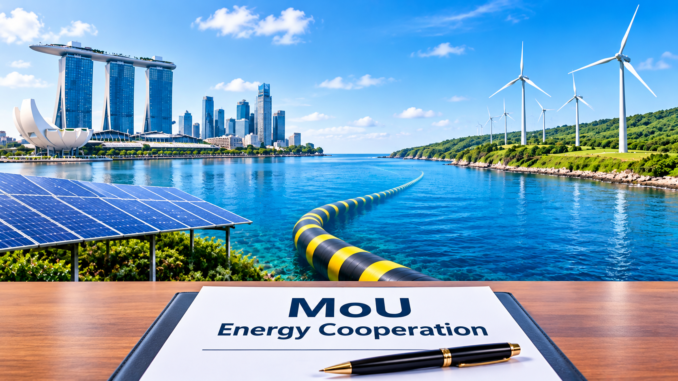
Nov 11: Singapore and Ireland are strengthening their energy partnership through a cooperation agreement signed on 5 November 2026, creating opportunities for knowledge exchange in renewable electricity, power grid management and submarine cable infrastructure. The Singapore-Ireland energy cooperation agreement, signed between Singapore’s Energy Market Authority (EMA) and Ireland’s electricity transmission system operator, EirGrid, reflects the growing importance of international collaboration in building reliable and sustainable electricity networks.
The agreement comes as both countries navigate changing energy requirements. Singapore is looking to diversify its electricity supply to support industrial expansion and rising demand from data centres, while Ireland is working to integrate increasing amounts of renewable electricity into its power network.
An important part of the partnership is the exchange of technical expertise on electricity interconnections and submarine power cables. These technologies are becoming increasingly relevant as countries explore ways to connect electricity markets, improve energy security and access renewable power from different locations.
Although the MoU does not announce a direct electricity connection between Singapore and Ireland, it establishes a framework for cooperation that could support wider developments in renewable energy and international electricity infrastructure.
What Does the Singapore-Ireland Energy Cooperation Agreement Cover?
The agreement provides a framework for EMA and EirGrid to share experience and technical knowledge in areas related to electricity system development and management.
The cooperation focuses on subjects including:
-
Electricity market design and power system operations.
-
Cross-border electricity interconnections.
-
Submarine electricity cable technologies.
-
Renewable energy integration and grid management.
-
Technical exchanges, professional training and industry discussions.
These areas are closely connected. As renewable electricity becomes a larger part of national energy systems, grid operators need better forecasting, transmission capacity and electricity balancing mechanisms.
The partnership gives both organisations an opportunity to understand how different electricity markets address these challenges. It also provides a platform for professional exchanges between specialists working in electricity transmission, infrastructure planning and renewable power management.
Importantly, the agreement should be viewed as a technical cooperation framework rather than a commitment to construct a new power transmission project.
Singapore’s Rising Electricity Demand Creates a Need for Stronger Infrastructure
Singapore’s energy requirements are changing as industries become more dependent on reliable electricity.
Data centres, semiconductor manufacturing facilities and electric transport are expected to contribute to rising demand. According to the Energy Market Authority’s Five-Year Energy Infrastructure Plan, Singapore’s peak electricity demand reached 8.6 GW in August 2026 and could rise to between 9.9 GW and 13 GW by 2031.
To prepare for this growth, the country plans to invest up to S$5.3 billion in expanding its electricity grid between 2025 and 2029. The investment includes new transmission substations and an expansion of the transmission cable network from approximately 7,700 km to 9,100 km by 2030.
Singapore is also planning to increase energy storage capacity from around 350 MWh to just over 1 GWh by 2030.
These investments show why cooperation with international electricity operators is becoming important. Singapore needs not only additional electricity but also the infrastructure and technical capabilities to manage different energy sources reliably.
Ireland’s Experience in Renewable Power Integration Offers Valuable Lessons
Ireland’s experience in managing renewable electricity provides an important foundation for the partnership.
As wind and solar power become more prominent in electricity generation, grid operators must manage fluctuations in supply while ensuring that homes and businesses receive a consistent power supply.
This involves accurate electricity forecasting, flexible grid operations, transmission planning and effective coordination between different parts of the energy system.
Through its cooperation with EirGrid, Singapore’s EMA can exchange expertise on these challenges. The partnership also creates opportunities for technical professionals from both countries to share practical experiences.
According to the official announcement, activities under the MoU will include:
-
Knowledge-sharing programmes on electricity systems and energy transition.
-
Training and manpower exchanges.
-
Dialogues between EMA and EirGrid.
-
Technical workshops and discussions.
-
Exchange of expertise on electricity market design, power system management and cross-border interconnections.
These activities are particularly relevant as both countries look to strengthen their electricity systems while adapting to changing energy requirements.
Submarine Electricity Cables and the ASEAN Power Grid Connection
Submarine electricity cables could become one of the more significant infrastructure opportunities associated with the wider energy transition.
Unlike conventional transmission lines, these cables carry electricity across underwater routes, allowing countries to connect their power networks. They can help bring electricity from renewable energy projects located offshore or in neighbouring countries to areas with higher demand.
For Singapore, this technology is closely linked to its ambition to import low-carbon electricity from Southeast Asia.
The country is working towards developing regional electricity connections under the broader vision of the ASEAN Power Grid, which aims to strengthen electricity connectivity among Southeast Asian countries.
As of August 2026, Singapore had awarded conditional approvals to 13 projects involving the potential import of 9.25 GW of low-carbon electricity from Australia, Cambodia, Indonesia, Malaysia and Vietnam. These projects remain subject to regulatory approvals, financing and commercial viability.
The importance of subsea infrastructure was also highlighted in the Singapore-United States energy cooperation discussions in October 2026. A regional feasibility study examined the legal, regulatory and financing arrangements needed to support cross-border electricity connections, including submarine cable projects.
The Singapore-Ireland MoU complements this broader direction by providing an additional channel for technical knowledge exchange on submarine power cables and electricity interconnections. It is not itself an ASEAN Power Grid project or a commitment to build a specific cable route.
Five Business Sectors That Could Benefit from the Energy Transition
The growing focus on renewable electricity and cross-border power infrastructure could create opportunities for companies across several industries.
1. Submarine Cable Manufacturing and Marine Engineering
Companies involved in high-voltage cable manufacturing, underwater surveys, offshore installation and cable maintenance could benefit from increasing investment in regional electricity connections.
As more countries explore subsea transmission routes, specialised engineering and installation capabilities will become increasingly important.
2. Renewable Energy Technology Providers
Solar and wind energy companies could find opportunities in markets seeking to increase renewable electricity generation.
Businesses offering renewable energy integration, power conversion systems and grid-connected technologies could also benefit from infrastructure modernisation.
3. Battery Storage and Energy Management
Renewable electricity generation can fluctuate depending on weather and operating conditions. Energy storage systems help manage these variations by storing electricity when supply is available and releasing it when demand increases.
This creates opportunities for battery manufacturers, storage system integrators and companies developing energy management software.
4. Engineering and Infrastructure Consultancies
Electricity interconnections require detailed technical assessments, transmission planning, environmental studies and project management.
Engineering consultancies with experience in high-voltage transmission and subsea infrastructure could find opportunities as regional power projects move towards implementation.
5. Artificial Intelligence and Smart Grid Technology
Digital technology is becoming an important part of electricity network management.
AI-powered forecasting, predictive maintenance, automated monitoring and smart grid platforms can help operators identify potential problems and manage electricity demand more effectively.
Technology companies that develop solutions for energy infrastructure could therefore find a growing market as electricity networks become more complex.
These are potential opportunities arising from the wider development of the sector, rather than contracts or procurement commitments announced under the Singapore-Ireland agreement.
How the Agreement Could Strengthen Singapore-Ireland Business Relations
Beyond technical cooperation, the agreement could provide a foundation for stronger business engagement between Singapore and Ireland.
Singapore offers companies access to Southeast Asian markets and an established environment for energy trading, infrastructure investment and technology development. Ireland brings experience in electricity transmission, renewable energy integration and power system operations.
This creates opportunities for businesses in both countries to explore partnerships in:
-
Renewable energy research and technology development.
-
Electricity infrastructure consultancy.
-
Grid automation and digital energy management.
-
Professional training and technical expertise.
-
Subsea cable engineering and transmission technologies.
For companies looking to expand internationally, the partnership also highlights the importance of developing capabilities that can serve multiple electricity markets.
However, commercial opportunities will depend on future project development, investment decisions and procurement requirements.
What the Singapore-Ireland Energy Partnership Means for the Future
The energy cooperation agreement signed on 5 November 2026 reflects a wider shift in how countries are approaching electricity security and renewable energy development.
Generating more renewable electricity is only one part of the transition. Countries must also invest in transmission networks, storage technologies and systems that allow electricity to move efficiently between different markets.
For Singapore, the partnership offers an opportunity to learn from Ireland’s experience in managing renewable power and interconnected electricity systems. For Ireland, it provides a platform to share technical expertise and strengthen international engagement.
The growing importance of submarine electricity cables adds another dimension to the agreement. As Southeast Asia advances its regional electricity connectivity ambitions, demand for specialised engineering, cable infrastructure and digital grid technologies could create opportunities for businesses.
Although the MoU does not establish a direct Singapore-Ireland electricity connection, it represents a useful step towards international knowledge sharing in an increasingly important industry.
For businesses, the development is worth watching. The next phase of the global energy transition will require not just renewable power producers but also technology companies, infrastructure developers, engineering specialists and digital solution providers capable of supporting more connected electricity networks.
