

Mumbai, May, 25 : Centre For Transforming India today announced the launch of its integrated rural education transformation initiative at the Zilla Parishad School in Vatsalanagar, Andur, in Osmanabad, Dharashiv – one of India’s Aspirational Districts identified under NITI Aayog. The initiative has been launched in alignment with the key concerns highlighted in NITI Aayog’s recent report, School Education System in India: Temporal Analysis and Policy Roadmap for Quality Enhancement, which points to rising school dropout rates, declining government school enrollment, infrastructure gaps, and widening digital inequalities across India’s education ecosystem.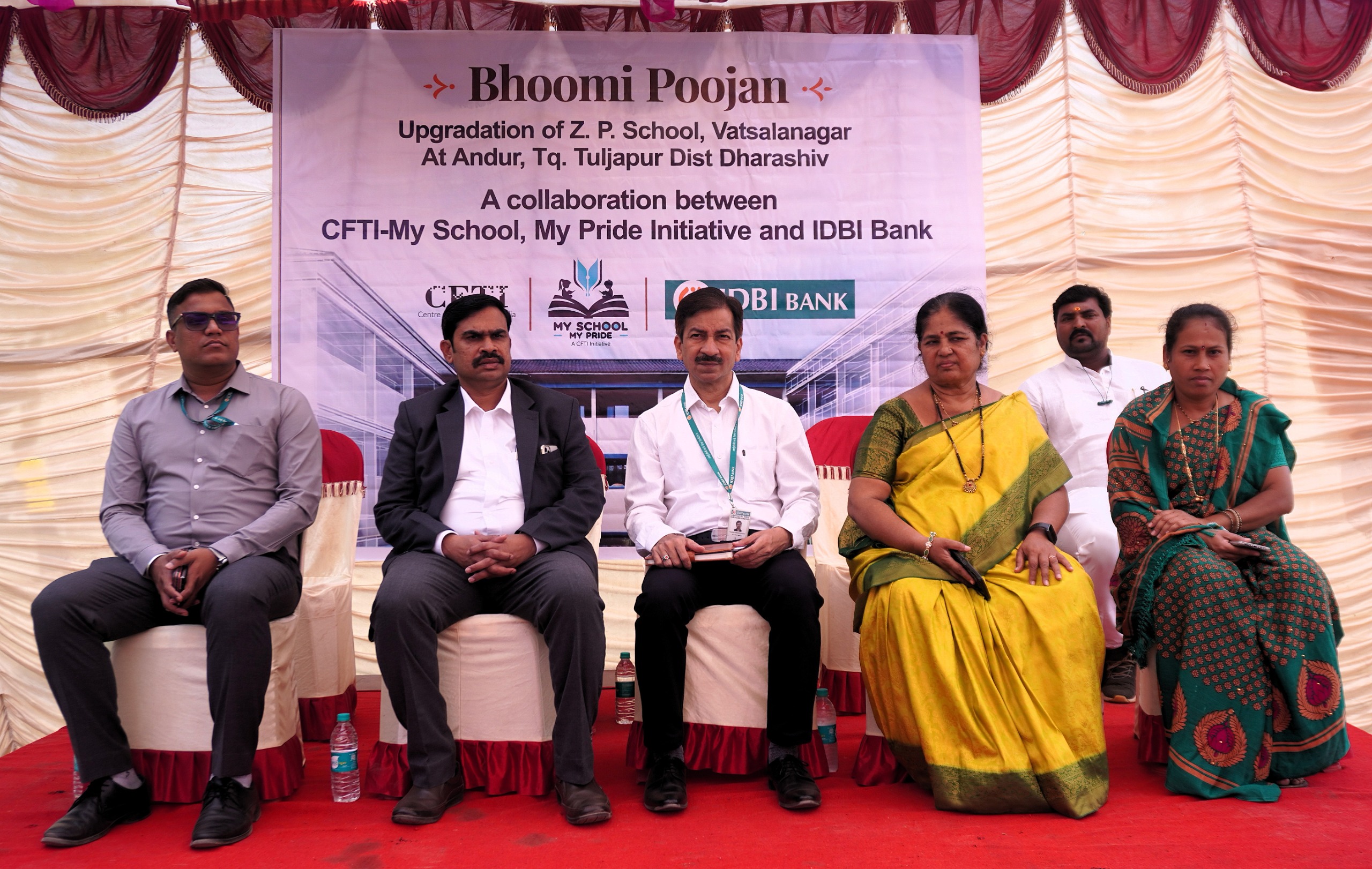
At the Andur school, students have faced longstanding challenges linked to inadequate educational infrastructure, limited digital learning exposure, sanitation gaps, and mobility barriers, with many children, especially girls, travelling 3–5 kilometers daily to access schooling. Through this intervention, CFTI will develop modern classrooms, science and computer labs, library facilities, sanitation blocks, clean drinking water systems, solar-powered educational infrastructure, and a multi-utility sports complex to create a safer, more inclusive, and future-ready learning environment. Additionally, nearly 300 students will receive bicycles and academic kits under CFTI’s flagship “Pedals of Hope” initiative to improve educational access and strengthen classroom continuity.
The intervention reflects a broader need identified by NITI Aayog’s report, which notes that while India’s school system serves over 24.69 crore students across 14.71 lakh schools, significant gaps continue to persist around foundational learning, retention, digital access, and educational infrastructure particularly across rural and aspirational districts. The Andur initiative has been designed through a structured community participation model involving Gram Panchayat authorities, school management committees, teachers, parents, and local stakeholders to ensure long-term sustainability and measurable impact on attendance, retention, and student participation.
Commenting on the initiative, Amit Deshpande, Chief Operating Officer at Centre For Transforming India, said,
“The future of rural education depends on how effectively we bridge infrastructure, accessibility, and learning gaps at the grassroots level. The Andur initiative is designed as a holistic transformation model that combines educational infrastructure, mobility support, digital access, and community participation to create a meaningful and sustainable impact for students. Strengthening school ecosystems at the local level is critical to improving long-term learning outcomes and reducing dropout rates.”
Over the years, CFTI has emerged as a key grassroots implementation partner across education, healthcare, WASH, mobility support, women empowerment, and sports infrastructure development. The organization has supported 144 schools, upgraded more than 90 classrooms, distributed over 35,000 bicycles, provided 1,700+ academic kits, and enabled digital learning access through 100+ computers across multiple community-focused interventions. Through partnerships with corporates and PSUs. As India moves towards equitable and inclusive development, initiatives like these demonstrate how collaborative CSR partnerships and grassroots implementation can collectively transform the future of rural communities — one school, one child, and one village at a time.