
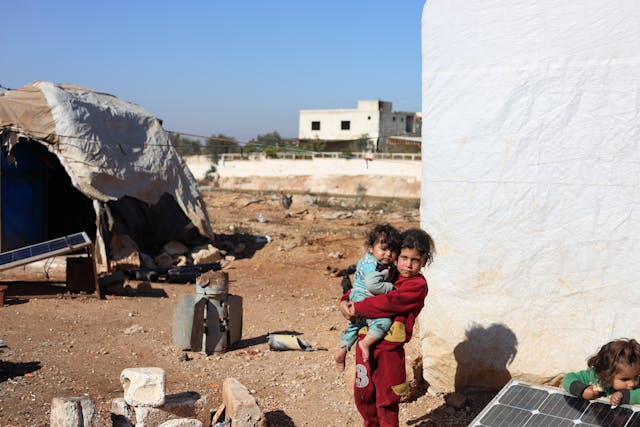

Afghanistan stands on the brink of an unprecedented humanitarian disaster as winter sets in, with millions facing acute hunger and malnutrition. A combination of economic collapse, climate shocks, and drastic reductions in international aid has created a vicious cycle: the humanitarian crisis prevents economic recovery, while the fragile economy exacerbates the suffering of the population.
A Vicious Cycle of Hunger and Economic Stagnation
The crisis is not simply a result of a weakened economy—it actively blocks recovery through multiple channels:
-
Diversion of Resources: Families are forced to prioritize immediate survival over long-term planning. Many are selling assets, accumulating debt, and skipping meals to make ends meet. This erosion of savings and human capital limits future economic potential.
-
Shrinking Livelihoods: Recurring droughts, earthquakes, and other climate shocks have destroyed agricultural land and livestock, the backbone of rural economies. Job losses and reduced incomes weaken domestic demand, further suppressing economic activity.
-
Erosion of Human Capital: Widespread malnutrition among children and pregnant or breastfeeding women, combined with the closure of hundreds of health facilities due to funding cuts, threatens the population’s long-term health and productivity.
-
Forced Migration and Returnee Influx: Over 2.5 million Afghans returned from Pakistan and Iran in 2025 alone, many arriving malnourished and impoverished. This influx strains limited public services and depresses wages, deepening poverty.
-
Restrictions on Women’s Work: Policies restricting female education and employment prevent half the population from contributing to the economy, stifling recovery prospects and social cohesion.
Winter 2025–2026: The Humanitarian Toll
As Afghanistan enters winter, the crisis reaches critical levels:
-
Acute Hunger: Over a third of the population—approximately 17.4 million people—is expected to face severe food insecurity (IPC Phase 3 or higher) between November 2025 and March 2026.
-
Malnutrition: About 3.7 million children under five and 1.2 million pregnant and breastfeeding women are projected to suffer from acute malnutrition, marking one of the highest levels in decades.
-
Funding Shortfalls: International aid has fallen far short of requirements. The World Food Programme (WFP) estimates that $468 million is needed to assist six million people over the winter, but current resources are a fraction of this, forcing a dramatic scale-back in operations. For the first time in years, the winter response lacks substantial U.S. assistance, leaving millions without support.
The Human Face of the Crisis
Behind the statistics are families grappling with impossible choices. Khalid, a 60-year-old day laborer in southern Afghanistan, survives on roughly $3 a day. His eight-month-old child, Zia, was recently treated for malnutrition. Families across the country are skipping meals, pulling children out of school, or sending them to work just to survive. Health clinics and nutrition centres, once lifelines for vulnerable communities, have largely closed.
Economic Consequences
The humanitarian crisis has profound economic ramifications:
-
Collapse of Household Purchasing Power: Widespread unemployment and extreme poverty reduce demand for goods and services, stalling business growth.
-
Destruction of Livelihoods and Infrastructure: Loss of crops, livestock, and health systems weakens rural economies and the future workforce.
-
Brain Drain and Investment Shortages: Political instability and economic collapse have driven skilled workers abroad and deterred foreign investment.
Even limited economic activity, such as returnee-driven demand for housing or small-scale humanitarian cash injections, is insufficient to reverse the downward spiral.
Breaking the Cycle
Afghanistan’s crisis has evolved from an acute emergency to a structural issue that threatens generations. Humanitarian agencies stress that the situation is preventable but requires immediate intervention. Adequate funding for food, nutrition, and winter relief is crucial to prevent loss of life and long-term societal collapse.
This winter, the stakes are stark: without global attention and support, millions of Afghan children and families could face suffering on an unimaginable scale. Addressing hunger is not only a moral imperative—it is essential for any hope of economic recovery and a sustainable future.