

Bangalore, April 09: HealthCare Global Enterprises Ltd. (HCG) marked World Psycho-oncology Day with a Stakeholders Round table deliberation and a day-long skill-building workshopat HCG Cancer Hospital, KR Road, Bengaluru, bringing together leading oncologists, psycho-oncologists, psychiatrists, medical social workers & patient advocates to address the unmet psychosocial needs of cancer patients and their families by integrating routine distress screening the 6th Vital sign in cancer care.
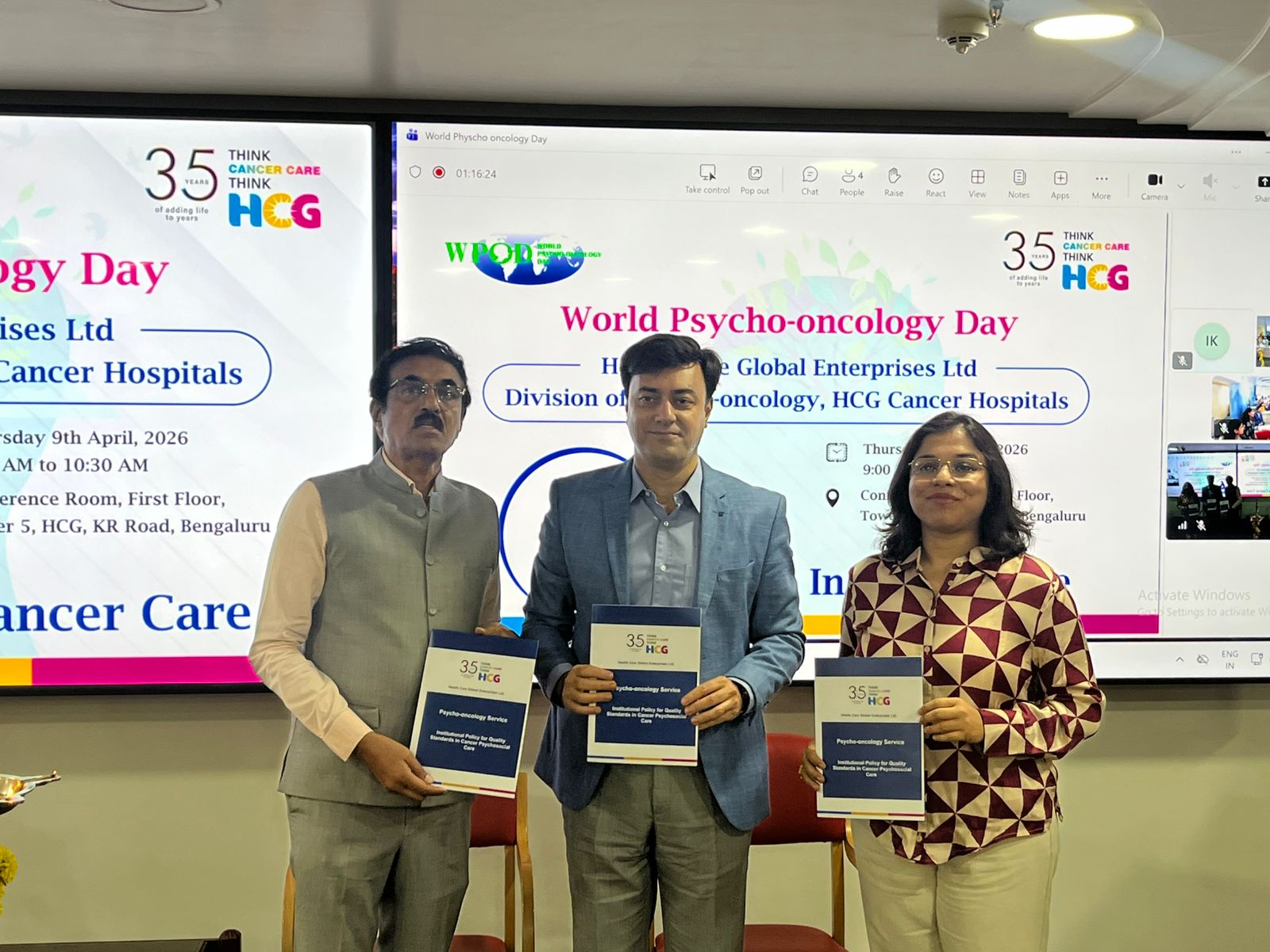
The programme focused on the increasing recognition of distress as the “6th Vital sign” in oncology, highlighting the need to systematically assess and manage the emotional and psychological burden experienced by cancer patients and their caregivers.
During the discussions, experts highlighted that a significant proportion of cancer patients experience varying degrees of distress, which can directly impact treatment adherence, clinical decision-making, and overall quality of life. Despite this, distress often remains underdiagnosed and undertreated in routine oncology settings.
The importance of the international guidelines and recommendations of the National Comprehensive Cancer Care Network (NCCN) and the International Psycho-Oncology Society (IPOS) for routine distress screening and timely psychosocial intervention as a standard component of cancer care was emphasised.
Emphasising the importance of a more comprehensive approach to cancer care, Dr. B. S. Ajaikumar, Founder and Chairman, HealthCare Global Enterprises Ltd., said:
“As cancer care evolves, it is essential to recognise that clinical outcomes are closely linked to a patient’s emotional well-being. Addressing distress is not optional, it is fundamental to delivering comprehensive, patient-centric care. Structured screening and timely support can significantly improve how patients cope with treatment and recovery.”
Dr. Manish Mattoo, CEO & Executive Director, HealthCare Global Enterprises Ltd., said:
“Cancer care is as much about healing the mind as it is about treating the body, and this reality is reshaping the way oncology must be practiced today. We have taken a major step in developing an institutional policy quality standard for cancer psychosocial care, which was released today. This mandates routine distress screening for all patients and their families and address their psychosocial needs. At HCG, we have always believed that the future of oncology lies in a deeply human, multidisciplinary approach, where science and empathy go hand in hand. The learnings from this platform will help drive a more responsive and compassionate care ecosystem, ultimately enabling better outcomes and experiences for patients and their families.”
Reinforcing the operational and patient-centric impact of such initiatives, Ms. Manisha Kumar, COO – Karnataka, HCG Cancer Hospital, said:
“Cancer care today had to go beyond clinical treatment to truly centre the patient’s overall well-being. Recognising distress as the sixth vital sign was an important step towards more compassionate, holistic care. At HCG, we remained committed to embedding psychosocial support into every stage of the patient journey, ensuring that no individual navigated cancer feeling unheard or unsupported. Initiatives like this workshop were crucial in equipping our teams to address not just the disease, but the person behind it.”
The workshop, led by Dr. Brindha Sitaram, Group Director – Psycho-oncology Services, HCG Cancer Hospital, included hands-on training sessions aimed at equipping healthcare providers with practical tools to identify and manage distress within clinical workflows. Participants were trained on validated screening methods such as the Distress Thermometer (NCCN version 2025), interpretation of distress indicators, and appropriate referral pathways for psychosocial support. The sessions also included practical demonstrations, role-plays, and training on distress screening across the cancer continuum, including End-of-life care, grief and bereavement management, as well as care for paediatric and young adult patients.
Speaking on the outcomes of the workshop, Dr. Brindha Sitaram said:
“One of the key takeaways from today’s sessions is the importance of early identification and timely intervention. By integrating distress screening at critical points in the patient journey, we can ensure that emotional challenges are addressed alongside medical treatment, leading to more patient-centred care delivery.”
The programme also featured interactive role-play exercises and case-based discussions, enabling participants to strengthen their approach to handling sensitive patient interactions, including conversations around diagnosis, prognosis, and treatment-related anxiety.
The event brought together experts for the Stakeholders Roundtable deliberation on Management of the 6th vital sign and its importance in day-to-day clinical practice. specialists emphasised the need for stronger collaboration between oncology, psycho-oncology, and integrative oncology teams, along with the development of structured institutional protocols for distress screening and management. The panel discussion brought together experts across oncology, psycho-oncology, management, and patient advocacy to discuss a more integrated and multidisciplinary approach to cancer care.
The discussions underscored HCG’s continued focus on advancing patient centric cancer care, ensuring that emotional and psychological well-being is integrated into standard oncology practice, alongside clinical treatment.
