

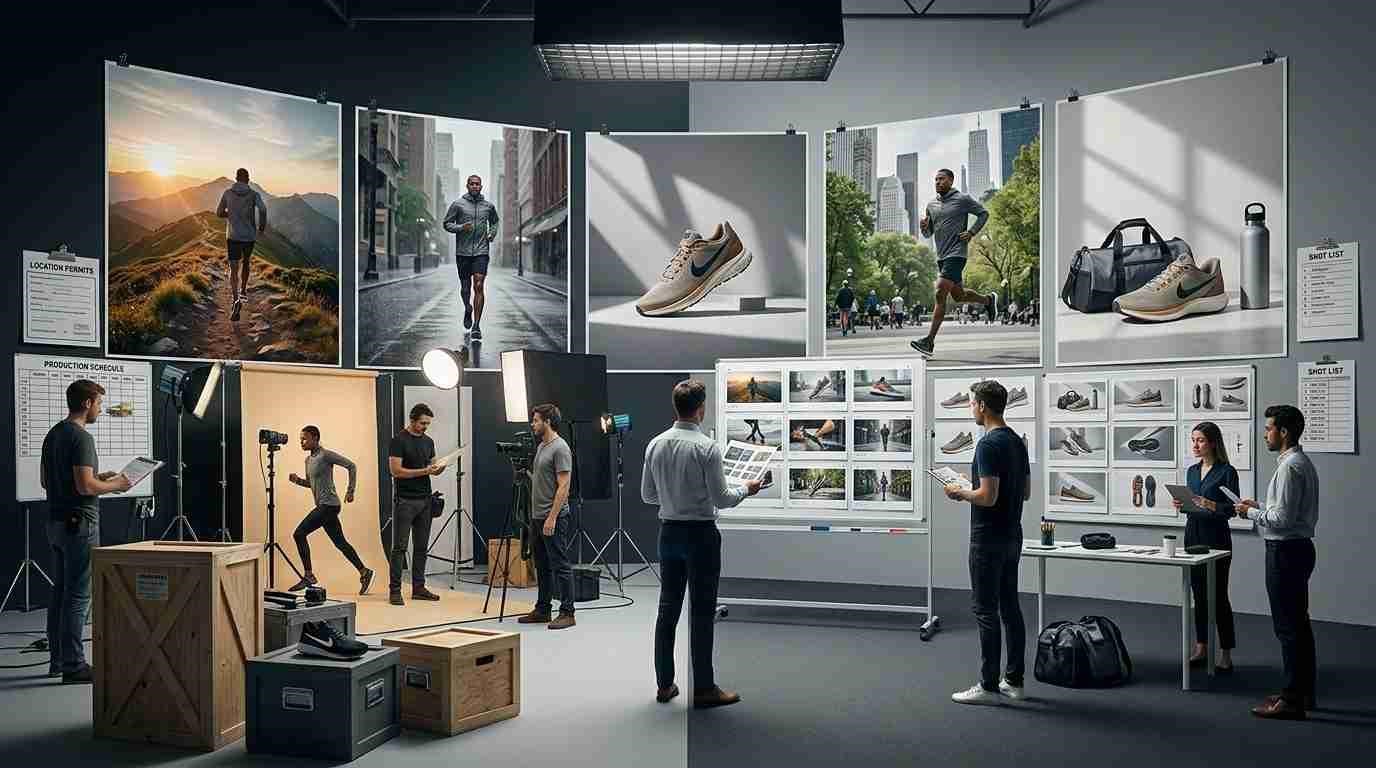
Marketing budgets have always had to stretch furthest at the production stage, the point where a campaign idea actually becomes a finished video ad. That’s where a growing number of businesses are now turning to an advanced platform like Higgsfield that holds access of AI Video Generator which eases the work by fulfilling all your visual requirements instead of a traditional production budget that requires too much work hassle and multiple individuals maintaining and helping the shift flow naturally.
That shift matters because video production has traditionally been one of the largest, least flexible line items in a marketing budget, a fixed cost that scales poorly the moment a business needs more than a handful of campaigns a year, regardless of how much overall marketing spend actually grows or how many new products the business adds to its lineup throughout the year.
Why Has Video Production Become the Most Expensive Part of Modern Marketing?
Video consistently outperforms static content across nearly every platform, from social feeds to product pages to paid advertising, which has made it a genuine requirement for competitive marketing rather than an optional extra reserved for larger campaigns with bigger budgets behind them. That shift has put real pressure on budgets, since video has always been the most resource-intensive format to actually produce, regardless of how small or targeted a given campaign happens to be, or how modest the overall marketing spend behind it actually is.
Unlike a written ad or a static graphic, a video campaign traditionally requires casting, filming, and editing before a single version is ready to run, and that cost multiplies with every additional platform format, every seasonal refresh, and every new product line a business wants to market to its audience. For businesses without an in-house production team, that cost has historically limited how much video content they could realistically produce in a given quarter.
What Has Kept High-Quality Video Out of Reach for Many Businesses?
Commissioning a traditional video production typically means a one to two week turnaround per concept, plus the cost of casting, shooting, and editing, expenses that add up quickly for a business running multiple campaigns simultaneously across different products, regions, or seasons throughout the year. That cost structure has forced marketing teams into a familiar tradeoff, producing polished video for a handful of flagship campaigns while relying on lower-effort content, or no video at all, for everything else.
As covered in Business News This Week’s own reporting on AI and social commerce reshaping digital marketing, businesses are increasingly expected to deliver personalized, platform-specific content at a pace traditional production timelines were never built to support in a fast-moving, always-on marketing environment. That expectation has made the production bottleneck even more visible, since the demand for video content has grown faster than most businesses’ capacity to produce it affordably at the scale that expectation now requires.
How Are AI Video Generators Actually Cutting That Cost?
AI video generation addresses this gap by removing the dependency on a traditional production cycle entirely. Instead of briefing a production team and waiting on casting, filming, and editing, a business can generate a finished video directly from a product description or campaign brief, with the underlying platform handling the creative execution in a single pass rather than a multi-week production timeline that eats into an already tight launch schedule.
This matters most for the kind of ongoing, high-volume production that modern marketing genuinely requires but traditional budgets have rarely accommodated, testing multiple creative directions for the same campaign, refreshing content for different platforms, and producing video for products or campaigns that would never have justified a full traditional shoot on their own economics, even when the underlying product genuinely deserved better marketing support than it received.
How Does Higgsfield Fit Into a Business’s Marketing Workflow?
Rather than functioning as a narrow, single-purpose video tool, Higgsfield operates as a broader AI creative suite, bringing video generation together with image, voice, and upscaling tools inside one platform. For a business, that breadth matters because a marketing campaign rarely needs video alone, a launch might also need matching product imagery, social graphics, and platform-specific variations, all producible from the same Higgsfield workspace rather than several separate vendors each managing a different piece of the campaign.
Higgsfield brings together multiple leading AI video models inside one workspace, letting a marketing team match a specific model’s style to a specific campaign rather than being limited to a single fixed aesthetic across every piece of content they produce. That flexibility fits directly into the broader shift toward personalized, platform-specific content that businesses are increasingly expected to deliver today, where a single generic video no longer performs the way a tailored one does across different channels and audiences.
What Capabilities Matter Most for Cutting Production Costs?
A handful of specific features determine whether an AI video generator actually holds up for the demands of ongoing business marketing production.
Turning a Product or Brief Into a Finished Video Without a Shoot
Higgsfield lets a marketing team generate a finished video directly from a product description or a written brief, without booking a crew, a location, or actors for every piece of content the campaign calendar calls for. That matters directly for businesses running frequent campaigns, where commissioning a separate shoot for every product or promotion was never financially realistic under a traditional production model, no matter how strong the underlying campaign idea actually was.
Producing Multiple Ad Variations Within the Same Budget
Because generation cost per video is a fraction of a traditional shoot, a marketing team can test several creative directions, different hooks, different visual styles, before committing further budget to a single approach, all on Higgsfield within the same working session rather than across separate booked shoots. That kind of testing has traditionally required separate production budgets for each variation, making it something only larger, better-funded marketing teams could realistically afford to do properly.
Adapting One Video Across Every Platform a Campaign Needs
A single campaign typically needs different formats for different platforms, a square format for a product page, a vertical cut for social, a widescreen version for a display ad, each with its own specific dimensions and pacing requirements. Higgsfield supports reframing and upscaling from the same source generation, letting a business produce every version a campaign requires from a single piece of source content rather than commissioning separate production work for each individual platform.
How Should Businesses Measure Whether the Switch Actually Pays Off?
This is worth addressing directly and honestly, since a lower cost per video only matters if the resulting content actually performs at a comparable level to what it’s replacing. A business shouldn’t judge AI-generated video purely on production savings without also tracking whether it drives comparable engagement, conversion, and brand perception against what traditional production delivered on similar campaigns in the past.
The businesses getting the most reliable results from tools like Higgsfield tend to run a direct comparison early, testing an AI-generated version against a recent traditionally produced campaign on the same platform, rather than assuming the cost savings alone justify the switch without any further scrutiny. That comparison usually settles the question quickly, since the performance gap between AI-generated and traditionally produced video has narrowed considerably for the kind of everyday campaign content most businesses actually need on a routine basis, even if flagship campaigns still benefit from a more traditional approach.
How Does This Compare to a Traditional Video Production Budget?
The practical gap between a traditional production budget and AI-generated video becomes clear once cost and volume enter the picture, a gap platforms like Higgsfield are specifically positioned to close for businesses of every size.
| Factor | Traditional Video Production | AI Video Generation with Higgsfield |
| Cost per video | Casting, filming, and editing fees | A fraction of that cost within a subscription plan |
| Turnaround | One to two weeks per concept | Minutes per generated video |
| Testing multiple directions | Requires separate shoots for each concept | Multiple versions generated from the same brief |
| Scaling across campaigns | Cost multiplies with every new campaign | Scales without a proportional cost increase |
| Best suited for | Flagship brand campaigns | Everyday, ongoing marketing content |
That comparison doesn’t remove the value of a traditional production for a business’s most important, highest-visibility campaigns, where a genuine creative concept and physical production still carry weight with certain audiences and stakeholders. What changes is how much of a business’s everyday marketing video, the bulk of routine campaign content rather than a handful of flagship pieces, realistically needs to depend on that heavier process at all, freeing up whatever traditional production budget remains for the campaigns that genuinely warrant it.
Which Businesses Stand to Save the Most?
Small and mid-sized businesses without a dedicated in-house production team stand to save the most directly, since AI video generation removes the single biggest cost barrier standing between a marketing plan and content that can actually compete with larger, better-resourced competitors in the same category. Businesses running frequent promotions or managing a large product catalog benefit similarly, since the cost of traditional production has historically limited video coverage to only their highest-priority items, leaving the rest of a catalog underrepresented and less competitive online.
Marketing agencies managing multiple client accounts across different industries also stand to benefit, using a single Higgsfield workspace to produce distinct campaign content across several clients without commissioning separate production work for each one they represent across different industries and target audiences. Businesses expanding into new markets or platforms simultaneously gain particular value, since producing consistent, platform-specific video across several new channels at once has traditionally required a production budget most growing businesses don’t have readily available upfront, especially while they’re also absorbing the cost of the expansion itself and everything else that comes with entering a new market.
How Can a Business Get Started?
Higgsfield is free to start with, offering daily generation credits that let a marketing team test the platform against a single upcoming campaign before committing further. A practical starting point is taking one campaign already planned for the coming weeks and generating a video from the existing brief, comparing the result and the cost directly against what commissioning a traditional production for that same campaign would have required, giving the team a concrete, measurable comparison rather than an abstract sense of the savings.
Businesses managing a larger, ongoing marketing calendar benefit from testing across a few different campaign types before deciding how broadly to build AI video generation into a regular production workflow, since results can vary depending on the product category and how detailed the original brief actually is going into the process. A campaign with a clearly defined creative direction tends to produce more immediately usable results than one still being worked out, which is exactly why nailing down that direction first tends to pay off before generating a full set of campaign assets around it.
What Does This Mean for Marketing Budgets Going Forward?
As businesses continue facing pressure to produce more personalized, platform-specific content without a proportional increase in marketing budget, the gap between what a large, well-resourced company and a smaller business can produce is likely to keep narrowing. That shift doesn’t eliminate the value of traditional production for a business’s flagship campaigns, but it does mean the everyday work of producing marketing video no longer needs to consume the disproportionate share of a budget it traditionally has.
For businesses of every size navigating the same pressure to do more marketing with less, that shift is likely to matter considerably, not by replacing genuine creative strategy, but by closing the cost gap that has historically separated which businesses could afford to compete on video and which ones couldn’t. Platforms structured around that shift, Higgsfield among them, are becoming part of how that gap gets closed for businesses that never had a production budget to match their larger competitors in the first place, particularly in markets where video has become the default way customers discover and evaluate a brand before ever making contact with it directly.