

For years, haircut decisions have depended on a surprisingly unreliable system: inspiration, memory, and guesswork.
A person sees a look on social media, saves a few photos, walks into a salon, and tries to imagine how the same style will translate onto a different face, different hair texture, and different daily routine. Sometimes the result is close enough. Often, it is not.
That gap between inspiration and outcome is exactly why haircut selection is becoming a meaningful use case for consumer AI. What looks like a beauty decision on the surface is actually a personalization problem. And personalization is where digital tools tend to gain traction fastest.
Search demand around hairstyles for every face shape reflects that shift. People are no longer just looking for trend lists. They are looking for decision support.
The Real Problem Was Never a Lack of Hairstyles
Consumers have never lacked options.
The internet is full of hairstyle galleries, celebrity references, salon portfolios, and social content built around transformation. The issue is not access to ideas. The issue is filtering those ideas in a way that makes them useful.
A haircut can fail for several reasons at once. The shape may not suit the face. The length may not work with the person’s hair density. The fringe may look polished in a photo but require daily styling that the user will never maintain. A trend may look impressive on camera but feel visually wrong in person.
This is what makes haircut choice more complex than standard beauty browsing. It is not just discovery. It is evaluation.
That evaluation layer is where AI becomes relevant.
Beauty Tech Is Moving From Playful Filters to Practical Decisions
Much of beauty technology started as entertainment.
Users tried filters, changed hair color digitally, or experimented with highly stylized edits for curiosity rather than serious planning. But that phase is maturing. The more durable category is not novelty. It is practical visualization.
Consumers increasingly expect technology to reduce uncertainty before they commit money, time, or identity to a change. That pattern already exists in eyewear try-ons, furniture placement tools, and makeup previews. Hair is simply a more emotional version of the same behavior.
A haircut is not a small purchase decision. It affects appearance every day, cannot be reversed immediately, and often shapes how someone presents themselves socially and professionally. That makes it highly suitable for pre-decision technology.
In that context, hairstyles for every face shape stop being just a search phrase and start becoming part of a broader beauty-tech workflow.
Face Shape Is Valuable Because It Simplifies Personalization
The role of face shape in haircut advice is sometimes misunderstood.
It is not useful because people want rigid rules. It is useful because it creates a simple framework for visual balance. A haircut can lengthen the face, soften angular features, widen the silhouette, reduce heaviness near the cheeks, or move attention toward or away from certain areas.
Without that framework, haircut selection becomes vague. With it, users can begin to understand why one style feels more convincing than another.
That is why hairstyles for every face shape remain relevant even in a more tech-driven environment. Face shape is not the final answer, but it is a strong input signal. It helps turn random inspiration into structured comparison.
From a product perspective, that matters. Good personalization tools work best when they translate subjective taste into clearer variables. Face proportions are one of those variables.
What AI Changes in the Haircut Decision Process
The biggest improvement AI brings is not that it “creates new hairstyles.” It changes how people make decisions.
Instead of relying entirely on imagination, users can move through a more practical sequence:
- identify facial proportions
- compare multiple hairstyle directions visually
- reduce mismatch between reference photos and real-life features
- test ideas before making an offline commitment
This is especially important because haircut regret usually begins before the haircut itself. The wrong choice is often made at the inspiration stage, when the user confuses a style they admire with a style that will actually suit them.
AI helps slow that mistake down.
It gives the user a chance to compare shapes, lengths, and framing effects before a stylist ever picks up scissors. That does not remove human creativity from the process. It simply improves the quality of the starting point.
Why the Consumer Experience Matters More Than the Technology Demo
Many AI products impress users once and then lose relevance. The reason is simple: they demonstrate capability, but not utility.
Hair-related tools are more likely to stick when they solve a recurring consumer problem. Choosing a haircut is one of those problems because it combines uncertainty, self-image, and visible risk.
The most useful products in this category are not the ones that produce the flashiest output. They are the ones that reduce hesitation. A better user experience here means helping someone answer questions such as:
Will this cut make my face look wider?
Will bangs help or overwhelm my features?
Will shorter hair sharpen the look or throw off balance?
Will this style still make sense with my natural texture?
Those are not entertainment questions. They are decision questions.
That difference is why this category has more long-term potential than many lightweight beauty filters.
The Strongest Products Will Blend Visualization With Analysis
A simple try-on is helpful, but it is often not enough on its own.
Users do not just want to see a hairstyle pasted onto a photo. They want context. They want a reason to trust what they are seeing. That is why the stronger product direction in this space is likely to combine visual preview with structured analysis.
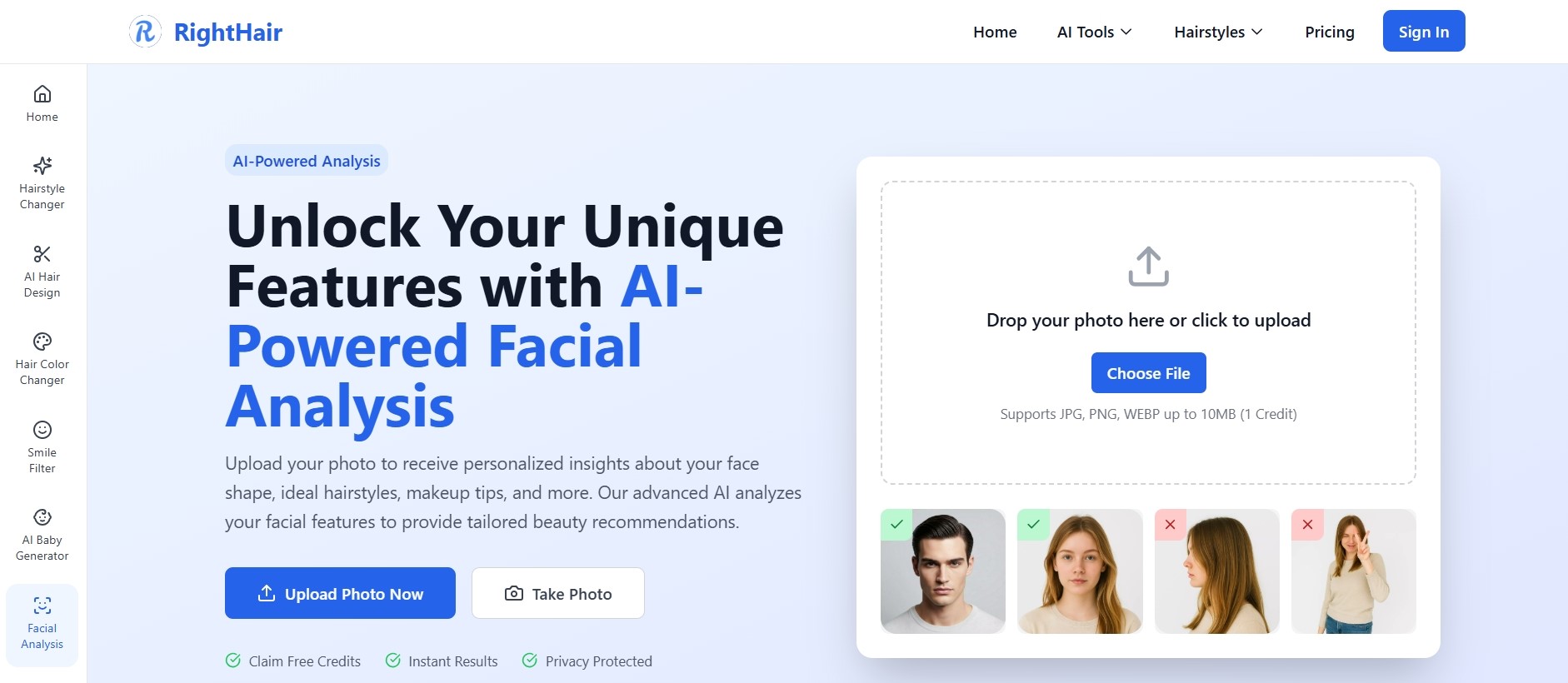
When an AI hairstyle try-on experience is paired with face shape analysis for haircuts, the interaction becomes more than cosmetic experimentation. It becomes a guided comparison.
That is the difference between playful exploration and productized decision support.
Platforms such as Righthair.ai sit in that more practical layer of the market. The value is not only that users can test looks online. The value is that they can make more informed decisions before committing to a change in real life.
Human Stylists Still Matter — But the Workflow Is Changing
None of this means AI replaces stylists.
Texture behavior, growth patterns, damage history, maintenance habits, and technical execution still require human judgment. A strong stylist can read details that software cannot fully capture, especially when the decision involves major transformation rather than simple comparison.
But the role of the consultation is shifting.
Instead of arriving with a random reference photo, more users will arrive with narrower, better-tested preferences. They will know whether they want softness, width, lift, or cleaner framing. They will have eliminated some mismatched options before the appointment starts.
That makes the salon conversation more efficient and often more realistic.
In other words, AI may not replace professional expertise, but it can improve the quality of consumer input.
Why This Category Has Room to Grow
The long-term opportunity here is larger than haircut simulation alone.
Beauty-tech products that survive tend to do three things well: they reduce uncertainty, personalize the experience, and fit naturally into an existing consumer behavior. Haircut choice already has all three conditions.
People are already searching, comparing, saving examples, and second-guessing themselves. They are already trying to solve the same problem repeatedly: how to choose something flattering without taking unnecessary risk.
That makes hairstyles for every face shape a surprisingly strong bridge between beauty content and applied AI. It connects an old consumer need with a newer product capability.
As the category matures, the most successful tools will likely be the ones that feel less like novelty software and more like trusted decision infrastructure.
From Inspiration Economy to Decision Economy
The internet has given consumers endless beauty inspiration.
What it has not always provided is a reliable way to decide.
That is why the next phase of beauty tech is likely to be less about spectacle and more about confidence. Users do not just want more hairstyle content. They want a clearer path from interest to action.
AI fits that need well because haircut choice is fundamentally a preview problem. The more accurately a platform can help users compare possibilities before committing, the more practical it becomes.
Seen this way, the future of hair technology is not just about trying on looks for fun. It is about turning uncertainty into a better decision.
And that is what makes this one of the more credible consumer AI categories to watch.