
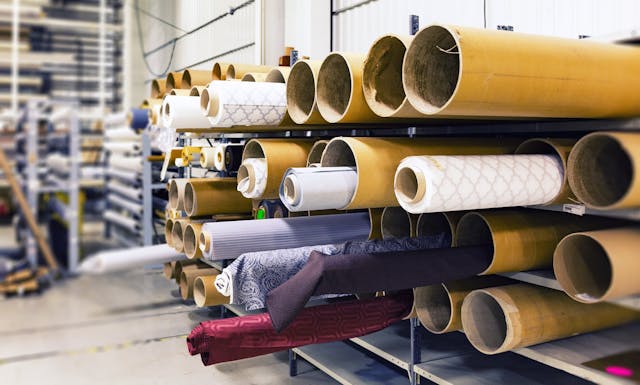

New Delhi: India’s textile sector, historically a cornerstone of the nation’s economy, is undergoing a profound transformation. Once seen primarily as a traditional industry, it is now emerging as a dynamic, job-creating, and people-centric engine of growth, embodying the vision of Aatmanirbhar Bharat.
Prime Minister Shri Narendra Modi recently shared an article by Union Minister of Textiles, Shri Giriraj Singh, highlighting the sector’s journey from its legacy roots to becoming a powerful contributor to economic development, employment, and skill-building. The article emphasizes how strategic government initiatives are driving modernization, investment, and global competitiveness.
A Century-Old Legacy Meets Modern Vision
India’s textile industry has a rich history, spanning centuries as a hub of craftsmanship and trade. From handlooms to industrial mills, textiles have been integral to employment generation and export earnings. Today, the sector is poised for unprecedented growth, blending traditional skills with advanced manufacturing technology.
Union Minister Shri Giriraj Singh notes that this transformation is not only economic but people-centric, ensuring that growth translates into sustainable livelihoods, particularly in semi-urban and rural areas where a significant portion of the workforce is employed.
Government Initiatives Powering the Next Wave
The government has introduced several initiatives to modernize the textile ecosystem and enhance its global competitiveness:
-
PM MITRA Parks – These mega textile parks are designed to integrate the entire production chain, from fibre to finished garments. By providing world-class infrastructure, fostering innovation, and clustering manufacturing units, MITRA Parks aim to boost efficiency, attract investment, and generate large-scale employment.
-
Production-Linked Incentive (PLI) Schemes – Under the PLI framework, the government incentivizes domestic production of high-value textiles, encouraging companies to expand manufacturing, adopt cutting-edge technology, and explore export markets. This initiative is creating opportunities for both large-scale manufacturers and MSMEs, enhancing India’s position in global value chains.
-
Free Trade Agreements (FTAs) – New trade agreements are opening up international markets for Indian textiles, enabling the sector to increase exports and gain a competitive edge. By reducing trade barriers and offering preferential access, FTAs support economic growth and employment generation across multiple regions.
Employment and Skill Development: A People-Centric Approach
A key highlight of the textile sector’s revival is its focus on people and skills. Modernization is accompanied by targeted training programs that equip workers to handle advanced machinery, embrace digital manufacturing, and meet international quality standards.
By linking traditional craftsmanship with technology-driven production, the sector is not only creating jobs but also empowering communities, particularly youth and women. PM MITRA Parks and other government initiatives are expected to generate millions of new employment opportunities, contributing to inclusive economic growth.
Driving Economic Growth and Regional Development
The revitalized textile sector contributes significantly to India’s economic growth. As a labour-intensive and export-oriented industry, textiles stimulate growth in allied sectors such as logistics, chemicals, and retail. Increased manufacturing capacity, technological upgrades, and export expansion are helping the sector emerge as a major driver of India’s industrial and economic development.
With a strong domestic and global demand for Indian textiles, the sector not only boosts GDP but also strengthens India’s position as a key player in international markets. By attracting private investment, promoting exports, and enabling skill development, textiles are playing a central role in regional development and employment creation.
Sustainability and the Future of Indian Textiles
The future of India’s textile sector lies in sustainable and inclusive growth. Modern policies are encouraging environmentally responsible practices, reducing waste, and improving energy efficiency in production. Initiatives like PM MITRA Parks also focus on cluster-based development, ensuring smaller manufacturers and local communities benefit from growth.
By combining innovation, technology, and human capital, the sector is charting a course toward global competitiveness and self-reliance, aligned with the broader vision of Aatmanirbhar Bharat.
Conclusion
India’s textile sector exemplifies how a legacy industry can be transformed into a modern, globally competitive engine of growth. With PM MITRA Parks, PLI schemes, and trade agreements paving the way for investment and employment, the industry is poised to generate millions of jobs, strengthen regional economies, and elevate India’s export capabilities.
The revival of textiles is more than just economic growth—it is a people-centric vision, linking skill development, sustainable industrialization, and global competitiveness. As India continues to modernize this century-old industry, textiles are set to remain a key driver of prosperity, employment, and national pride for years to come.