
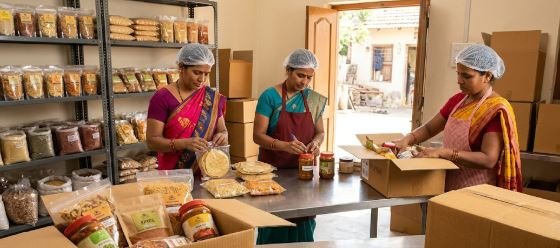
India’s regional food industry is entering a new phase of commercial growth. Products once associated mainly with local markets, family businesses and traditional food shops are finding customers across cities and states through online marketplaces, direct-to-consumer platforms and digital retail channels. This shift is creating opportunities for small manufacturers, rural entrepreneurs, self-help groups and established food brands to reach wider audiences without depending entirely on physical distribution networks.
For decades, the growth of regional food businesses was closely tied to geography. A producer in Odisha, Kerala, Rajasthan or Assam could build a loyal local customer base, but reaching consumers in distant markets often required substantial investment in distribution, retail partnerships and logistics. E-commerce is gradually changing that equation. A regional food brand can now present its products to customers in metropolitan cities and smaller towns, communicate its cultural identity online and receive orders from markets that were previously difficult to access.
The opportunity extends beyond simply selling traditional food products online. It is creating a new business environment in which regional identity, product authenticity, packaging, digital marketing and customer experience can become important commercial advantages. As India’s online consumer base expands, regional food businesses have an opportunity to turn local specialities into recognised brands and develop more sustainable revenue streams.
Regional Food Businesses Gain Access to Wider Markets
One of the most significant changes brought by e-commerce is the removal of geographical barriers for small food producers. Traditional distribution systems often require businesses to work with wholesalers, distributors and retailers before reaching consumers. These arrangements can increase costs and limit the market available to producers with modest financial resources.
Online platforms offer an additional route to market. A small manufacturer can list its products on an e-commerce marketplace, operate its own website or use social commerce channels to connect directly with customers. This makes it easier to test demand in different locations, introduce new products and expand gradually without immediately investing in a large retail network.
For regional food businesses, the commercial potential is considerable. Products such as traditional sweets, millet-based snacks, spice blends, pickles, papads, speciality flours and packaged regional meals can attract consumers who are looking for familiar flavours as well as those interested in discovering new cuisines.
The expansion of digital retail also creates opportunities for businesses to understand customer preferences through order patterns, reviews and repeat purchases. Instead of relying only on local market feedback, producers can identify which products are gaining attention in different regions and adjust their offerings accordingly.
Changing Consumer Preferences Are Supporting Demand
Consumer interest in regional and traditional food products is becoming an important opportunity for the packaged food industry. Urban consumers are increasingly exploring products associated with local cuisines, traditional preparation methods and distinctive ingredients. At the same time, people living away from their home states often seek familiar foods that are difficult to find in mainstream supermarkets.
This demand creates a market for products that combine convenience with regional identity. A customer living in Bengaluru may order traditional snacks from Odisha, while someone in Delhi may purchase speciality spices or sweets from Kerala. E-commerce makes these connections commercially possible by bringing producers and consumers together across geographical boundaries.
There is also an opportunity to serve consumers who value product differentiation. Regional food brands can compete by highlighting distinctive recipes, local ingredients, preparation methods and cultural associations. However, authenticity alone is not enough to build a successful business. Product consistency, food safety, attractive packaging and dependable delivery are equally important in converting consumer interest into regular sales.
Direct-to-Consumer Models Create New Revenue Opportunities
The growth of direct-to-consumer (D2C) commerce is giving regional food businesses greater control over how they present and sell their products. Through their own websites and digital storefronts, brands can communicate directly with customers, introduce product collections and build relationships beyond individual transactions.
This model can help businesses reduce their dependence on multiple intermediaries. It also provides access to valuable customer information, including purchasing frequency, preferred products, average order values and responses to promotional campaigns.
For a regional food manufacturer, these insights can support more informed business decisions. A company may discover that customers frequently purchase a particular spice blend in larger quantities or that a traditional snack performs especially well during festive periods. Such information can guide production planning, inventory management and marketing expenditure.
D2C businesses can also develop curated product boxes, regional food hampers, festival collections and subscription-based offerings. These formats provide opportunities to increase average order value while introducing customers to a wider range of products.
However, direct selling requires investment in website management, customer support, digital payments, packaging and order fulfilment. Businesses must therefore evaluate whether their margins and order volumes can support the additional operating costs.
Smaller Cities Are Becoming Important Consumer Markets
E-commerce growth is no longer limited to metropolitan consumers. Tier II and Tier III cities are becoming increasingly important to India’s digital retail economy as internet access, digital payment adoption and online shopping familiarity improve.
This expansion is particularly relevant to regional food brands. Consumers in smaller cities may have strong connections with local cuisines and traditional products, while online platforms provide access to food categories and brands that may not be available in nearby retail stores.
For businesses, these markets offer an opportunity to diversify revenue beyond major urban centres. Rather than depending on a limited geographical customer base, producers can reach households across different states and cities.
The opportunity also works in the opposite direction. Regional manufacturers can use digital platforms to reach consumers in metropolitan markets, including people who have relocated for education or employment but continue to purchase food associated with their home regions.
Businesses that understand regional tastes, price sensitivity and local purchasing behaviour will be better positioned to develop products and marketing strategies suited to these expanding markets.
Digital Storytelling Can Build Stronger Food Brands
Regional food products often have a story that goes beyond their ingredients. Their identity may be connected to a particular community, agricultural tradition, local recipe or preparation technique. E-commerce gives businesses the opportunity to communicate this background directly to potential customers.
Product descriptions, short videos, social media campaigns and behind-the-scenes content can help consumers understand what makes a product distinctive. A business selling traditional pickles, for example, can explain its ingredients, preparation process and regional significance. A millet-based snack producer can communicate the product’s ingredients and convenience without making unsupported nutritional claims.
This form of storytelling can strengthen brand recognition and help smaller businesses differentiate themselves from mass-market competitors. It can also build confidence among first-time buyers by providing clear information about ingredients, manufacturing standards, shelf life and packaging.
For regional food entrepreneurs, digital marketing should therefore be treated as a business investment rather than an occasional promotional activity. Consistent communication, customer reviews and responsive service can help turn one-time buyers into repeat customers.
Packaging and Logistics Will Determine Business Scalability
While online platforms create access to new markets, food businesses must ensure that products can reach customers in good condition. Packaging and logistics are particularly important for regional food products because different categories have different storage, handling and transportation requirements.
Products such as spices, dry snacks and packaged grains may be relatively easier to transport, while sweets, fresh foods and products with shorter shelf lives require more careful planning. Businesses must select packaging that protects against moisture, leakage, breakage and contamination while maintaining product quality during transit.
Food safety and regulatory compliance are equally important. Businesses selling packaged food must follow applicable Food Safety and Standards Authority of India requirements, including appropriate labelling, licensing and declarations. Clear information about ingredients, allergens, manufacturing details, shelf life and storage instructions can improve consumer confidence and reduce the risk of disputes.
Delivery costs also influence profitability. A low-priced regional product may attract online interest but become commercially difficult to sell if packaging and shipping expenses account for a large share of its price. Businesses need to calculate their contribution margins carefully, explore suitable logistics partnerships and consider bundled orders where appropriate.
E-Commerce Is Creating Opportunities for Rural Entrepreneurs
The expansion of online food commerce can also support rural enterprises, women-led businesses, self-help groups and small-scale producers. Many communities have long produced traditional food items for local consumption and nearby markets. Digital platforms offer an additional channel through which these products can reach customers beyond their immediate surroundings.
This creates opportunities for income diversification and enterprise development. Small producers can potentially increase sales, develop product identities and create employment in processing, packaging, quality control and distribution.
Government initiatives supporting food processing and micro-enterprises can complement this development. Programmes such as the Pradhan Mantri Formalisation of Micro Food Processing Enterprises scheme are intended to strengthen micro food-processing businesses through support for formalisation, capacity building, branding and marketing.
The Open Network for Digital Commerce (ONDC) is also part of India’s broader effort to expand access to digital commerce. Such infrastructure can help smaller sellers participate in online markets, although the actual benefits depend on onboarding, platform participation, logistics and the ability to fulfil orders reliably.
For these enterprises, digital access must be accompanied by practical business support. Training in online selling, product photography, pricing, inventory management, packaging and customer service can make a meaningful difference to their ability to compete.
Competition and Profitability Remain Key Challenges
The growing popularity of regional food products also brings stronger competition. As more businesses enter online marketplaces, visibility becomes harder to secure. Smaller brands may struggle to compete with established packaged-food companies that have larger advertising budgets, stronger distribution networks and greater purchasing power.
Price competition can create additional pressure. Discounts and promotional campaigns may generate orders, but they can also reduce margins if businesses do not account for marketplace commissions, shipping, returns, packaging and marketing costs.
Customer retention is another important challenge. A business may attract buyers through an introductory offer, but long-term growth depends on product quality, consistent taste, reliable delivery and a positive customer experience.
Working capital can also become a constraint as online demand increases. Producers may need to purchase raw materials, maintain additional inventory and invest in packaging before receiving payment for completed orders. Businesses must therefore plan cash flow carefully and avoid expanding faster than their production and fulfilment capabilities allow.
The most successful regional food brands are likely to be those that balance growth with operational discipline. Building a recognisable digital presence is important, but maintaining quality and protecting profitability will determine whether that presence becomes a sustainable business.
Turning Local Food Heritage into Lasting Commercial Value
E-commerce is giving India’s regional food industry an opportunity to move from local recognition to wider commercial relevance. It is connecting traditional producers with new customer groups, helping small businesses explore direct selling and creating fresh possibilities for rural entrepreneurs and emerging food brands.
However, the long-term potential of this market will depend on more than the availability of online selling platforms. Businesses will need to combine authentic products with professional branding, reliable supply chains, food safety standards and a clear understanding of consumer demand. Investment in packaging, technology, customer service and financial planning will be essential as brands expand into unfamiliar markets.
For entrepreneurs, the opportunity lies in identifying regional products with genuine customer appeal and developing business models that can serve demand consistently. For investors and the wider food-processing industry, the segment offers scope to support differentiated brands, local manufacturing and more inclusive supply chains.
India’s regional food products have always carried cultural and commercial value within their communities. E-commerce is expanding the market in which that value can be realised. Businesses that successfully connect local identity with modern retail standards can do more than increase online sales: they can build enduring brands, strengthen producer networks and turn regional food heritage into a competitive advantage in India’s evolving consumer economy.
