
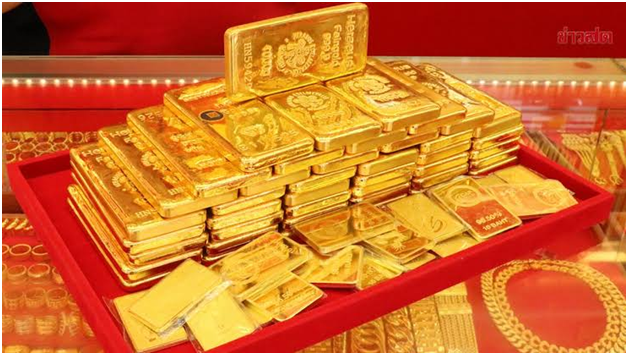
Gold is part of everyday life in Thailand. Families buy it for weddings and festivals, shoppers choose it as jewellery, and many people hold it as savings. That is why the daily gold price is a familiar number in Thai households.
The number does not stay still. It can change several times in a single day. Easy access to updated prices helps readers see what is happening in the local market, instead of guessing from old figures.
Why Daily Gold Price Information Matters in Thailand
Buyers want to know what they will pay. Sellers want to know what a shop will give them. Traders and market watchers follow each move to see where the market is heading. All of them need figures that are current.
Outdated information causes confusion. A morning price may no longer apply by the afternoon. Someone comparing a shop quotation with an old figure could think the shop is charging too much or too little. A fresh reference price removes much of that doubt.
How Thailand’s Gold Prices Are Reported
The Gold Traders Association of Thailand, founded in 1983, publishes the reference prices that many shops follow. It announces them in rounds through the day, and changes are usually made in steps of 50 baht.
Each announcement shows a selling price and a buying price. You pay the selling price when you buy. A shop pays the buying price when you sell. For gold bars, recent announcements have shown a gap of about 200 baht per baht weight.
Gold is priced by the baht weight. One baht weight of bar is 15.244 grams. Jewellery is counted at 15.16 grams. Most gold is 96.5% pure, so a baht weight of bar holds about 14.71 grams of pure gold.
Understanding Daily Price Movements in the Thai Gold Market
Several forces shape the daily price:
- International gold prices. World gold is priced in US dollars per ounce.
- USD/THB exchange rate. It turns the dollar price into baht.
- Local demand. Strong or weak buying can influence quotations.
- Economic uncertainty. Nervous markets often draw attention to gold.
- Buying and selling quotations. These can shift with each new round.
These forces work together. A rise in world gold can push Thai prices up. If the baht is weaker at the same time, the rise can be larger, because a weaker baht generally raises the domestic cost of dollar-denominated gold. A stronger baht can offset part of the move.
Busy days show this clearly. On one volatile day in July 2026, the association revised its prices 27 times, according to The Nation Thailand.
The Role of Online Platforms in Following Thai Gold Prices
Traditionally, many people learned the gold price from a shop board or a news broadcast. Online platforms have made this easier. A reader can now check the latest round on a phone within minutes.
A platform such as Rate Red shows the association’s announcements round by round, with buying and selling prices for gold bars and jewellery. It also keeps a history of past prices, charts for different periods and a calculator for estimating costs. These tools put the market in context instead of showing one number alone.
Good platforms also say where their data comes from. That helps readers judge quality. Prices shown online are for reference. They are not a quotation from a shop.
How Historical Gold Prices Help Readers Understand Market Trends
Looking back adds context. One day’s price tells you little. Seeing the last week or month shows whether a move is large or small by recent standards. The association’s records go back to 2006, and some websites publish them as daily, monthly and yearly archives.
Comparing days or periods can show how often prices swing and how they behaved when the baht moved. It can also show how calm and busy periods differ.
There is an important limit. History shows what has happened. It does not tell you what will happen next. Past patterns help you understand the market, but they are not a forecast.
| Factor | Possible influence on Thai gold prices |
| International gold price | Thai prices tend to move in the same direction. |
| USD/THB exchange rate | A weaker baht tends to raise prices. A stronger baht tends to lower them. |
| Local demand | Strong buying can support prices. Weak demand can ease them. |
| Economic uncertainty | Greater interest in gold can affect quotations. |
What to Check Before Using a Thai Gold Price Quotation
Start with the latest reference figure. A page showing the Thai gold price today lets you see the most recent round and how it compares with earlier ones that day.
Then check these points:
- Latest announced price. Make sure it is the newest round.
- Buying and selling difference. Know which price applies to you.
- Purity and weight. Check the purity, such as 96.5%, and the exact weight. Bar and jewellery baht weights differ.
- Making charges. These vary by shop and are usually not returned when you sell.
- Date and time. Note when the update was made.
- Shop differences. A shop may quote slightly differently from the reference price.
Ask for the full price, including all charges, before you pay.
Making Better Sense of Thailand’s Gold Market
Regular monitoring turns scattered numbers into a picture. Daily updates show the present. Historical records show the background. Awareness of the baht and world gold explains many of the changes in between.
Together, they help readers ask better questions about a quotation. Is the price current? Is the gap normal? Does the baht explain the move?
Conclusion
Daily Thai gold price updates give readers a reliable starting point in a market that can move many times a day. Knowing how the association reports prices, how purity and baht weight work, and how world gold and the baht interact makes those figures easier to read. Historical comparisons add context without promising what comes next. Together, they help readers compare quotations more clearly.
