
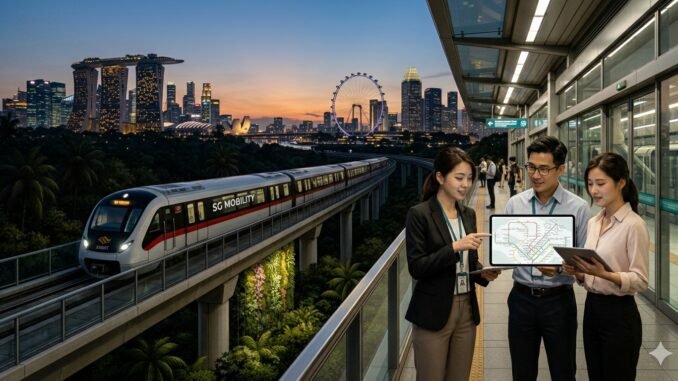
Nov 12: Singapore is strengthening its position as a regional rail technology hub as transport operators look beyond network expansion to improve railway maintenance, automation and operational efficiency. The latest partnerships announced by Siemens Mobility during Singapore Urban Mobility Week 2026 highlight this shift, bringing together international rail expertise and local engineering capabilities.
Announced on November 5, the agreements cover railway asset management, digitalisation and signalling technology. Siemens is working with SBS Transit on two Memorandums of Understanding (MoUs), while its collaboration with ST Engineering will support new metro signalling projects in Taiwan.
For businesses involved in railway engineering, automation, infrastructure software and equipment maintenance, these developments point to commercial opportunities emerging from the modernisation of public transport systems across Asia-Pacific.
Siemens Expands Rail Technology Partnerships in Singapore
Siemens Mobility announced two MoUs and new signalling contracts during Singapore Urban Mobility Week, held from November 4 to 6, 2026.
The first MoU with SBS Transit focuses on strengthening local engineering capabilities and improving railway asset lifecycle management. The proposed collaboration includes technology transfer, diagnostics and repair solutions to support the reliability and sustainability of Singapore’s rail network.
The second agreement involves Siemens and SBS Transit Mobility Ltd. It will explore opportunities in rail digitalisation, safety, sustainability and cross-border mobility initiatives. Both companies will work towards identifying industry challenges and developing solutions that could improve railway operations.
The agreements highlight the importance of building local technical expertise alongside the adoption of international railway technologies. As Singapore’s transport network grows, developing stronger maintenance and engineering capabilities will be essential to keeping operations reliable.
Signalling Contracts Extend Siemens’ Partnership to Taiwan
The Siemens announcements also have a regional dimension through contracts awarded by ST Engineering’s Urban Solutions business.
Siemens Mobility’s Taiwan branch will supply signalling systems for Taoyuan Metro’s Brown Line and Green Line Extension projects. The contracts include its Signaling X technology, along with Grade of Automation 4 (GoA4), which enables fully automated, driverless train operations.
The approximately 11-kilometre Brown Line project will include eight stations, while the Green Line Extension will connect the existing network towards Zhongli. Commissioning of the new sections is scheduled for the mid-2030s.
ST Engineering will lead project management and systems integration, combining its regional infrastructure capabilities with Siemens’ signalling technology.
The partnership demonstrates how international technology providers and regional engineering companies can work together on complex transport projects. It could also create opportunities for businesses involved in equipment supply, software integration, technical services and railway infrastructure development.
Singapore’s Rail Expansion Creates Long-Term Business Opportunities
Singapore’s investment in public transportation is providing a strong foundation for further railway technology partnerships.
According to Singapore’s Ministry of Transport, the country’s rail network is expected to reach approximately 360 kilometres by the early 2030s. Major projects include the Jurong Region Line, Cross Island Line and extensions to existing networks.
The government also aims to bring approximately eight in ten households within a ten-minute walk of a train station by the 2030s.
However, expanding the network is only one part of the challenge. Existing railway systems also require regular upgrades, reliable maintenance and technologies that can help operators identify problems before they affect passenger services.
This creates opportunities for businesses providing signalling equipment, asset monitoring platforms, engineering support, railway software and specialised maintenance services.
For companies operating in these segments, Singapore’s rail expansion offers a potential market for technology partnerships, equipment supply and long-term infrastructure support.
Reliable Report: Singapore’s Rail Reliability Taskforce Highlights the Need for Digital Maintenance
Singapore’s Rail Reliability Taskforce Report, submitted on December 30, 2025, provides important context for understanding the growing demand for railway technology and maintenance services.
The taskforce, comprising representatives from the Land Transport Authority (LTA), SMRT and SBS Transit, reviewed railway operations, asset management and service recovery following several train disruptions in 2025.
In February 2026, Singapore’s Ministry of Transport accepted its recommendations, including the need to prioritise the renewal of trains, signalling and power systems.
The report also recommended more comprehensive condition monitoring through technology and data, better management of spare components, and greater use of robotics and automation in railway maintenance.
These recommendations are particularly relevant to Siemens’ latest partnerships. Its focus on diagnostics, repair capabilities, asset lifecycle management and digital rail innovation aligns with several of the priorities identified by Singapore’s transport authorities.
For engineering companies, software developers and industrial technology providers, this creates potential demand for solutions that can improve equipment reliability, reduce maintenance delays and extend the working life of railway infrastructure.
The Ministry also confirmed that the recommendations would be implemented progressively across the rail network over the next few years, with part of the required investment supported by the S$1 billion committed to improving rail reliability.
Digital Rail Maintenance Could Become a Major Growth Segment
Railway maintenance is becoming increasingly dependent on data and digital systems. Instead of relying entirely on scheduled inspections, operators can use equipment-monitoring technologies to identify unusual performance patterns and detect potential failures earlier.
Siemens has experience in this area through its digital railway solutions and its work with transport infrastructure partners. Its wider portfolio includes asset management, operational monitoring and software designed to help operators manage railway infrastructure throughout its lifecycle.
Singapore’s own railway development also reflects this growing emphasis on technology. The Ministry of Transport has highlighted the use of condition-monitoring systems in upgraded North East Line trains to support data-driven maintenance decisions.
This shift towards digital maintenance could benefit several business segments:
- Railway software developers: Companies developing asset management platforms, predictive maintenance tools and operational analytics.
- Engineering service providers: Businesses specialising in equipment diagnostics, repair and system upgrades.
- Industrial technology companies: Suppliers of sensors, monitoring devices and connected infrastructure solutions.
- Cybersecurity providers: Companies protecting digital railway systems and connected operational networks.
- Technical training businesses: Organisations helping operators develop expertise in modern railway engineering and maintenance.
As transport networks become more connected, businesses that combine engineering knowledge with digital capabilities could find growing opportunities in the railway supply chain.
Opportunities for Regional Engineering and Technology Businesses
The latest agreements highlight the importance of regional partnerships in the railway industry.
Large transport projects often require expertise across several areas, including signalling, electrification, communications, automation and long-term maintenance. Individual companies may specialise in only some of these areas, making collaboration an important part of project delivery.
This creates opportunities for smaller engineering businesses and specialist technology providers to participate through subcontracting, equipment supply, technical services and joint development arrangements.
Several business segments could benefit from the growing demand for railway modernisation.
Railway signalling and automation: Metro expansion and modernisation require advanced train control systems, automated operations and reliable signalling infrastructure.
Asset management and maintenance: Operators need companies that can monitor equipment, manage spare parts, carry out repairs and support long-term infrastructure performance.
Artificial intelligence and industrial software: Data analytics and automated monitoring can help improve maintenance planning and identify potential operational problems.
Systems integration: Engineering companies with experience in connecting different railway technologies can support infrastructure developers and transport operators.
Workforce development: As new technologies enter railway operations, demand for technical training and specialised engineering skills is also expected to increase.
For small and medium-sized businesses, participating in established international partnerships could provide a route into larger infrastructure projects and regional supply chains.
Siemens’ Wider Asia-Pacific Projects Support Regional Growth
Singapore is an important part of Siemens Mobility’s wider Asia-Pacific activities, where governments and transport authorities are investing in metro networks, railway upgrades and automated public transportation systems.
The company’s regional projects include high-speed rail development in Vietnam, metro infrastructure in Australia, automated rail operations in Malaysia, railway signalling in Thailand and automated light rail operations in Indonesia.
In Malaysia, Siemens’ Trainguard MT technology supports driverless operations on the LRT3 Shah Alam Line. In Australia, the company has delivered its first metro train for the Sydney Metro-Western Sydney Airport project since 2006 and deployed its Railigent X digital platform in 2026.
In Singapore, Siemens’ existing projects include signalling and electrification systems for the Cross Island Line, along with long-term signalling support for the Downtown Line through 2047.
These developments demonstrate how regional rail modernisation is creating demand for integrated technology solutions, long-term maintenance arrangements and cross-border engineering partnerships.
Sustainable Mobility Becomes a Strategic Business Priority
Sustainability is also influencing how Singapore plans its public transportation network.
The Land Transport Master Plan 2040 places greater emphasis on public transport accessibility, connectivity and sustainable urban mobility. Expanding the rail network can encourage more commuters to use public transportation, while improvements in railway technology can help operators use infrastructure and energy more efficiently.
The expansion of rail services also increases the importance of managing energy consumption, maintaining equipment and making better use of existing infrastructure.
For businesses, this creates opportunities in energy-efficient railway systems, smart infrastructure, automated operations and technologies that improve the performance of existing assets.
Companies developing solutions that combine operational reliability with resource efficiency could find opportunities as Singapore and other regional markets modernise their transport networks.
What Siemens’ New Agreements Mean for Regional Mobility Businesses
Siemens Mobility’s latest agreements highlight how the railway industry is evolving beyond infrastructure construction. Maintaining existing assets, introducing digital technology and developing local engineering capabilities are becoming equally important.
Singapore’s Rail Reliability Taskforce Report reinforces this shift, particularly its recommendations on condition monitoring, automation, spare-parts management and preventive maintenance.
The partnerships with SBS Transit and ST Engineering bring these priorities into a practical business context. They also demonstrate how international technology providers and regional engineering companies can work together to address the changing requirements of urban transport systems.
As Singapore continues to expand its rail network and other Asia-Pacific economies invest in public transportation, opportunities could emerge for businesses involved in signalling, software, automation, engineering and maintenance.
For regional mobility businesses, the next phase of growth will not depend only on building new railway lines. It will also depend on the technologies, engineering expertise and specialised services that keep those networks safe, efficient and reliable.
