

June 5 : As manufacturers across the world look for ways to reduce resource consumption alongside improving environmental performance, things are changing. Circularity is becoming a really important part of how products are designed besides being manufactured & managed throughout their lifecycle. This World Environment Day, REHAU builds on progress in the use of recycled materials, reduction of emissions and saving of resources to highlight its wider approach to integrating greater resource efficiency into its operations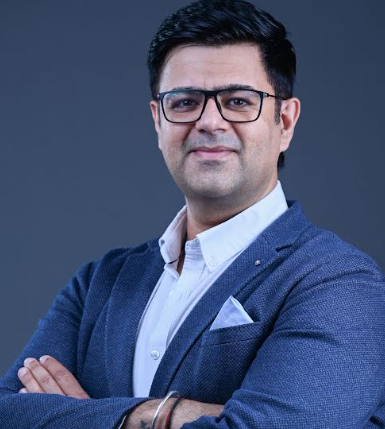
For REHAU, sustainability is closely tied to the very essence of manufacturing. It influences decisions around materials as well as energy alongside water & production processes. Through REHAU’s ‘Planet First’ concept, the company continues to drive initiatives aimed at reducing environmental impact while supporting long-term business growth.
Perhaps the best example of this is the increasing use of recycled materials across the company’s product portfolio. More than 18 percent of product composition in the company’s core business areas was made up of recycled materials in 2024, with a target of 20 percent.
These efforts are supported through REHAU RETURN, a global programme that brings together the company’s work around circularity, resource conservation and climate action. The objective is straightforward: keep valuable materials in use for longer, reduce dependence on virgin resources and improve resource efficiency across operations.
Beyond circularity, REHAU is also making progress in emissions reduction and renewable energy usage. The company has reduced its Scope 1 and Scope 2 greenhouse gas emissions by 58 percent across its global operations since 2018. 68 percent of electricity consumption is now covered by renewable electricity, and more than 20,000 tonnes of non-hazardous waste were recycled in 2024.
In India, these priorities can be witnessed through initiatives focused on water conservation and operational efficiency. At REHAU India’s Vadodara facility, more than 2.1 million litres of water are recycled annually through a closed-loop sewage treatment system. The company is also working towards reducing process water consumption by at least 20 percent as part of its ongoing efforts to optimise manufacturing operations and resource use.
Environmental considerations are integrated across sourcing, product development, manufacturing and supply chain management. REHAU’s operations are aligned with internationally recognised standards including ISO 14001 for environmental management, ISO 50001 for energy management and ISCC PLUS certification supporting circular economy practices.
Speaking on World Environment Day, Mr Tushar Verma, Executive Vice President, REHAU India & Subcon, said,
” Manufacturing businesses are being asked more significant questions nowadays than they were a decade ago. Customers along with partners as well as policymakers increasingly want to understand how products are made, where materials come from and how companies are managing their environmental impact. That shift is pushing sustainability from the side-lines into the core of business decision-making. The progress we have achieved over the years, shows years of consistent effort and demonstrate how these priorities are being translated into action on the ground. True progress comes from embedding sustainability into everyday operations – thereby continuously finding better ways to use resources.”
As industries continue to adapt to changing environmental and resource challenges, REHAU remains focused on improving material circularity besides reducing operational impact and strengthening resource efficiency across its business. Through Planet First and REHAU RETURN, the company continues to invest in practical solutions that support both manufacturing performance and environmental progress.