

Sept 17: Not every mountain holiday has to be about rushing from one viewpoint to another. Sometimes, the best part of a trip is having nowhere to be.
That is what makes Jibhi in Himachal Pradesh interesting. Tucked away in the Banjar Valley, this small mountain village has become increasingly popular with travellers looking for forests, streams, wooden homes and a quieter way to experience the Himalayas.
Jibhi is no longer a completely hidden destination, but it has retained much of the character that first attracted travellers looking for an alternative to Himachal Pradesh’s busier hill stations.
Its appeal is simple: walk through the forest, sit beside a stream, explore a nearby village, have a long breakfast and let the mountains set the pace.
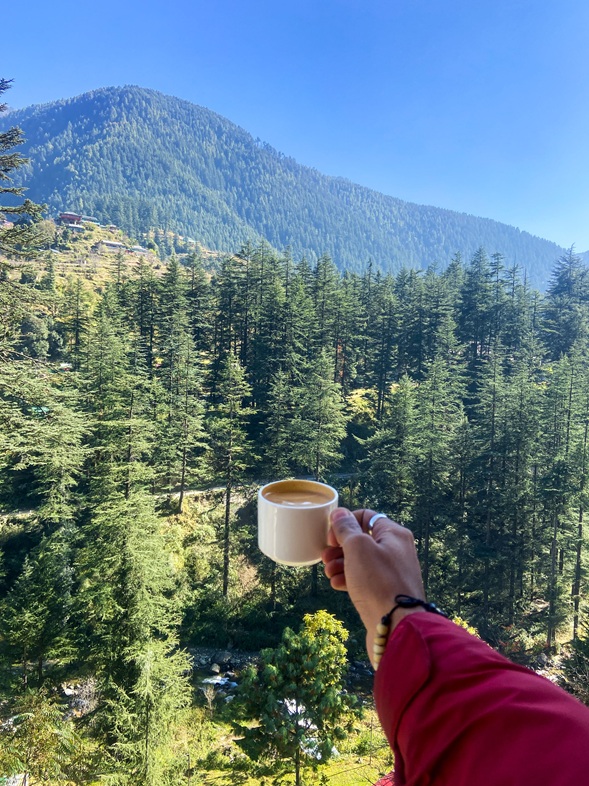
Where Is Jibhi?
Jibhi is located in the Banjar Valley of Himachal Pradesh, in the Tirthan region. Surrounded by forested hills and mountain landscapes, it provides a convenient base for exploring the surrounding countryside.
Getting there is part of the experience. The road winds through the mountains, passing forests, villages and valleys before reaching the quieter landscape around Jibhi.
For travellers arriving from larger cities, the change is noticeable. Traffic gradually gives way to mountain roads, and busy commercial areas are replaced by forests and small settlements.
What Makes Jibhi Different?
Jibhi does not depend on one major monument or attraction.
Its charm comes from the setting itself. Traditional wooden houses sit against green hills, streams run through the valley and forest paths lead towards nearby villages.
There are also cafés, homestays and small accommodations, giving visitors enough comfort without turning the village into a conventional tourist centre.
A day in Jibhi can be remarkably uncomplicated. Start with a walk, spend some time near the water, explore the village and finish the evening with views of the surrounding hills.
There is little pressure to keep moving.
Jibhi Waterfall
The Jibhi Waterfall is one of the easiest natural attractions to include in a visit.
Located within walking distance of the village, the waterfall is surrounded by greenery and offers a relatively simple nature experience. The short walk to the falls is also enjoyable, particularly for travellers interested in photography and forest landscapes.
It is the kind of attraction that does not require an entire day. Visitors can see it and still have plenty of time to explore Jibhi itself.
Walking Through Jibhi’s Forests
For travellers who enjoy walking, Jibhi offers plenty of opportunities to explore beyond the main village.
The surrounding forests provide routes for short walks as well as longer hikes. Depending on the season, visitors can encounter lush greenery, misty landscapes, mountain streams and changing views of the valley.
The absence of a rigid sightseeing schedule is part of the appeal. You can choose a trail, stop for photographs or simply spend time taking in the surroundings.
For many visitors, these uncomplicated experiences become more memorable than checking off a long list of attractions.
Jalori Pass and Serolsar Lake
Jibhi can also be used as a base for exploring Jalori Pass, a scenic mountain route in the region.
From the Jalori Pass area, travellers can take the trail towards Serolsar Lake, a forest-surrounded high-altitude lake. The route combines mountain scenery and walking through the surrounding woodland.
The trek requires reasonable preparation, and mountain conditions can change quickly. Visitors should check local weather and road conditions before planning excursions to higher elevations.
Discovering Village Life
One of Jibhi’s most appealing qualities is that the village itself becomes part of the holiday.
Staying in a homestay can offer visitors a closer connection to local communities, while nearby villages provide glimpses of traditional homes, agriculture and everyday life in the mountains.
This is where Jibhi differs from a conventional hill-station holiday. Instead of spending most of the day moving between tourist attractions, visitors can simply spend more time in the place they have travelled to see.
Himachal Pradesh Is Promoting Lesser-Known Destinations
Jibhi’s growing relevance comes at a time when Himachal Pradesh is looking beyond its traditional tourist circuit.
The Himachal Pradesh Department of Tourism & Civil Aviation has been promoting new tourism destinations and encouraging visitors to explore the state’s countryside and lesser-known areas. Its tourism portal has a dedicated “Unexplored” section highlighting destinations away from the conventional tourist circuit. Himachal Pradesh Tourism – Unexplored Destinations
An official study by the Himachal Pradesh Forest Department also discusses the promotion of offbeat destinations as a way of offering visitors new experiences while supporting local livelihoods. Himachal Pradesh Forest Department report
Jibhi fits naturally into this changing tourism landscape. Its appeal is built around forests, outdoor activities, village experiences and the opportunity to spend more time in one place.
Why Nature-Focused Travel Is Growing
Jibhi’s appeal also connects with a wider change in how people are approaching holidays.
Booking.com’s 2026 Travel Predictions, based on research involving 29,733 travellers across 33 countries and territories, found that 43% of respondents said they would travel to feel closer to nature, while 25% said quieter hobbies and opportunities for solitude were a reason to take a holiday.
The research does not specifically measure Jibhi’s popularity, but it provides useful context for the growing interest in nature-focused travel.
For destinations such as Jibhi, this can mean greater interest in forest walks, village stays, local food, photography and spending several days away from crowded tourist centres.
How to Reach Jibhi
Jibhi is primarily reached by road.
Travellers commonly approach the village from the Aut Tunnel–Aut–Banjar route, with the final stretch involving winding mountain roads. The nearest major airport is Bhuntar Airport near Kullu, while travellers arriving by train can consider rail connections towards Joginder Nagar and continue by road.
Because mountain travel times can vary with traffic, weather and road conditions, it is worth keeping some flexibility in the itinerary.
When Is the Best Time to Visit Jibhi?
Jibhi changes noticeably with the seasons.
Spring and summer bring greener landscapes and generally comfortable conditions for walking and exploring the surrounding areas.
Monsoon makes the valley particularly lush, but heavy rainfall can affect mountain roads. Travellers should check weather and local road conditions before setting out.
Autumn can bring clearer skies and pleasant conditions for outdoor activities and photography.
Winter is colder, with the possibility of snow in higher areas. Visitors travelling during winter should check road conditions and accommodation availability in advance.
How Many Days Are Enough for Jibhi?
A two- to four-day stay works well for most travellers.
Two days can cover Jibhi village, the waterfall and nearby walks. With a longer stay, visitors can explore Jalori Pass, Serolsar Lake and surrounding villages without rushing.
And that is important because Jibhi is not really a destination that rewards a packed itinerary.
The more time you leave open, the more you notice the small details that make the village distinctive.
Jibhi Is About Doing Less
Jibhi represents a different idea of a Himachal holiday.
It is not about crowded markets, a long attraction checklist or trying to cover an entire region in one weekend. It is about forests, wooden homes, mountain air, village walks and time spent outdoors.
For travellers tired of tightly planned itineraries, that can be refreshing.
The village also shows how the idea of an Indian hill holiday is changing. As more travellers explore beyond established destinations, smaller mountain communities are becoming part of the conversation around nature tourism, village stays and experiential travel.
A Different Kind of Himalayan Getaway
Jibhi may no longer be a secret, but it has not lost the quality that made travellers seek it out.
Its greatest attraction is its pace.
You can wake up to the sound of a stream, walk through a forest, stop at a small café, explore a nearby village and watch the mountains change as the day comes to an end.
There is no need to rush.
And perhaps that is exactly why Jibhi continues to attract travellers searching for a quiet place in Himachal Pradesh.
It is not necessarily about finding somewhere nobody has heard of. It is about finding somewhere that still gives you enough space to experience the mountains on your own terms.
Pic credit: Pexels