
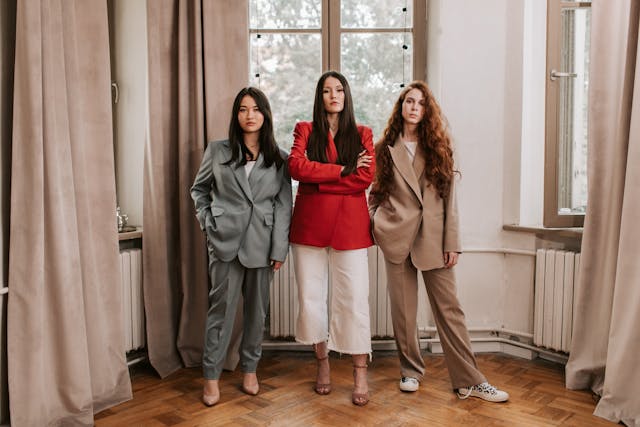

Power dressing has long been associated with structure, precision, and authority. For decades, it was defined by sharp tailoring, strong shoulders, neutral palettes, and silhouettes designed to command attention in formal spaces. Clothing functioned as armor—polished, deliberate, and often rigid. It was less about personal identity and more about fitting into an established image of power.
Today, that definition has transformed.
Power dressing is no longer about conforming to a prescribed uniform. It is about confidence rooted in authenticity. It is not dictated by tradition but shaped by individuality. The modern language of power is quieter, more nuanced, and deeply personal.
From Uniform to Identity
Historically, professional fashion emphasized structure as a visual metaphor for authority. Crisp suits, structured blazers, and pointed heels became staples of ambition. The goal was clear: signal capability, seriousness, and control.
But as workplace culture evolves, so does its wardrobe. The contemporary approach to power dressing shifts the focus from imitation to self-expression. Authority is no longer borrowed from traditional symbols; it is cultivated through clarity of identity.
Fluid tailoring now stands alongside classic suiting. Wide-leg trousers replace restrictive cuts. Monochrome ensembles share space with expressive color. The message is subtle but powerful: strength does not require stiffness.
The Rise of Intentional Style
Modern power dressing is intentional rather than prescriptive. It asks not “What should I wear to look powerful?” but “What reflects who I am while honoring the space I occupy?”
This shift has been influenced by broader cultural changes. Flexibility in work environments, the blending of digital and physical presence, and increased conversations around identity have reshaped expectations. Professional wardrobes are no longer confined to a single formula.
Quality has become central. Fabric matters. Fit matters. Craftsmanship matters. Instead of chasing trends, the emphasis is on investment pieces that communicate discernment—garments that move seamlessly between settings while maintaining presence.
Softness as Strength
One of the most significant transformations in power dressing is the embrace of softness. Where authority once relied on severity, it now welcomes fluidity.
Silk blouses, relaxed tailoring, tactile knits, and flowing coats demonstrate that elegance and strength are not opposites. Muted tones can project calm authority. Sculptural draping can feel commanding without appearing aggressive.
Soft power is not passive—it is controlled, assured, and deliberate. It suggests that confidence does not need to be loud to be undeniable.
Color, Texture, and Presence
Color has become a strategic tool in the modern authority wardrobe. While black and navy remain timeless, bold shades now communicate visibility and intention. Deep burgundy, cobalt blue, emerald green, and even unexpected pastels convey optimism and creative confidence.
Texture also plays a defining role. Structured wool, smooth leather, crisp cotton, and rich cashmere add dimension and depth. The interplay of materials creates visual interest without excess. In this landscape, detail speaks louder than logos.
Minimal branding and refined silhouettes signal a shift toward subtle luxury. Power is expressed through precision rather than proclamation.
Comfort as Control
Comfort has redefined professionalism. Ease of movement, breathable fabrics, and adaptable layering are no longer secondary considerations. They are essential.
When clothing supports the body rather than restricts it, confidence becomes natural. A well-cut blazer with soft structure, trousers with fluid drape, or refined flats that balance style and practicality all contribute to a composed presence.
Control begins with comfort. And comfort, when executed thoughtfully, elevates authority rather than diminishing it.
Inclusivity and Fluidity
Perhaps the most progressive evolution of power dressing is its inclusivity. It is no longer confined by gender, age, or strict codes of formality. Oversized tailoring, skirt-and-boot combinations, relaxed suiting, and androgynous silhouettes reflect a broader understanding of identity.
Power now accommodates diversity in expression. The modern wardrobe acknowledges that authority has many forms—and each deserves space.
Dressing with Purpose
At its core, the new language of power dressing is about alignment. Clothing becomes an extension of mindset. It reflects ambition, clarity, and self-awareness.
Whether expressed through minimalist tailoring, bold color, or quiet craftsmanship, power dressing today is less about impressing others and more about affirming oneself. It is situational, adaptable, and deeply personal.
There is no single formula. No mandatory silhouette. No universal shade of authority.
The most powerful look in any room is the one worn with conviction.
Confidence, after all, is not stitched into a garment. It is carried within—and expressed through style that feels undeniably your own.