

The way people design their homes is quietly evolving. Not long ago, creating a well-designed room or planning a home’s exterior required sketches, mood boards, and often professional help. Today, artificial intelligence has introduced a more fluid, interactive way to approach design, one that feels less technical and more intuitive.
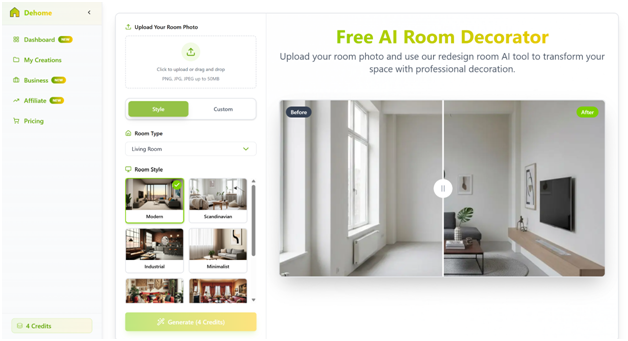
Room design AI and AI exterior design free tools are not just about generating images. They are about helping people understand space differently how it works, how it feels, and how small changes can completely reshape it.
Rethinking Room Design with AI
A room is more than walls and furniture. It’s a place where daily life unfolds where people relax, work, and connect. Designing such a space requires more than just picking items; it requires balance.
Instead of asking users to figure everything out, the system interprets the space and offers arrangements that make sense visually and functionally. It considers proportions, spacing, and alignment in ways that are often overlooked in manual planning.
You might notice how:
- Empty corners become purposeful
- Furniture aligns more naturally with movement
- Visual clutter is reduced without making the room feel empty
The result is a space that feels organized without being rigid.
A Different Way to Explore Design Ideas
One of the most interesting aspects of AI design is how it changes the way people explore ideas. Instead of committing to a single concept, users can move between styles and layouts freely.
A room can shift from modern to classic in seconds. A bold color scheme can be replaced with something softer just as quickly. This flexibility allows people to see possibilities they might not have considered before.
It turns design into a process of discovery rather than decision-making under pressure.
Understanding Space Through AI
It recognizes dimensions, lighting, and structural elements, then responds with suggestions that feel appropriate. A compact room might be opened up visually with lighter tones and minimal furniture. A larger room might be divided subtly into functional zones without adding walls.
This kind of spatial awareness is what gives AI-generated designs a sense of realism.
Exterior Design: More Than Just Appearance
While interior design focuses on comfort and usability, exterior design is about identity. It’s how a home presents itself before anyone steps inside.
Instead of imagining how a new façade might look, users can see it instantly. Different materials, colors, and structural elements can be tested without any physical changes.
This makes it easier to refine ideas and avoid choices that don’t align with the overall vision.
The Role of Detail in Exterior Design
Exterior design often comes down to details that are easy to miss. The spacing of windows, the contrast between materials, or the shape of an entrance can all influence how a house feels.

They highlight how small adjustments—like changing the tone of a wall or adding texture—can create depth and character. These are the kinds of refinements that usually require experience, but AI makes them more accessible.
Connecting Rooms to the Outside World
A well-designed home doesn’t treat interiors and exteriors as separate elements. There’s a subtle connection between the two.
Room design AI and exterior design tools help bridge that gap. A bright, open interior might naturally extend into an exterior with large windows and clean lines. A cozy indoor setting might reflect through warmer tones and softer materials outside.This continuity creates a sense of flow, making the entire home feel more unified.
Designing Without Overthinking
One of the biggest challenges in home design is overthinking. Too many choices can lead to hesitation, and hesitation can delay progress.
Instead of presenting endless options, it narrows down possibilities into designs that already make sense. Users can then adjust rather than start from scratch. This approach reduces mental effort while still allowing creative control.
A More Natural Design Process
Traditional design often follows a structured pathplan, revise, finalize. AI introduces something more flexible.
You can start anywhere. A single room, an exterior wall, or even just a color idea. From there, the design evolves naturally. There’s no strict sequence, which makes the process feel less like a task and more like exploration.
Practical Use in Everyday Life
What makes room design AI and AI Exterior Design Free valuable is their practicality. They are not limited to large projects or new homes.
They can be used for:
- Refreshing a single room
- Testing small upgrades before committing
- Visualizing renovations
- Improving the look of an existing exterior
This makes them useful for both long-term planning and quick adjustments.
The Subtle Influence of AI Suggestions
AI doesn’t force decisions, it suggests them.
Sometimes, the most useful outcome isn’t a complete design but a small idea. A different furniture angle, a new exterior color, or a layout adjustment can shift the entire feel of a space.
These subtle changes often have a bigger impact than major redesigns.
Design That Adapts to You
Every person has a different sense of style. Some prefer simplicity, others enjoy bold and expressive spaces. AI design tools adapt to these preferences over time.
As you interact with them, they begin to reflect your taste more accurately. The designs start to feel less generic and more personal, even though they are generated instantly.
A Quiet Shift in Creativity
What’s happening with AI design tools is not a dramatic replacement of traditional methods—it’s a quiet shift.
People are becoming more confident in their own ideas. They rely less on external validation and more on what feels right to them. AI simply supports that process by making ideas visible.
Final Thoughts
Designing a space, whether inside or outside, is ultimately about creating an environment that feels right. It’s not about perfection it’s about comfort, identity, and balance.
AI exterior design free tools make this process more approachable. They remove unnecessary complexity while keeping creativity intact.
Instead of replacing human input, they enhance it offering guidance without taking control.
And that’s what makes them valuable. Not because they design for you, but because they help you design better, with clarity and confidence.