
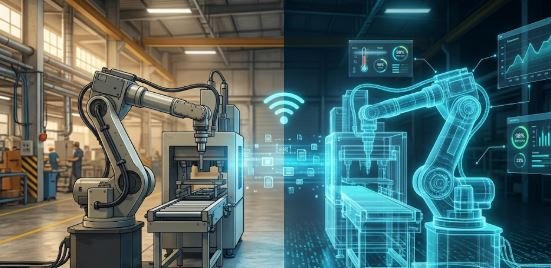
Digital twin technology is creating new opportunities for manufacturing businesses by helping them monitor machinery, improve production efficiency and reduce operational costs. By connecting virtual models of physical equipment with real-time data, manufacturers can identify problems early, improve product quality and make better investment decisions.
Manufacturing businesses are under constant pressure to produce more, control expenses and deliver better-quality products. Equipment breakdowns, production delays, rising energy bills and material wastage can affect profitability, particularly when companies operate complex production facilities.
Digital twin technology is emerging as a practical solution to many of these challenges. It allows businesses to create virtual versions of physical machines, products, production lines and entire factories. These digital models use information collected from actual operations to help manufacturers understand performance, identify inefficiencies and explore improvements before making changes on the factory floor.
What makes this technology particularly valuable is its ability to connect everyday manufacturing activities with better business decisions. Companies can anticipate equipment problems, test production changes and manage resources more effectively.
As industries increasingly embrace automation and artificial intelligence, digital twins are becoming an important part of the shift towards smarter manufacturing. The opportunities extend beyond large industrial companies to smaller manufacturers, technology startups, engineering firms and investors.
Digital Twin Market Growth Creates New Business Opportunities
The growing interest in digital twins reflects the increasing demand for connected industrial operations. The global digital twin market was valued at approximately $35.8 billion in 2025 and is estimated to reach around $49.5 billion in 2026. Long-term projections indicate considerable potential for further expansion over the coming years.
Manufacturing is an important contributor to this growth as companies look for better ways to monitor equipment, manage production and improve operational performance.
The expanding market is also creating opportunities for software developers, industrial sensor manufacturers, automation companies and engineering service providers. Businesses offering practical solutions to manufacturing challenges are particularly well positioned to benefit from this shift.
Predictive Maintenance Helps Manufacturers Reduce Costs
Unexpected machinery failures can disrupt production and create expenses that extend beyond equipment repairs. Delayed orders, wasted materials and idle employees can affect a company’s overall financial performance.
Digital twins can help manufacturers identify potential equipment problems before they lead to major breakdowns.
By monitoring information such as temperature, vibration, pressure and machine performance, businesses can recognise unusual changes and investigate them early. Artificial intelligence can further help identify patterns that may indicate equipment deterioration.
For example, if a motor begins overheating or showing unusual vibration, its digital model can help maintenance teams understand the issue and plan repairs before production is interrupted.
This approach allows manufacturers to move towards predictive maintenance instead of depending entirely on emergency repairs or fixed maintenance schedules.
The result can be better equipment utilisation, fewer production interruptions and more controlled maintenance expenses.
Virtual Factory Planning Reduces Investment Risks
Setting up a new manufacturing facility or expanding an existing production line requires significant investment. Decisions involving machinery, factory layouts and production capacity can have long-term financial consequences.
Digital twins allow businesses to examine these decisions in a virtual environment before committing substantial capital.
Manufacturers can test different factory layouts, evaluate equipment placement and examine how changes in production schedules may affect output. Engineers can also simulate machinery performance and identify potential technical issues before installation.
This helps businesses make more informed decisions about factory expansion and equipment purchases.
For companies planning to increase production capacity, virtual simulations can reveal whether existing infrastructure can support additional demand or whether new investment is necessary.
Better planning can reduce unnecessary expenditure, minimise installation delays and improve the overall return on manufacturing investments.
Better Quality Control Improves Customer Confidence
Maintaining consistent product quality is essential for manufacturers that want to secure repeat orders and build long-term business relationships.
Defective products can increase material wastage, inspection expenses and warranty costs. They can also affect a company’s reputation, particularly when supplying components to large industrial customers.
Digital twins help businesses understand how different production conditions influence product quality. By connecting manufacturing information with product performance, engineers can investigate the reasons behind defects more effectively.
If a particular batch fails quality checks, manufacturers can examine the production conditions, machine settings and material inputs associated with that batch.
This makes it easier to identify recurring problems and introduce corrective measures.
For industries such as automobiles, electronics and precision engineering, improved quality management can help manufacturers reduce losses and strengthen their competitiveness.
Energy Efficiency Supports Sustainable Manufacturing
Energy is a significant operating expense for manufacturing businesses, particularly those that depend on heavy machinery and continuous production.
Digital twins can help companies understand how electricity is consumed across different machines and production activities.
By examining energy usage alongside production output, manufacturers can identify equipment that consumes excessive power and explore more efficient operating arrangements.
For instance, a factory can evaluate whether changing machine operating schedules or improving equipment performance could reduce electricity consumption without affecting production.
These insights can help businesses control utility expenses, reduce resource wastage and improve environmental performance.
The growing focus on sustainable manufacturing is also creating opportunities for companies offering smart energy management, industrial monitoring and automation solutions.
SMEs Can Benefit From Digital Twin Technology
Digital twin technology is not limited to multinational manufacturers with large technology budgets. Small and medium-sized businesses can also benefit by introducing it gradually.
An SME does not need to create a digital replica of its entire factory. It can begin with one important machine or production process where equipment failures, delays or inefficiencies create significant expenses.
A small engineering company, for example, can use digital monitoring to understand machinery performance and plan maintenance more effectively. A component manufacturer can use virtual models to test product designs before spending money on physical prototypes.
Starting with a specific business requirement makes implementation more manageable and allows companies to measure the benefits.
This is also creating opportunities for technology providers to develop affordable solutions for smaller manufacturers. Software companies, industrial consultants and automation specialists can support SMEs that want to modernise their operations without making large upfront investments.
New Opportunities for Technology Companies and Investors
The growing adoption of digital twins is creating demand across several areas of the technology industry.
Software developers can build virtual modelling and simulation platforms, while sensor manufacturers can provide equipment that collects real-time operational information. Artificial intelligence companies can develop tools to analyse this information and help businesses improve their decisions.
There are also opportunities for cloud service providers, industrial cybersecurity companies and engineering consultants.
Another emerging opportunity is the development of service-based business models. Machinery manufacturers can use digital twin technology to offer remote monitoring, maintenance assistance and equipment performance services to customers.
This allows companies to generate additional revenue beyond the traditional sale of industrial equipment.
For investors, the opportunity extends to businesses providing the technology and services required for manufacturing digitalisation. Solutions that deliver measurable improvements in productivity, equipment reliability and operating costs are likely to attract greater commercial interest.
India and Asia-Pacific Can Benefit From Smarter Manufacturing
The growing adoption of digital manufacturing is particularly relevant to India and the wider Asia-Pacific region.
India’s efforts to strengthen domestic manufacturing through initiatives such as Make in India and the Production Linked Incentive schemes are encouraging investment across electronics, automobiles, pharmaceuticals and other industrial sectors.
As manufacturing facilities become more advanced, businesses will increasingly need technologies that improve production planning, equipment management and quality control.
Digital twins can support this development by helping companies monitor operations and make better use of existing infrastructure.
For Indian SMEs, adopting such solutions can improve operational efficiency and help them meet the quality and delivery expectations of larger domestic and international customers.
Technology startups also have an opportunity to develop affordable industrial software, monitoring platforms and specialised digital services for manufacturers.
Challenges Businesses Must Consider
Despite the potential benefits, digital twin adoption requires proper planning and investment.
Companies may need to upgrade older machinery, install sensors and improve their existing data infrastructure. Software integration and employee training can also increase initial expenses.
Data security is another important consideration because connected industrial systems can create additional cybersecurity risks.
Manufacturers should therefore begin by identifying the areas where digital twins can deliver the greatest business value. Starting with critical equipment or a specific production line can help companies understand the benefits before expanding the technology across their facilities.
Employee training is equally important. Digital systems can provide valuable information, but businesses need skilled teams that can interpret the data and turn it into practical improvements.
Digital Twins Are Shaping the Next Generation of Manufacturing Businesses
Manufacturing is gradually moving towards a business model where production decisions are supported by real-time information, virtual simulations and intelligent systems. Digital twin technology is becoming an important part of this transition.
For manufacturers, it offers opportunities to reduce equipment downtime, improve product quality, control energy expenses and plan investments more effectively. For SMEs, it provides a gradual pathway towards modernisation, while technology companies and investors can explore new opportunities in industrial software, automation and digital services.
The real value of digital twins lies in their ability to solve practical business problems. Companies that use the technology to improve productivity, reduce unnecessary expenses and strengthen customer relationships can build a stronger foundation for long-term growth.
As manufacturing becomes increasingly technology-driven, digital twins are moving beyond virtual modelling to become valuable business tools. Companies that combine industrial experience with intelligent digital solutions will be better prepared to improve profitability, attract new opportunities and compete in the evolving global manufacturing market.