

New Delhi, Sep 9: Prime Minister Narendra Modi’s appeal to consumers to reduce gold purchases has brought renewed attention to the economic cost of India’s strong dependence on imported gold, while also highlighting the challenge of balancing financial priorities with a market deeply linked to weddings, festivals and household savings.
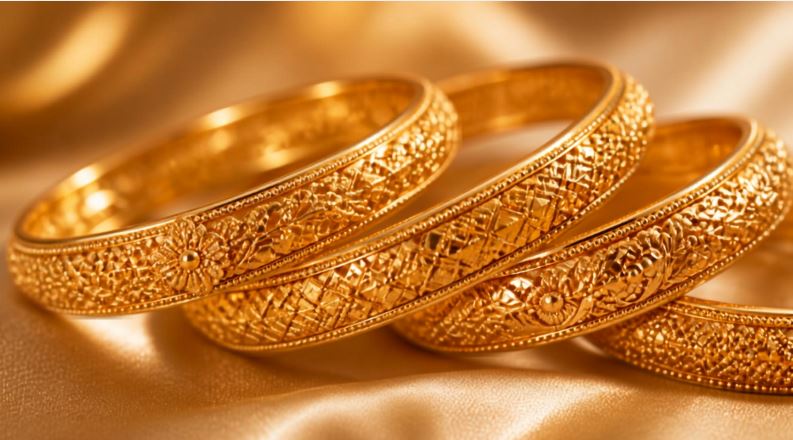
Gold occupies a unique place in the Indian economy. For millions of households, it is not simply a commodity but a form of savings, a family asset and an important part of social and cultural traditions. Any effort to moderate demand therefore has implications not only for imports but also for jewellers, manufacturers, artisans and consumers.
The government’s focus on gold purchases comes against the backdrop of efforts to manage the country’s import bill and conserve foreign exchange. Gold is one of India’s major imported commodities, and changes in demand can have a direct impact on the country’s trade balance.
Recent data shows that Indian consumers remain strongly attached to gold despite high prices. According to the World Gold Council, gold demand in India fell 6 per cent year-on-year to 131 tonnes in the second quarter of 2026. However, spending increased 35 per cent to a record Rs 1.98 lakh crore as prices remained significantly higher than a year earlier.
The numbers highlight an important change in the market. Consumers may be buying less gold by volume, but the value of purchases remains high because of elevated prices. Jewellery demand declined 15 per cent year-on-year in the second quarter, while investment demand remained above its long-term average.
Gold imports have also come under greater policy scrutiny. The government raised the import duty on gold from 6 per cent to 15 per cent in May as part of measures aimed at moderating imports and conserving foreign exchange. The World Gold Council said the higher duty, along with other policy measures, was expected to weigh on demand.
For the jewellery industry, the changing environment presents both challenges and opportunities. High gold prices can discourage fresh purchases, particularly among price-sensitive consumers, while wedding and festive demand continues to support the market. Jewellers are increasingly relying on exchange schemes, allowing customers to use existing gold when purchasing new jewellery.
Recycling could become increasingly important as India looks for ways to meet domestic demand without relying entirely on fresh imports. The World Gold Council reported that recycled gold accounted for 16 per cent of India’s gold supply in the second quarter, helping offset lower bullion imports.
The impact of any sustained reduction in gold purchases would extend across the wider jewellery ecosystem. Gold retailers, manufacturers, refiners, artisans, logistics companies and other businesses depend on consumer demand, particularly during the wedding and festive seasons.
At the same time, moderating imports could provide an economic benefit if consumers shift part of their savings towards financial assets or other productive investments. A lower import requirement can reduce pressure on foreign exchange and help manage the country’s external balance, particularly when other major imports such as crude oil remain expensive.
The challenge is that gold has historically served several roles in India. It is used for jewellery, held as an investment and often passed between generations as family wealth. This makes consumer behaviour difficult to change through policy measures alone.
The current situation is also being shaped by global gold prices and international uncertainty. Gold continues to attract investors seeking protection during periods of geopolitical and economic volatility, which can keep demand strong even when prices are high.
For businesses, the changing market could accelerate the shift towards lightweight jewellery, exchange-based purchases, recycling and more flexible payment and savings products. These trends can help the industry respond to consumers who want to continue buying gold while managing the impact of higher prices.
India’s gold market is therefore entering a period of adjustment. The government wants to contain excessive import dependence, while consumers continue to view gold as an important financial and cultural asset. The jewellery industry, meanwhile, will need to adapt to changing buying patterns and increasingly price-sensitive customers.
The broader economic objective is not simply to stop people from buying gold, but to encourage more balanced household savings and reduce unnecessary pressure from imports. For India, the challenge will be to achieve that objective without disrupting an industry that supports millions of livelihoods and remains closely connected to the country’s social and cultural life.