
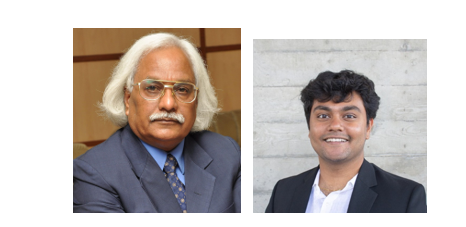
– Prof PB Sharma & Anugyan Sharma
The debate about employment in the age of AI is largely centred around the future of jobs and the impact that AI powered machines and systems will have on replacing people on shopfloors and workplaces. There are others who argue that human engagement in workplace is not just empathy or humane input to work ethics and compassionate work environment, it is pooling of minds, an instrument of collective creativity and nourishing an environment for innovation and team excellence.
Importance of Human Ingenuity:
Human ingenuity has all along been recognized as having infinite potential. It could produce great inventors like Newton, Einstein, Madam Curie and CV Raman in the past and also Pranav Mistry and Abdul Kalam in the recent times who envisioned a bright future for the world humanity and left a lasting impact on the minds of people the world over. They demonstrated that the power of science and might of technology is unleashed by the power of mind and its infinite potential to innovate and make the impossible, possible.
For them here in India, the organizations were not just infrastructure or its intelligent machines and systems, at the core were its people, and the power of their minds and their collective cognitive abilities that created ISRO, DRDO, BHRC, TIFR and a host of research laboratories of CSIR and on the industrial front TCS, Infosys, CDoT and a host of heavy industries in India that moved the mountains and created enormous prosperity and human engagement in making the humanity proud of its people and their collective ingenuity and innovativeness.
The scene around the world was no different, where also the human ingenuity and the power of human mind has created wonders in making man step foot on the moon, create intelligent machines and systems enhancing human exploration of the beautiful universe and create new avenues for human endeavour. The eminence of NASA, the Bell Lab, the impressive rise of Silicon Valley in California and the marvels of technology innovations rolled out lately by Cisco, Samsung, Micron and Nvidia are the finest examples of collective human mind shaping the future of humanity.
Universities and HEIs play an Important Role:
No doubt that the universities and institutions of eminence across the world, including here in India have fueled the impressive march of humanity on the pathways of innovation and excellence by providing both the innovative minds of young professionals as well as innovative research driven technology development in the research hubs of the universities and institutions of higher learning.
The focus of attention in institutions of higher learning all along has been on employability of graduates and postgraduates and on the quality and relevance of research of its doctoral programs.
The age of AI has raised the question of engagement of the people as the fear of replacing the workforce by AI empowered smart and autonomous machines and systems is looming large.
Myself (Anugyan Sharma) experience as a bioengineering undergraduate at UC San Diego, together with my summer internship, has made this idea personally meaningful. At university, I have seen how learning becomes more valuable when students from different backgrounds discuss problems, question assumptions and combine their knowledge in team projects. During my summer internship at a medical device startup, I learned that contributing to an organization is more than completing an assigned task. It means learning from experienced colleagues, offering fresh perspectives and applying knowledge to real problems and at the end taking responsibility for the quality of the outcome. These experiences have convinced me that even as AI becomes more capable, education and employment must continue to develop human curiosity, collaboration, judgment and ethical responsibility.
True purpose of Employment:
When we look across the landscape of modern institutions, we often ask ourselves a fundamental question: What is the true purpose of employment?
For generations in the past, employment was engagement of people in the work activity as assigned, based on their competence and caliber. As Artificial Intelligence rapidly takes over routine task execution, data processing, and automated workflow, the traditional definition of “work” is changing forever.
The prime question however, is if machines can execute tasks faster and more efficiently, what is the need for human engagement and the true essence of human enterprise?
Now that AI with its cognitive abilities can not only organise and execute workflows efficiently but also take strategic decisions and create a more profound understanding of the futuristic work plans, the human employment is becoming questionable.
The answer lies in a fundamental truth: Employment is not just about hiring people for work. It is about pooling the capabilities, creativity and power of the human mind for work excellence and creating winning teams.
In the age of AI, this perspective becomes our greatest strategic imperative. AI provides unprecedented computational capacity, but capacity is meaningless without capability. AI can generate data, but it takes the pooled wisdom, intuition, and moral clarity of the human mind to convert that data into meaningful impact and a profound insight for strategic planning for future.
Deloitte’s 2026 Global Human Capital Trends: Shift to “Human \times Machine” analyzed C-suite leaders across 100+ global organizations to measure the returns on technological adoption vs. human-centric workforce design. It found that organizations taking a purely technology- or headcount-focused approach to AI are 1.6 times more likely to fail to realize expected returns compared to those taking a human-centric approach focused on value creation. The study further revealed that traditional model of treating employees as transactional units executing static tasks has reached its limit. Leaders who succeed treat human capability as an ecosystem of adaptability, creativity, and judgment—redesigning work so that technological tools multiply human potential rather than merely replace headcount. Another study on Industry 5.0 Human-Centric Systems Research (2025/2026) published in MDPI (2026) evaluated employee well-being and cognitive performance in Industry 5.0 production environments. It found that technologies (such as collaborative robotics and AI assistants) yield maximum productivity only when designed to augment human agency, autonomy, and psychological safety rather than exert algorithmic control.
This study also states that headcount models that rely on rigid algorithmic tracking increase techno–stress and cognitive overload. Conversely, capability-pooling frameworks empower worker autonomy and problem-solving, creating high organizational effectiveness and high productivity.
Major Shift in Mindset for Employment Needed:
When an organization shifts its mindset from buying labor to aggregating human mind power alongside advanced technologies, two extraordinary transformations happen:
First, we achieve Work Excellence– Free from mundane, repetitive tasks, individuals are elevated to higher-order thinking, critical analysis, creative synthesis, and ethical judgment. They cease to be task executors and become masters and innovators of their craft. Innovation infinite becomes the outcome and product excellence becomes the competitive advantage for the organisation. After all, it is the century of mind for unleashing the innovativeness of man and smartness of machines
Second, we build Team Excellence– Algorithms do not build trust, nor do they possess empathy or shared vision. Team excellence in the AI era is the multiplier effect created when diverse, highly capable human minds collaborate, challenge each other, and direct technological power toward a shared human purpose.
As leaders of the institutions of higher learning, our ultimate mandate is not to manage routine output, but to cultivate a thriving intellectual ecosystem. It is to build environments rooted in curiosity, continuous learning, and ethical grounding, where human intellect and technological capability are harmonized.
Concluding Remarks:
Let us move beyond the traditional employment contract. Let us view employment as the sacred trust of pooling human mind power, ensuring that as technology advances, our collective human excellence advances right alongside it. Let human engagement in the age of AI be given its legitimate recognition for the ingenuity and innovativeness of human mind to drive organizations to new altars of organisational excellence and eminence of its accomplishments.
Let us therefore envision employment beyond the contract and unleash collective Intellect in the Age of AI.
*The Authors, Prof PB Sharma is an eminent educationist, a renowned thought leader, the past President of AIU, founder Vice Chancellor of DTU and currently Vice Chancellor of Amity University Gurugram and Anugyan Sharma is a Student Member of Biomedical Engineering Society and Bioengineering Undergraduate at California University, San Diego.