


Choosing a broker is often influenced by the most visible features: lower spreads, higher leverage, faster registration, account bonuses, cashback campaigns, or promises of a better trading experience. These elements may help traders compare platforms at a basic level, but they rarely show the full operational reality behind a broker.
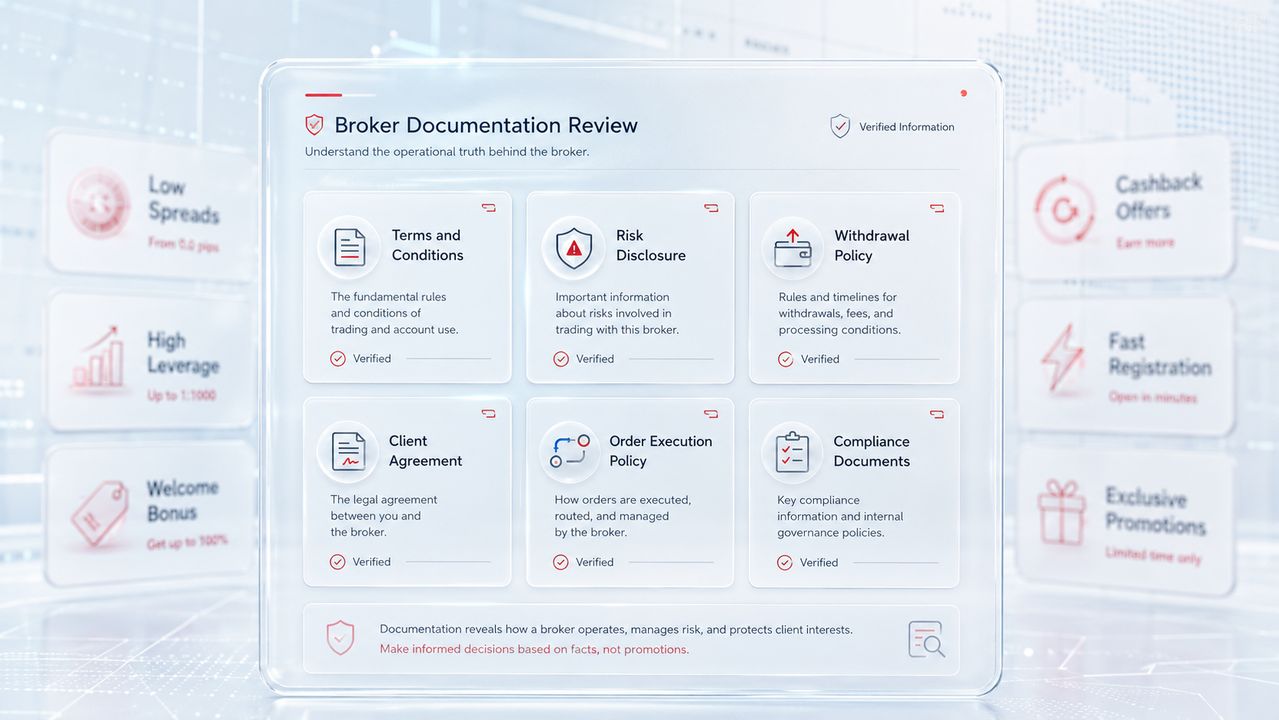
A more careful evaluation requires looking beyond promotional comparisons and reviewing the broker’s official documentation. Documents such as Terms and Conditions, Risk Disclosure, Withdrawal Policy, Client Agreement, Order Execution Policy, and compliance-related materials can reveal details that marketing pages often do not explain clearly.
For traders, this kind of review is not about slowing down the account-opening process unnecessarily. It is about understanding the structure, responsibilities, limitations, and operational standards of the platform before committing funds or personal information.
Why Promotional Comparisons Can Be Misleading
Broker comparisons often focus on headline numbers. A platform may advertise tighter spreads, higher leverage, faster onboarding, or more attractive promotional rewards. These features can appear useful, especially for beginners who want a simple way to compare providers.
However, promotional claims do not always explain the conditions behind them. A low spread may apply only to certain account types or market conditions. A bonus may include withdrawal restrictions or trading volume requirements. High leverage may increase exposure and risk. A fast registration process may not indicate how carefully the broker handles verification, withdrawals, disputes, or client support.
This is why traders should treat promotional features as only one layer of evaluation. The deeper layer is documentation.
Terms and Conditions Show the Operating Rules
The Terms and Conditions section is one of the most important documents a trader can review. It usually explains the relationship between the broker and the client, including account rules, responsibilities, restrictions, service limitations, and conditions under which the company may take specific actions.
Many users skip this document because it appears lengthy or technical. However, it often contains essential information about account access, service changes, trading restrictions, inactive accounts, prohibited activities, and dispute procedures.
A broker’s Terms and Conditions can show whether operational rules are clearly defined or left open to broad interpretation. Clear terms help users understand what they are agreeing to before opening an account.
Risk Disclosure Explains What Marketing Often Avoids
A responsible broker should explain trading risk clearly. Risk Disclosure documents are important because they move the conversation away from profit expectations and toward market reality.
These documents may explain volatility, leverage risk, margin calls, stop-outs, slippage, liquidity changes, and the possibility of losing capital. They may also explain that trading outcomes cannot be guaranteed and that past performance does not ensure future results.
This matters because some promotional content in the wider trading industry focuses heavily on opportunity while giving less attention to risk. A clear Risk Disclosure helps traders understand the limits of any trading service and evaluate whether the broker communicates responsibly.
Withdrawal Policies Reveal Practical Transparency
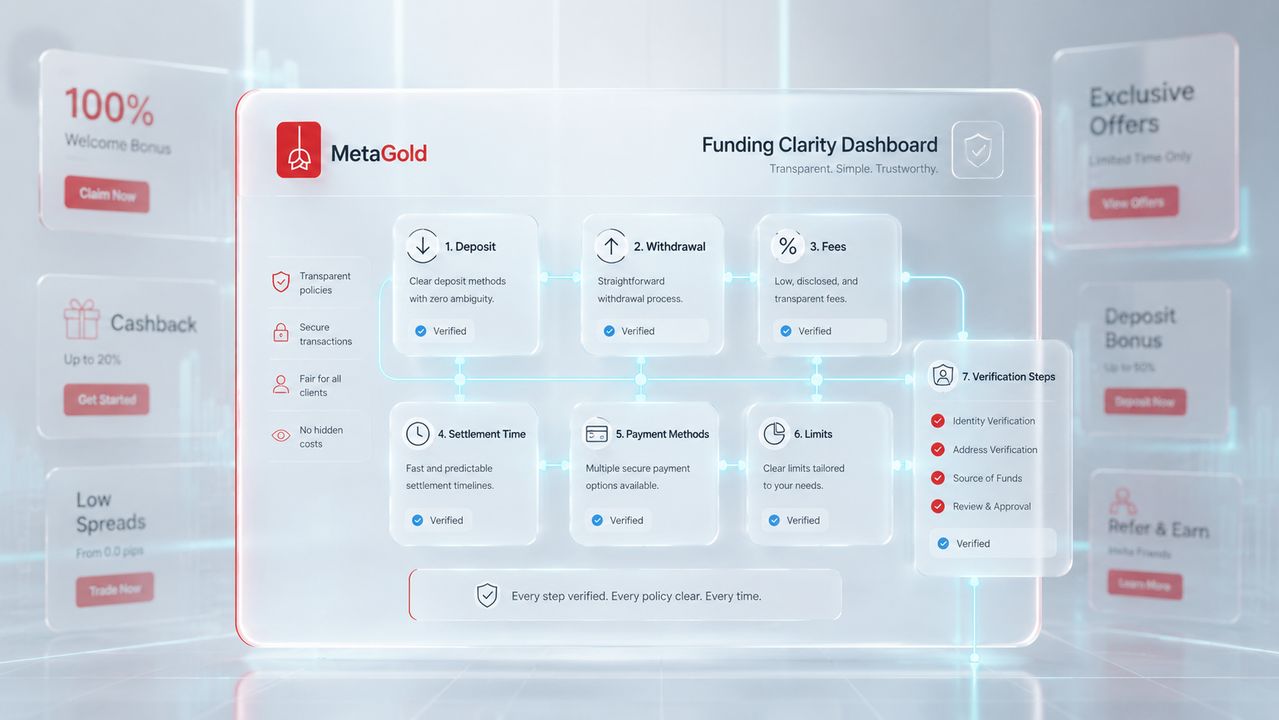
Withdrawal conditions are one of the clearest indicators of operational transparency. A broker may make deposits easy, but traders should also understand how withdrawals work before opening an account.
A Withdrawal Policy can explain available withdrawal methods, processing timelines, fees, minimum amounts, verification requirements, and possible reasons for delays. It may also show whether withdrawal procedures are consistent and understandable.
If withdrawal information is difficult to find or written vaguely, traders may face confusion later. A clear withdrawal policy, on the other hand, helps users understand how their funds can be accessed and what steps may be required.
Client Agreements Define the Relationship
A Client Agreement can provide important details about the legal and operational relationship between the trader and the broker. It may include information about account classification, execution terms, pricing, margin requirements, communication rules, reporting, dispute handling, and termination conditions.
For traders, the Client Agreement is not just a formality. It helps define what the broker is responsible for, what the client is responsible for, and how different situations may be handled. Reviewing this document can prevent misunderstandings and help users make more informed decisions.
Compliance Documents Show Structural Discipline
Compliance-related documents can also reveal how seriously a broker approaches operational standards. These may include KYC procedures, AML policies, legal entity information, regulatory references, privacy policies, and data handling procedures.
While not every broker presents these materials in the same format, the availability and clarity of compliance information can help users assess transparency. A broker that provides accessible documentation gives traders more material to evaluate than one that relies mainly on promotional claims.
Compliance documents also help users understand why certain procedures exist. Identity verification, source-of-funds checks, withdrawal reviews, and account restrictions may be connected to legal or regulatory obligations rather than arbitrary decisions.
Documentation and Infrastructure Are Connected
Broker documentation is closely connected to operational infrastructure. A platform’s real quality is not defined only by what it advertises, but by how its systems, policies, and procedures work together.
This includes how orders are executed, how liquidity is accessed, how pricing is structured, how funds are processed, how risks are disclosed, and how client communication is managed. In this context, documentation becomes a window into the broker’s internal structure.
One example of this infrastructure-focused approach can be seen in the article MetaGold Focuses on Trading Infrastructure Rather Than Profit Promises, which discusses why structural clarity, execution architecture, and operational transparency can matter more than marketing-driven promises.
What Traders Should Look For Before Opening an Account
Before choosing a broker, traders should review whether the company provides clear answers to several practical questions:
- Are the Terms and Conditions easy to access?
- Is the Risk Disclosure clear and visible?
- Are withdrawal procedures explained before funding the account?
- Does the broker provide a Client Agreement?
- Are compliance, KYC, AML, and legal details available?
- Are execution and trading conditions documented?
- Are fees, commissions, swaps, spreads, and margin rules explained?
- Are support and communication channels official and consistent?
This review does not require legal expertise. The goal is to identify whether the broker provides enough information for a user to understand the service before joining.
Final Thoughts
Promotional comparisons can help traders notice a broker, but documentation helps them evaluate it. Lower spreads, higher leverage, faster sign-up, bonuses, and profit-oriented messaging are not enough to assess the quality of a trading platform.
Official documents reveal how a broker defines its responsibilities, explains risks, handles withdrawals, structures client relationships, and communicates operational rules. They also help traders understand whether the broker is focused on transparency or mainly on marketing appeal.
In broker selection, the most important information is not always found on the most attractive landing page. Often, it is found in the documents that explain how the platform actually works.