
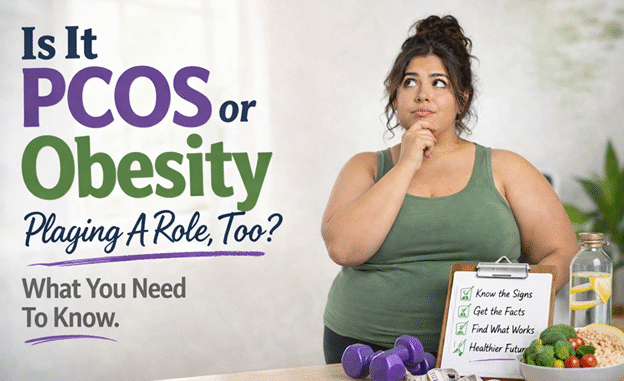

PCOS and obesity are more closely linked than many people think. Knowing about this connection can really help you take charge of your health. Managing PCOS and obesity is not about medical treatments. It often means making changes in your daily life, such as eating better, staying active, and sometimes considering options like bariatric surgery.
In some cases, weight loss surgery may also be recommended when lifestyle changes alone are not enough to manage PCOS and obesity effectively.
PCOS can cause problems like insulin resistance and hormonal imbalances, which can make it harder to manage your weight. If you think you might have one or both of these conditions, finding out more about PCOS and obesity is a way to start taking control of your health.
In this blog, we will explain how PCOS and obesity are related and give you tips to help you manage PCOS and obesity better.
Understanding PCOS
PCOS is a condition that affects a lot of women. It usually happens when they are young and can have babies. PCOS can change how the ovaries work. You might notice things like periods, male hormones, and small cysts on the ovaries. A lot of women with PCOS also gain weight. Have other problems with their body.
The reason why women get PCOS is not really known. It seems like it is because of a lot of things. So it is really important to notice the signs of PCOS. If you do, you can take care of yourself. Manage PCOS. Recognizing PCOS early is a big deal because it helps you do the right things to manage PCOS.
Key Points to Understand
We do not really know what causes PCOS. It might be because of the genes we get from our family, the way we live our lives, and the world around us. One big reason is that our bodies do not use insulin well, known as insulin resistance, and this can hurt our ovaries. Make them not work properly. PCOS is like a puzzle. We are still trying to fit all the pieces together.
- Irregular Periods: If you notice that your periods are not regular, if your weight is going up and down, or if you have symptoms that seem weird, you should keep track of them. Talk to your doctor about PCOS. Your doctor can help you understand what is going on with your body.
- Symptoms: Some signs of PCOS include periods that are not regular, or maybe you skip some periods, you grow too much hair, you get acne, you gain weight, and it is hard to get pregnant. PCOS can cause many problems.
- Hormonal Imbalance: The sign of PCOS is that your hormones are out of balance; This means you have many of the hormones called androgens. It is good to know that when your hormones are out of balance, it can hurt your ovaries and make it hard for you to ovulate.
Familiarizing yourself with PCOS can be the step to making yourself feel better and being healthy for a time. PCOS is a health problem that affects women and their hormones. Hormones are important because they help our bodies work properly, help us feel emotions, and help us have babies. If you are overweight, it can disrupt your hormones.
Understanding how being overweight affects your hormones is important because it can cause or exacerbate problems like PCOS, thyroid problems, and metabolic problems. PCOS is a health problem that can be managed if you know what to do. Your doctor can help you learn more about PCOS and how to take care of yourself.
Understanding Obesity
Knowing the impact of obesity on hormone functions is important because obesity can cause or exacerbate diseases, such as Polycystic Ovary Syndrome, hypothyroidism, and metabolic disorders.
Obesity is usually measured using the Body Mass Index. Where body fat builds up is also very important. Some reasons for obesity include eating habits, not exercising enough, hormonal imbalances, and environmental factors.
A lot of body fat can mess with how hormones work. Are regulated. Insulin resistance, which occurs with obesity, leads to insulin and other hormonal imbalances. This disorder affects how hormones such as cortisol, a stress-related hormone, and estrogen work.
The Connection Between Body Fat and Hormone Regulation
Body fat works like an organ that produces hormones. Having more body fat increases estrogen levels. Affects the signals that control hunger, metabolism, and ovulation. Keeping a healthy weight helps balance hormones and prevent long-term health problems, such as obesity.
Obesity is an issue and body fat and hormone regulation are connected. Body fat and hormone levels are connected.
The Link Between PCOS and Obesity
The connection between PCOS and obesity is really complex. This is because PCOS can make obesity worse, and obesity can make PCOS worse. A lot of women who have PCOS also have something called insulin resistance. This insulin resistance often causes women to gain weight around their stomach.
When this happens it can disrupt balance in the body and lead to higher levels of insulin and androgens. These hormonal problems can then cause issues with cycles and ovulation.
The thing is, PCOS and obesity are so closely linked that it is difficult to determine which condition is the cause and which is the effect.
Having both PCOS and obesity can have an impact on a woman’s metabolism and her reproductive health. PCOS and obesity can really affect how a woman’s body works and her ability to have children.
Obesity and PCOS often have symptoms, which can make diagnosis difficult. For example, both conditions are associated with metabolic disorders, such as insulin resistance.
Overlapping Symptoms
It can be tough to lose weight even while adhering to a diet and exercising regularly, since it all depends on your metabolic rate and hormonal levels. It would be ideal to start by making dietary changes and setting realistic goals. You may want to start by going for a few minutes of walks each day, then build up slowly from there. Mindful eating requires paying attention to the foods you eat and to whether you are hungry or full.
- Irregular Periods: Failure to get periods due to hormonal imbalances results in one of the typical symptoms of PCOS. This can happen if someone has been diagnosed with obesity.
- Insulin Resistance: One of the causes of PCOS and obesity is insulin resistance. This condition occurs when the body fails to use insulin, leading to an elevation in blood sugar.
- Fatigue: This is because of the imbalance and metabolic syndrome, among other problems. People with these conditions usually have difficulty sleeping at night, which makes it difficult to carry out daily activities.
- Type 2 Diabetes Risk: Polycystic Ovary Syndrome and obesity contribute to the risk factors for Type 2 diabetes because of insulin resistance. Furthermore, mood changes and even the development of depression may also result from these two conditions.
- Sleep Disorders: Insomnia, sleep apnea, and other sleep disorders are more common in cases of obesity.
Having an idea about the effects that PCOS and obesity can cause on your body would be made easier with the information mentioned above.
Diagnosing the Root Cause: PCOS, Obesity or Both
Differentiating between the two may not always be easy. Diagnosing only one without considering the other could result in a misdiagnosis. The diagnosis requires reviewing one’s history, symptoms, hormone levels, and more. Other factors include the patient’s lifestyle, which is vital to consider. Knowing these factors will help identify the root cause and find ways of managing it.
Major Contributing Factors
Nutrition Issues
Eating processed foods, consuming excessive sugar, and consuming unhealthy fats contribute to obesity, insulin resistance, and hormonal imbalance. A sedentary lifestyle also has an impact.
Insufficient Exercise
Lack of physical exercise leads to a slow metabolism, body fat buildup, and an increased risk of conditions linked to PCOS and obesity.
Genetic Factor
A family history of metabolic disorders and PCOS means that people have a chance of developing such problems. There must be some factor behind this trend.
Insufficient Sleep
Insufficient sleep interferes with hormones involved in hunger control, metabolism, and stress management, thereby exacerbating PCOS and obesity.
Emotional Eating
Chronic stress is associated with levels of cortisol, which causes overeating. This is bound to lead to weight gain and hormonal imbalance.
To effectively tackle the problem, you need to identify which factors affect you most.
Health Risks Associated with PCOS and Obesity
Without treatment, PCOS and obesity can cause serious complications. The latter can manifest itself in forms of diseases and disorders, including Type 2 Diabetes, infertility, high levels of insulin resistance, and heart disease. For this reason, when dealing with PCOS complications, it is important to opt for an approach to treatment.
Disbalance in levels may cause emotional disorders such as anxiety and depression. These conditions require an approach to their solution, including good nutrition, regular exercise, and consultation with a doctor.
If your weight has become too excessive for weight management techniques or has become too resistant to the traditional approach, then surgery might be the next step. Bariatric surgery is considered the option for people with a BMI of 40 or higher. On the other hand, when you are obese and have additional factors, such as type 2 diabetes or sleep apnea with a BMI index exceeding 35, bariatric surgery is the way to go. Bariatric surgery for weight loss will be recommended as a resort in case other methods fail to show any results.
Key Approaches
Changes in Lifestyle
A diet rich in fruits and vegetables, protein sources, and fats will help maintain healthy blood glucose levels and prevent insulin resistance. Exercising regularly through cardio and strength training helps manage body mass and boost metabolism.
The medical part of managing Polycystic Ovary Syndrome or PCOS may involve taking medication to regulate the cycle, managing insulin, or taking drugs to alleviate other symptoms like acne and excessive hair growth.
In cases of obesity, weight loss management strategies or even surgical methods can be considered to deal with PCOS.
Impact of Weight Loss on PCOS Treatment
A little weight loss can make a big difference in dealing with Polycystic Ovary Syndrome or PCOS symptoms.
As the individual loses weight, they become more sensitive to insulin, the ovulatory cycle becomes more consistent, and male hormone production decreases.
In terms of body weight loss treatment techniques, the body benefits and is less prone to developing Type 2 Diabetes.
When to Consider Treatments
Further approaches may be considered if you are not able to manage your PCOS symptoms and obesity through usual methods and usual medications.
When women cannot lose weight despite diet and exercise, and medication, we can consider further approaches to weight loss, such as bariatric surgery, which can help with weight loss and hormonal imbalances.
Book a consultation with a top bariatric surgery center in Ahmedabad and take the first step towards sustainable weight loss.
Maintaining Hormonal Balance and Healthy Weight
Balancing the hormones and optimizing weight control are critical in dealing with Polycystic Ovary Syndrome or PCOS and all the challenges associated with obesity.
This will involve establishing a lifestyle that includes a diet, regular exercise, sufficient rest, and stress management.
Some simple things you can start with include preparing meals in advance, maintaining a sleep schedule, drinking plenty of water, walking for a few minutes, practicing relaxation exercises, and setting goals each morning towards achieving the desired health.
These simple tasks can do wonders in facilitating behavior, which is very important for Polycystic Ovary Syndrome or PCOS management.
Metabolism helps improve one’s health by reducing insulin resistance and balancing hormone levels, which is very important for the management of PCOS.
It is important to be consistent with little changes because they can go a very long way in managing Polycystic Ovary Syndrome or PCOS.
Conclusion
This link between Polycystic Ovary Syndrome or PCOS and obesity highlights the importance of looking at the body as a whole rather than isolating any single variable.
In light of the link between these two variables in cases such as insulin resistance and hormone imbalance, tackling them will require an approach that may even include bariatric surgery to manage Polycystic Ovary Syndrome or PCOS. For expert guidance on weight loss surgery, connect with NObesity today.
Being aware of the causes of Polycystic Ovary Syndrome or PCOS, knowing which symptoms are prevalent, and having a treatment plan in place will enable you to manage your illness and keep your hormones in check, which is very important for Polycystic Ovary Syndrome or PCOS management.