

Hyderabad, May 26: Doctors at KIMS Hospitals successfully treated a 26-year-old woman suffering from an extremely rare and life-threatening liver complication caused by Weber-Christian Disease, without performing a liver transplant, despite international medical criteria indicating an urgent need for transplantation.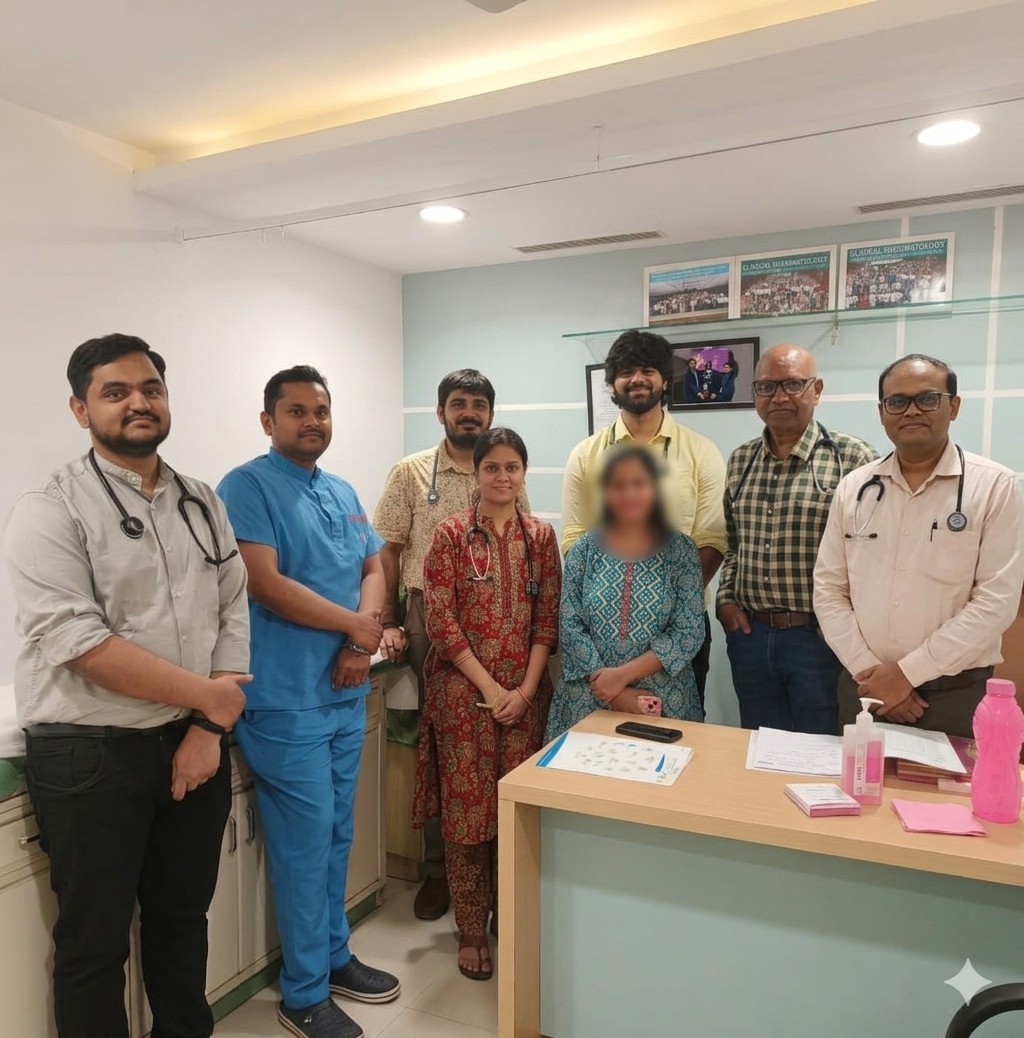
According to Dr. Sarath Chandra Mouli Veeravalli, Clinical Director, Department of Rheumatology and Clinical Immunology, and Dr. K.N. Chandan Kumar, Director, Hepatology and Transplant Hepatology, the patient’s condition represented rare case reported worldwide.
Weber-Christian Disease is a rare autoimmune disorder characterized by inflammation of the fatty tissues beneath the skin. The patient, a resident of Hyderabad, was first diagnosed with the condition in 2018 after presenting with painful nodules on her hands and legs along with recurrent fever. She initially responded well to treatment under the care of Dr. Sarath Chandra Mouli and his team. However, she discontinued medications after 2 years and did not return for follow-up for nearly six years.
Recently, she was brought back to KIMS Hospitals in critical condition with severe fever, jaundice, sub dural hemorrhage, altered behaviour, confusion, and rapidly deteriorating liver function. Within days, she developed Grade-4 hepatic encephalopathy, a dangerous condition in which severe liver failure affects brain function.
She was immediately shifted to the Liver ICU, where the hepatology and liver transplant team led by Dr. K.N. Chandan Kumar initiated intensive treatment. The patient was placed on ventilator support, measures were taken to control brain swelling, and extracorporeal liver support was provided through plasmapheresis.
Doctors noted that she fulfilled the internationally accepted King’s College Criteria for emergency liver transplantation. However, further investigations revealed falling blood cell counts and abnormally elevated serum ferritin levels, indicating Macrophage Activation Syndrome, a severe hyper-inflammatory condition caused by uncontrolled immune system activation.
Doctors explained that severe liver involvement in Weber-Christian Disease is highly fatal and has been documented in only a handful of cases globally. Given the complexity of the condition, specialists from Rheumatology, Hepatology, Liver Transplant Intensive Care, and Critical Care departments worked together to formulate a treatment strategy. The patient was treated with pulse steroids, and advanced immunomodulatory therapy. At a critical stage, doctors administered Anakinra, an IL-1 receptor antagonist, which had been specially imported from abroad as it was not readily available in India. This marked the first-ever reported use of Anakunra in the world to treat Weber-Christian Disease with fulminant hepatic failure.
Following treatment, the patient’s inflammation gradually reduced, and liver function began to improve. Her neurological condition stabilised, allowing doctors to remove ventilator support. She was later shifted out of the ICU and eventually discharged in stable condition. She is currently leading a normal life and remains under regular medical follow-up. The doctors stated that early recognition of rare autoimmune disorders, rapid multidisciplinary coordination, and the use of targeted immunotherapy played a key role in saving the patient’s life. They described the case as a significant medical achievement and a reflection of KIMS Hospitals’ capability in handling highly complex medical emergencies.