
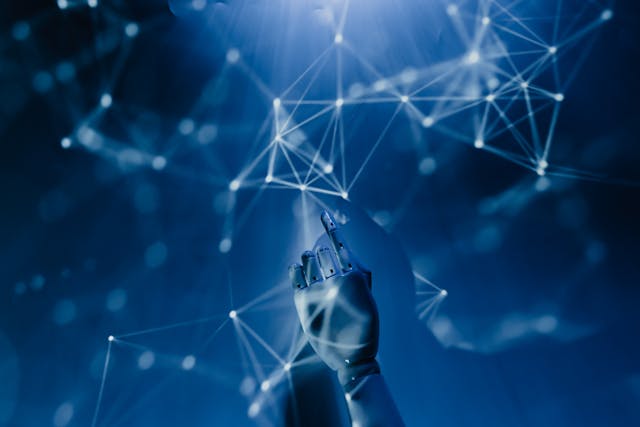

The relationship between humans and machines has long been defined by efficiency and automation. Computers calculated faster, stored more data, and simplified complex tasks. Today, however, technology is entering a remarkable new phase—one where machines are no longer just tools but collaborators in the creative process. This transformation is being driven by generative artificial intelligence (AI), a rapidly evolving field that enables computers to create original content ranging from images and music to written stories and digital designs.
Among the most fascinating capabilities of generative AI is its ability to produce visual art from simple text descriptions. With just a few words typed into a prompt, users can generate detailed illustrations, imaginative landscapes, or realistic portraits within seconds. What once required hours of artistic work can now emerge almost instantly, opening new possibilities for creativity and innovation.
What Is Generative AI?
Generative AI refers to a class of artificial intelligence systems designed to create new content by learning patterns from large datasets. Unlike traditional software that follows fixed instructions, generative models study vast collections of images, text, or audio and identify relationships between them. Using this knowledge, they generate entirely new outputs that resemble the patterns they have learned.
For instance, if an AI model is trained on millions of photographs and their descriptions, it can learn how words correspond to visual features such as shapes, colors, textures, and lighting. When a user enters a prompt describing a scene, the system uses this understanding to generate a new image that matches the description.
The technology behind generative AI often relies on advanced neural networks, particularly deep learning models capable of recognizing complex patterns. These models continuously improve as they process more data, allowing them to create increasingly sophisticated and realistic outputs.
Turning Language into Visual Art
One of the most groundbreaking developments in generative AI is the emergence of text-to-image models. These systems translate written prompts into visual compositions, making it possible to create artwork simply by describing an idea.
For example, a prompt like “a futuristic city floating in the clouds at sunset” can produce a vivid image complete with glowing buildings, dramatic skies, and imaginative architectural details. Each generated image is unique, even when the same prompt is used multiple times.
Several powerful tools have popularized this technology, including:
-
Stable Diffusion
-
DALL-E
-
Midjourney
-
Imagen
-
Adobe Firefly
-
Recraft
-
Flux
These platforms allow users to experiment with styles ranging from photorealism and digital painting to anime-inspired illustrations and surreal artistic compositions.
The Art of Neural Style Transfer
Generative AI is not limited to creating images from text. Another intriguing technique known as neural style transfer allows computers to blend the visual style of one image with the content of another.
In this process, AI separates an image into two components: the content, which represents the objects and structure in the image, and the style, which captures artistic elements such as brush strokes, textures, and color palettes. By combining these components, the system can transform a photograph into something that looks like it was painted in a particular artistic style.
For example, a simple landscape photo can be reimagined to resemble an impressionist painting or a bold abstract artwork. This technique has become popular among digital artists, photographers, and filmmakers seeking fresh visual effects.
Expanding Creative Possibilities
One of the most significant impacts of generative AI is the way it democratizes creativity. In the past, producing professional-quality artwork required years of training and mastery of specialized tools. Today, individuals with little artistic background can generate compelling visuals simply by describing their ideas.
This shift is influencing many industries:
Design and advertising
Creative teams use AI to generate quick design concepts, promotional visuals, and brand imagery.
Film and gaming
Concept artists can rapidly develop characters, environments, and storyboards for new projects.
Education
Teachers and students can create custom visuals that help illustrate complex ideas and enhance learning.
Content creation
Writers, bloggers, and social media creators can produce unique visuals that complement their storytelling.
Rather than replacing human artists, generative AI often serves as a creative partner, helping people explore ideas faster and experiment with different styles.
Ethical Considerations and Challenges
Despite its remarkable capabilities, generative AI also raises important ethical questions. Because these systems are trained on massive collections of online images and artwork, concerns have emerged about copyright, ownership, and fair use. Some artists worry that their work may be used to train AI systems without proper recognition or consent.
Another challenge involves the potential misuse of AI-generated visuals. Highly realistic images could be used to spread misinformation or manipulate public perception if not used responsibly.
To address these concerns, researchers and technology companies are working to develop ethical frameworks, transparency tools, and guidelines that encourage responsible use of generative AI.
The Future of AI-Powered Creativity
Generative AI is still evolving, but its influence is already reshaping how people create and interact with digital content. Future systems may integrate text, images, audio, and video into unified creative platforms capable of producing entire multimedia experiences from a single idea.
In this emerging landscape, creativity will increasingly involve collaboration between humans and intelligent machines. While AI can generate visuals at remarkable speed, human imagination, storytelling, and cultural understanding remain essential.
The future of creativity may therefore lie not in competition between humans and machines, but in partnership—where technology amplifies human ideas and expands the boundaries of artistic expression.