

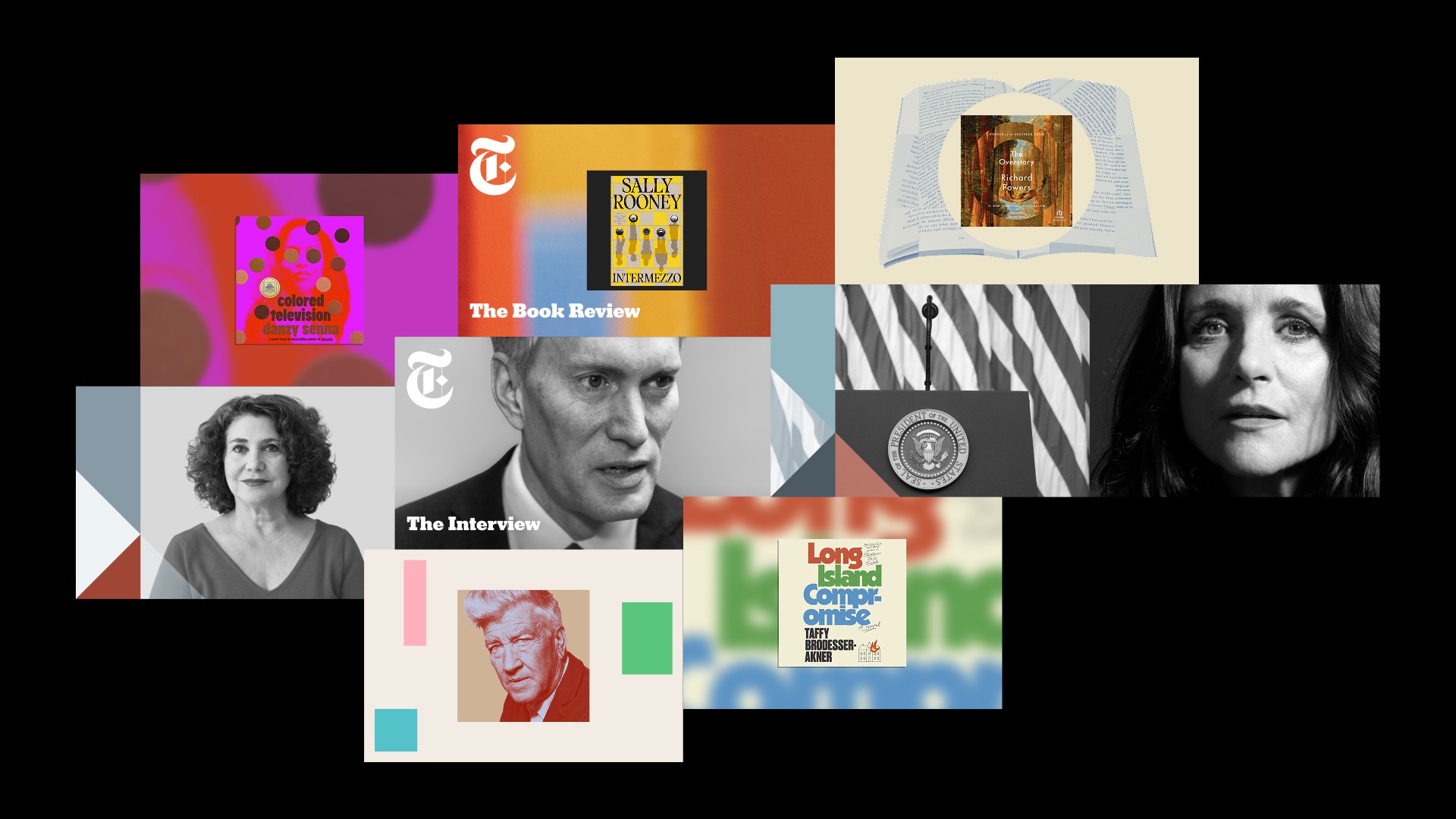
The era of aggressive gradients, high-octane animations, and heavy digital interactions that once defined the web’s visual “spectacle” is giving way to a more disciplined and thoughtful philosophy, according to Harshal Duddalwar, a New York-based senior designer and former designer for The New York Times. Mr. Duddalwar argues that the next phase of web design will be characterized by clarity and intent, rather than novelty.
Mr. Duddalwar, whose career has spanned prestigious global institutions and includes an academic foundation from the Rhode Island School of Design (RISD), suggests that the evolution of the web is moving toward a more editorial and stable environment. Having navigated the intricate design systems of legacy brands like The New York Times, Newsweek, Microsoft, Raw Mango and Verve Magazine, he sees a pervasive shift toward digital minimalism that is not soulless, but purposeful.
“The last decade was a period of experimentation and visual noise,” Mr. Duddalwar notes. “But in 2026, design for the web is moving away from spectacle, and toward clarity and intent. What feels more relevant now is restraint. Especially in publication design, the visuals are becoming more editorial again.”
He anticipates a return to the fundamentals of typography and structure, emphasizing their power to guide and inform without overwhelming.
This shift, he explains, is not merely an aesthetic preference, but a practical response to how modern audiences consume information. Mr. Duddalwar highlights that most reading now occurs in fragmented moments; during commutes, between meetings, or late at night. “Good design respects that,” he explains. “It holds attention without demanding it; I see systems becoming quieter, but more thoughtful.”
The implications of this “quiet” design are particularly significant for the news industry. In an age where digital credibility is paramount, Mr. Duddalwar explains that a calm, consistent visual system is essential for building and maintaining long-term reader trust. When design “steps back,” it significantly reduces cognitive noise, allowing readers to focus entirely on the content.
During his time working as a designer at The New York Times from 2023 to 2025, Mr. Duddalwar worked on visual systems for Audio, The Times’s dedicated podcast and audio journalism platform, and other rebranding and systems design projects– tasks that required a delicate balance between the institution’s historical gravitas and contemporary digital needs. “Staying ahead is less about being new, and more about being precise and intentional,” he said.
By refining subtle details like icon systems and typographic hierarchies, Mr. Duddalwar helped ensure the brand felt current without chasing fleeting trends.
A recurring challenge for digital publications, he observes, is maintaining reader engagement without resorting to intrusive “growth hacks.” Mr. Duddalwar’s approach relies instead on the traditional editorial craft of pacing. To keep readers scrolling to the end, he emphasizes the importance of breaking content into digestible sections and using typography to subtly guide the eye.
“You cannot rely on tricks,” Mr. Duddalwar stated. “There is a sense of narrative tension, even in non-fiction. Each section should feel like it leads somewhere. If the design is doing its job, the reader is not thinking about the interface. They are simply moving forward because it feels natural.”
This philosophy was evident in his work for Verve Magazine’s Cinema Issue, where he translated a print sensibility into a digital space. By using scale and contrast to mirror the feeling of cinema, he created an immersive yet readable environment that framed the content, rather than dominating it visually. The same can be said for his editorial design for Dhoop magazine, which takes a more colorful approach to their website.
Mr. Duddalwar’s expertise is rooted in a rigorous professional history that began in India with Leaf Design and Now Form, alongside an internship at Microsoft IDC. Before his current role at Astronaut Monastery and his work at 2×4, he served as an intern at Pentagram under the mentorship of Emily Oberman and other high profile industry experts.
This global perspective informs his work as an educator at Parsons School of Design and RISD. Whether teaching the next generation of designers or developing personal projects such as “Table for One Too Many,” “One Day At A Time” and “Meandering,” he remains focused on the human aspect of design. Across these projects, his work reflects a sustained interest in slowing down, observing closely and creating with intention, a theme that also shapes his design predictions for the year ahead.
Photo: Harshal Duddalwar for The New York Times Images from respective photographers/owners.