
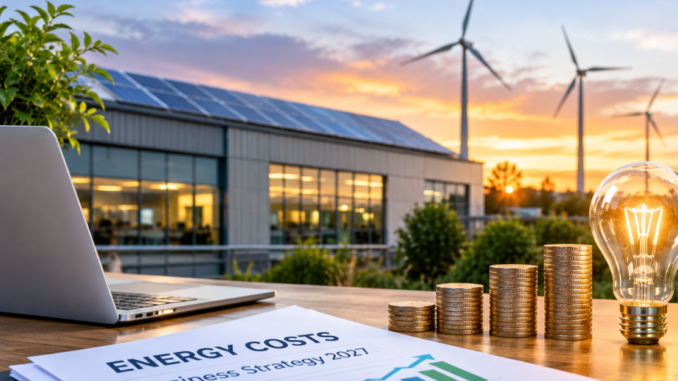
Rising Energy Costs in Ireland: Why Businesses Need to Prepare for 2027
Nov 03: Rising energy costs in Ireland are making it increasingly important for businesses to review electricity and gas consumption, control operating expenses and protect profit margins. From manufacturing facilities and hotels to retail outlets and logistics companies, energy expenditure has become an important part of day-to-day business planning.
As companies prepare their budgets for 2027, managing energy costs is no longer simply about finding a cheaper electricity supplier. Businesses also need to understand how much energy they consume, identify inefficient equipment and consider investments that can deliver savings over time.
Small and medium-sized enterprises (SMEs) may face particular challenges because they often have less flexibility to absorb higher operating costs. For these businesses, even a modest increase in monthly energy expenditure can affect cash flow and profitability.
Companies cannot control international energy markets, but they can take practical steps to manage consumption, review purchasing arrangements and make better use of available support.
What the Latest Reports Reveal About Business Energy Costs in Ireland
The scale of the challenge is evident in the latest figures from Ireland’s Central Statistics Office (CSO).
Its September 2026 publication, Business Energy Use 2024, found that Irish resident businesses spent approximately €16.3 billion on energy purchases in 2024. Although this represented a 4% decrease from 2023, the quantity of energy consumed increased by 1%. Electricity and natural gas together accounted for 58% of total business energy costs.
The report also identified transportation and storage as the largest energy-consuming business sector, accounting for 44% of total business energy use.
The pressure is not limited to large companies. A September 2026 study by the Strategic Banking Corporation of Ireland (SBCI) found that 91% of surveyed SMEs considered rising energy and transportation costs a key business risk, compared with 68% in the previous year.
These findings highlight why energy management is becoming part of everyday business planning. Even when energy prices ease, high consumption can continue to put pressure on operating budgets.
Ireland’s Business Electricity Prices Remain a Concern
Electricity costs are another important consideration for companies operating in Ireland.
According to SEAI statistics based on Eurostat data, the average electricity price for non-household consumers in Ireland was 24.27 euro cents per kWh in the first half of 2025. The EU-27 average stood at 17.87 cents per kWh.
The difference matters for businesses that depend heavily on electricity. Manufacturers, food processors, hotels and commercial property operators can face substantial bills because of their continuous energy requirements.
The actual price paid by an individual business will depend on its supplier, contract, consumption level and additional charges. Nevertheless, the comparison shows why Irish companies need to pay close attention to energy procurement and efficiency.
Energy Efficiency: Where Businesses Can Start Saving
Reducing energy consumption does not always require a major investment. In many workplaces, savings begin with identifying equipment and processes that use more electricity or gas than necessary.
An energy audit is a useful starting point. It gives businesses a clearer picture of their consumption and helps identify where improvements are likely to deliver the greatest financial benefit.
Heating and cooling systems deserve particular attention. Better insulation, regular boiler maintenance, improved temperature controls and efficient ventilation can help reduce unnecessary energy use.
Lighting is another area where businesses can make practical changes. Replacing older fittings with LED lighting and installing motion sensors in less frequently used areas can reduce electricity consumption.
Manufacturers can also review the performance of machinery, refrigeration systems and compressed-air equipment. Poorly maintained equipment can consume more energy, while better production scheduling may help reduce unnecessary operating hours.
For smaller businesses, these changes can be a sensible first step towards controlling costs without committing to large capital expenditure.
How Businesses Can Calculate the Return on Energy-Saving Investments
For companies working with tight budgets, the decision to invest in energy-efficient equipment often comes down to one question: how quickly will the investment pay for itself?
Calculating the return on investment (ROI) can help businesses compare different energy-saving projects and decide which improvements should receive priority.
A simple starting point is to compare the annual energy savings with the initial investment.
For example, if a business invests €20,000 in an equipment upgrade and expects to save €5,000 annually on energy bills, the simple payback period would be four years.
Businesses should also consider maintenance costs, equipment lifespan, financing expenses and any available grants when assessing the overall financial benefit.
An energy audit can help establish realistic savings estimates. Companies should also monitor consumption before and after an upgrade to understand whether the expected reductions are being achieved.
This approach allows SMEs to prioritise projects that offer a reasonable payback period rather than making investments based only on potential energy savings.
Solar Energy and Renewable Power Offer Longer-Term Options
Some businesses are looking beyond energy-saving measures and considering whether generating their own electricity makes financial sense.
Solar panels are increasingly being considered by factories, warehouses, offices, retail buildings and hotels with suitable roof space. On-site generation can reduce reliance on electricity purchased from the grid, particularly when businesses use a significant amount of power during daylight hours.
Battery storage can provide additional flexibility by storing surplus electricity for later use. However, the financial case depends on installation costs, energy consumption patterns, electricity tariffs and available support schemes.
Businesses should assess the likely payback period before making these investments. For some, beginning with smaller efficiency upgrades and expanding renewable energy capacity over time may be the more practical approach.
Irish Government Support for Business Energy Upgrades
Financial support can make energy-efficiency investments more accessible, particularly for SMEs.
The Sustainable Energy Authority of Ireland (SEAI) offers business supports that help organisations assess their energy consumption and invest in improvements.
Its business energy audit support includes a €2,000 voucher towards a professional energy audit for eligible organisations. The assessment can help identify inefficient equipment, unnecessary consumption and opportunities for savings.
SEAI also provides support for qualifying energy upgrades, renewable energy projects and other efficiency improvements. Businesses should review the latest scheme conditions and eligibility requirements before planning an investment.
The potential savings can be significant. SEAI estimates that an average SME could reduce its energy bill by up to 30% through energy-efficiency measures. The actual result will depend on the business, its existing equipment and the improvements undertaken.
For companies working with tight budgets, understanding which grants and incentives are available could help bring forward projects that might otherwise be delayed.
Reviewing Energy Contracts Can Help Control Costs
While reducing consumption is important, businesses should also examine how they purchase electricity and gas.
An energy contract that was competitive when it was signed may no longer offer the best value when renewal approaches. Companies should review their contract dates, standing charges, tariff structures and additional fees rather than focusing only on the headline unit price.
Fixed-price contracts can offer greater budget certainty for businesses with predictable consumption. Other contract options may suit organisations that can manage price fluctuations and have more flexible energy requirements.
For companies operating across several locations, bringing energy procurement under a central management system can also improve visibility and help identify better purchasing opportunities.
The key is to avoid treating energy procurement as an administrative task that only receives attention when a contract expires.
How Technology Is Helping Businesses Manage Energy Use
Technology is making it easier for companies to understand where their energy is going.
Smart meters and energy monitoring platforms can provide information about consumption at different times of the day. Businesses can use this data to identify unusual usage, spot inefficient equipment and make changes to operating schedules.
For companies with multiple facilities, centralised monitoring can help managers compare energy performance across locations and identify sites where improvements are needed.
Artificial intelligence and predictive analytics may also support energy planning by forecasting demand, identifying maintenance requirements and helping businesses optimise consumption.
However, technology alone will not reduce energy bills. The real value comes when businesses use the information to make practical changes to their operations.
Which Irish Business Sectors Need to Pay Attention?
Energy costs affect almost every industry, but the impact is particularly visible in sectors with high and continuous energy requirements.
Manufacturing companies need reliable electricity and gas for production machinery, heating and processing. Food businesses have additional requirements for refrigeration and temperature-controlled storage.
Hotels, restaurants and leisure facilities use energy throughout the day for kitchens, laundry, heating, cooling and hot water. Retailers must manage lighting, refrigeration and air conditioning, while warehouses rely on electricity for equipment and storage operations.
Transport and logistics companies face another layer of pressure because fuel expenditure is closely linked to operating costs. Better route planning, fleet utilisation and vehicle efficiency can help reduce unnecessary fuel consumption.
For these industries, energy management is no longer just about lowering bills. It can influence pricing decisions, investment plans and the ability to compete.
Preparing for Energy Cost Uncertainty in Ireland in 2027
Businesses planning for 2027 should prepare for energy price volatility rather than assume that prices will move in one direction. International fuel markets, weather conditions, electricity demand, network costs and regulatory changes can all influence the cost of energy.
Companies should build more than one energy-cost scenario into their budgets. Reviewing supplier contracts before renewal, monitoring consumption regularly and setting aside funds for efficiency improvements can help businesses respond to changing conditions.
It is also important to consider how energy requirements may change as a business expands, introduces new equipment or increases production. A growing company may need a different energy strategy from one focused on maintaining its current operations.
A planned approach can help businesses avoid making rushed decisions when bills increase or contracts come up for renewal.
Protecting Profit Margins: A Business Priority for 2027
As Irish companies prepare for 2027, managing energy expenditure needs to become a regular part of financial planning.
The first step is understanding where energy is being consumed and identifying where waste can be reduced. Businesses can then review their supplier contracts, explore available grants and assess whether investments in efficient equipment or renewable energy are financially worthwhile.
There is no single solution that will work for every company. A manufacturing facility may benefit most from upgrading machinery, while a hotel may achieve better results through heating controls and improved insulation. Logistics companies may need to focus on fuel efficiency and route optimisation.
What matters is taking a planned approach rather than waiting for higher bills to force a response.
For Ireland, the growing focus on energy efficiency also creates opportunities for businesses offering solar installations, energy management software, building technology and specialist consultancy services.
Ultimately, companies that understand their energy requirements and make informed investment decisions will be in a stronger position to protect their margins. In 2027, energy efficiency could become not just a cost-saving exercise, but an important part of staying competitive in Ireland’s business environment.
