

Hyderabad, May 13: CARE Hospitals has successfully treated a 60-year-old patient suffering from severe tracheal stenosis using an advanced minimally invasive airway intervention at its Hitech City facility, enabling the patient to regain normal breathing and speech after months of respiratory distress.
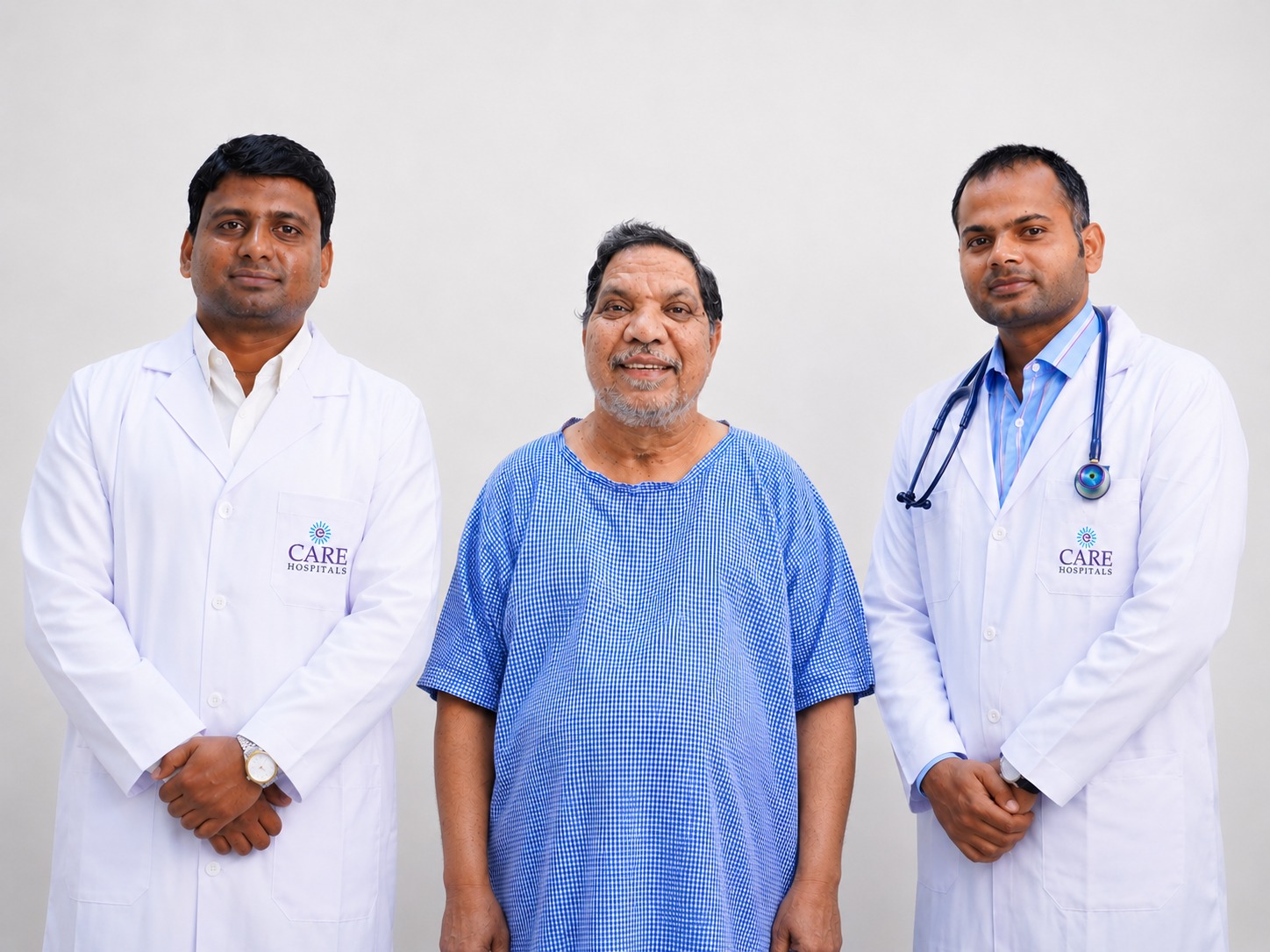
The patient, a Hyderabad resident, had developed complications following spinal surgery and required a tracheostomy to support breathing during recovery. However, repeated attempts to remove the tracheostomy tube were unsuccessful, leaving the patient dependent on assisted airway support and significantly impacting his ability to speak and breathe.
Following persistent symptoms, the patient was referred to the hospital’s Pulmonology team for further evaluation. A detailed bronchoscopy revealed severe tracheal stenosis, with nearly 90% narrowing of the airway — a potentially life-threatening condition that can occur after prolonged airway support or ventilation.
A multidisciplinary team led by Dr. Sathish C Reddy and Dr. M Abdul Amjad Khan performed a complex rigid bronchoscopy procedure using electro-cautery knife techniques and CRE balloon dilatation to reopen the airway. A silicone stent was then placed to maintain long-term airway patency and prevent recurrence.
The procedure restored airway function without the need for open surgery, resulting in immediate improvement in breathing and restoration of normal speech for the patient.
Commenting on the case, Dr. Sathish C Reddy said:
“Tracheal stenosis is a serious but often under-recognised complication in patients requiring prolonged airway support. In this patient, the airway had narrowed almost completely, severely affecting both breathing and speech. In severe tracheal stenosis, even a small delay can turn into a breathing emergency. Using advanced interventional pulmonology techniques, we were able to restore the airway through a minimally invasive approach without the need for major open surgery.”
The hospital noted that the case highlights the growing role of advanced interventional pulmonology and bronchoscopy techniques in managing complex airway conditions and avoiding high-risk surgical procedures, significantly improving patient outcomes and recovery time.