

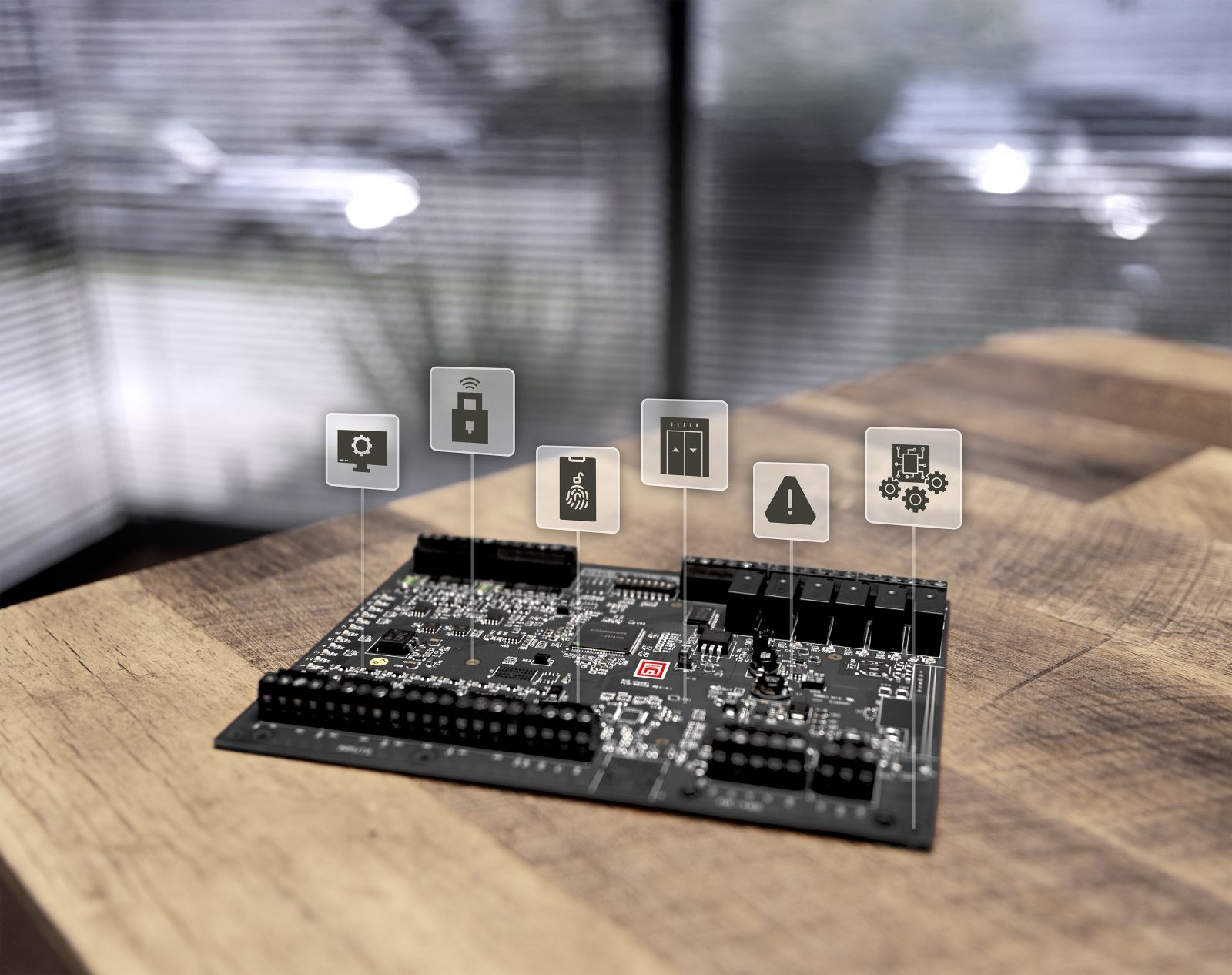
Bengaluru, April 8: Mercury Security, a global leader in open architecture access control hardware, recently announced the commercial launch of its embedded application environment. With developer onboarding active and partner applications in progress, the platform moves from concept to execution, enabling technology partners and OEMs to build and deploy secure applications directly on Mercury MP Intelligent Controllers equipped with the latest Mercury firmware.
From Groundwork to Execution
Mercury introduced its embedded application environment one year ago to expand what access controllers can do. Today’s announcement marks the platform’s transition from preview to commercial launch.
The platform extends Mercury’s open architecture by allowing approved applications to run directly at the edge. By embedding business logic and integrations on the controller itself, organizations can accelerate innovation, strengthen security and scale functionality without reengineering their core infrastructure.
Supported by a structured developer program, technology partners follow a four-step onboarding process that includes submitting proposals, collaborating with Mercury on technical evaluation, accessing development tools and completing a security review prior to distribution. This framework ensures applications meet performance and cybersecurity expectations while helping partners bring solutions to market faster.
Spotlight on App Developers
The launch highlights the growing community of OEMs and developers building on Mercury’s platform. By providing a secure, open environment at the controller, Mercury empowers partners to create new capabilities that operate directly at the edge.
Innovation is no longer confined to upstream systems. Applications can now enhance integration, analytics and orchestration within the controller itself. This ecosystem approach allows partners to differentiate their offerings, while delivering additional value for end users.
“This is a milestone moment,” said Steve Lucas, Vice President of Sales at Mercury Security. “We’ve laid the groundwork with a secure, open controller platform and validated distribution through OEM channels. We’ve created an environment where partners and developers can build apps on MP Controllers. Now, we have the program and tools to support a growing list of certified app developers.”
Partner Application Highlights
Mercury is working with three new partners to demonstrate the range of innovation possible within the app environment:
-
Commend Edge Bridge: The Commend Edge Bridge app will deliver real-time, hardware-level data directly and securely to Commend device displays and audio products, without requiring any middleware.
-
HiveWatch: The HiveWatch app on Mercury controllers will securely connect access control hardware to HiveWatch’s cloud security operations platform. Security teams will gain centralized visibility into physical security events, with the ability to isolate device health events at the panel level, enabling faster diagnostics, proactive maintenance, and more efficient incident response.
-
KeyShare Connect by PassiveBolt: The KeyShare Connect app will enable government-issued digital IDs — such as mobile driver’s licenses — to be verified for physical access within a Mercury-powered environment, running natively on the Mercury controller at the edge. Together, PassiveBolt and Mercury will help eliminate the need to issue, manage, or pay for separate access credentials.
These partner applications will join the Mercury KS210 device app, which enables OEMs to integrate up to 32 KS210 OSDP server cabinet locks per controller.
Built for Secure Growth
Security and governance are foundational to the embedded application environment. Applications undergo structured testing to ensure performance integrity and alignment with enterprise cybersecurity expectations.
Controllers designed on open standards allow partners to integrate more efficiently while giving end users flexibility to adapt over time. As regulatory requirements evolve and integration needs expand, the Mercury app environment supports phased modernization rather than wholesale replacement.
