
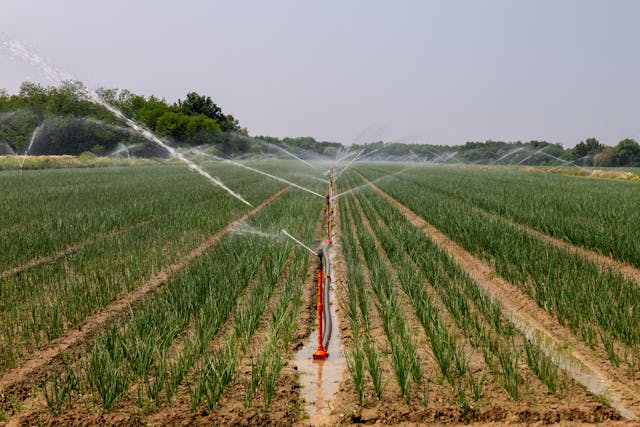

Summer has always tested the patience and resilience of farmers. The season brings intense sunlight, rising temperatures, and unpredictable water availability. For many, it is a period of constant adjustment—balancing irrigation schedules, protecting crops from heat stress, and managing rising pest pressure.
Yet, summer is not only a season of challenge. With the right approach, it can also be a period of strong growth, efficient production, and improved farm income. The difference lies in how farming is planned and executed.
This feature explores a practical yet forward-looking approach to summer agriculture—what farmers should do, what they must avoid, and how farming can evolve into a more resilient and sustainable system.
The Reality of Summer Farming
Agriculture during summer operates under pressure. Soil moisture evaporates faster, crops face heat stress, and water demand increases significantly. At the same time, pests and diseases often become more active in warm conditions.
These overlapping challenges make one thing clear: traditional methods alone are no longer enough.
Modern summer farming requires a blend of awareness, planning, and smart resource use.
What Farmers Should Do: Building Strength from the Ground Up
1. Treat Water as a Strategic Resource, Not an Unlimited Supply
Water is the foundation of summer farming, but also its most vulnerable resource.
Instead of relying on routine irrigation, farmers are increasingly shifting towards precision-based water use.
Drip irrigation systems, for example, allow water to reach directly to the root zone, reducing evaporation losses. Watering during early morning or late evening hours helps crops absorb moisture more effectively. Mulching—using straw, dry leaves, or crop residue—acts as a protective layer that slows down soil drying and stabilizes temperature.
In many progressive farms, even simple soil moisture observation has replaced guesswork, helping farmers decide exactly when irrigation is needed.
2. Choose Crops That Respect the Season
One of the most overlooked decisions in farming is crop selection. Summer rewards those who align their choices with climate conditions.
Heat-tolerant crops such as okra, brinjal, tomato, chilli, cucumber, and fruits like watermelon and muskmelon, tend to perform better under high temperatures. Millets and maize also show strong adaptability.
In contrast, water-intensive or sensitive crops often struggle, leading to poor yields and unnecessary loss of resources.
Smart farming begins long before sowing—it begins with choosing the right crop for the right season.
3. Build Living Soil, Not Just Cultivated Land
Healthy soil is more than a medium—it is an ecosystem.
Summer heat can weaken soil structure and reduce microbial activity. To counter this, farmers are returning to practices that rebuild soil naturally.
Organic compost, farmyard manure, and green manure help restore fertility. Crop rotation prevents nutrient exhaustion and reduces pest buildup. Avoiding excessive tilling helps preserve soil moisture and prevents erosion.
In many ways, soil health is becoming the true measure of long-term farm productivity.
4. Think Early, Act Early in Pest Management
Pests thrive in warm weather. What begins as a small infestation can quickly escalate if ignored.
Modern pest management focuses less on reaction and more on prevention. Regular field observation, natural sprays like neem-based solutions, and encouraging beneficial insects are becoming key strategies.
Rather than depending heavily on chemicals, farmers are gradually moving toward Integrated Pest Management (IPM)—a balanced approach that protects both crops and soil health.
5. Weed Control: The Silent Productivity Factor
Weeds are often underestimated, yet they compete directly with crops for water and nutrients—especially in summer.
Timely removal, mulching, and cover cropping are simple but highly effective solutions. When left unmanaged, weeds can significantly reduce yield potential, particularly in water-stressed conditions.
6. Water Storage: Preparing for the Invisible Crisis
Water scarcity rarely arrives suddenly—it builds gradually.
Forward-thinking farmers are investing in rainwater harvesting systems, farm ponds, and improved irrigation infrastructure. Even small-scale storage systems can provide critical support during dry spells.
Efficient water storage is not just preparation; it is insurance against climate uncertainty.
What Farmers Should Avoid: Mistakes That Cost the Season
1. Avoid Irrigation Guesswork
Overwatering or underwatering remains one of the most common causes of crop stress. Both extremes reduce productivity.
2. Avoid Ignoring Soil Testing
Without understanding soil conditions, nutrient application becomes inefficient and often wasteful.
3. Avoid Unsuitable Crop Choices
Planting without considering seasonal suitability often leads to avoidable losses.
4. Avoid Delayed Pest Action
Late response allows pests to spread rapidly and damage entire fields.
5. Avoid Neglecting Equipment Maintenance
In summer, machinery failures can disrupt critical farming activities at the worst possible time.
6. Avoid Ignoring Weather Updates
Weather forecasting is no longer optional—it is essential for planning irrigation, sowing, and protection measures.
The Future of Summer Farming: Smarter, Not Harder
Agriculture is gradually shifting from traditional intuition-based practices to data-aware and climate-resilient systems.
Technologies like weather apps, moisture sensors, and drip irrigation systems are becoming more accessible. At the same time, traditional knowledge—such as mulching, mixed cropping, and organic soil care—remains equally important.
The future of summer farming lies in combining both worlds.
Conclusion: Turning Heat into Opportunity
Summer does not have to be a season of loss or limitation. With careful planning and the right practices, it can become a season of efficiency, productivity, and growth.
The key lies in understanding the season rather than resisting it.
Farmers who manage water wisely, protect soil health, choose appropriate crops, and adopt timely interventions are better positioned not only to survive summer—but to thrive in it.
In the evolving landscape of agriculture, success is no longer defined by effort alone, but by intelligence, timing, and adaptability.