
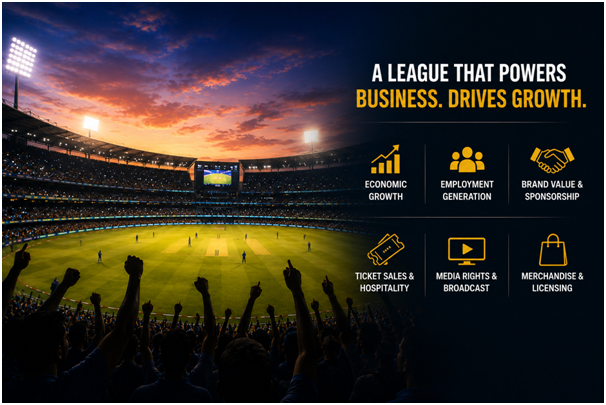

The IPL is no longer just a cricket league but an extremely robust engine for business in India. The IPL brand value is not limited to the thrill of the match alone, but covers media rights, sponsorship opportunities, franchisee loyalty, stadium income, players’ marketability, tax considerations, and even the local economy of each host city.
For readers tracking IPL 2026, the sharper question is not only which franchise builds the best squad. The bigger story is how the league keeps turning fan attention into structured commercial value. That is where Indian cricket looks different from most sporting products: emotion comes first, but the money follows with discipline.
Why the League Became an Economic Engine
The league sells urgency. A long cricket calendar can feel slow, but this tournament arrives like a festival with fixtures attached. Rivalries are familiar, evening slots suit working fans, and each match carries table pressure. Even neutral viewers find a reason to watch because form, captaincy calls, impact roles, and qualification maths change quickly.
This rhythm turns attention into repeat consumption. Fans do not only watch the last four overs. They follow squads, auctions, injuries, venue records, training clips, and match-ups. Offices discuss selection calls the next morning. Families plan dinner around the toss. Cafes and housing societies screen games because the tournament gives people a shared language.
A successful season creates value in several areas:
- Audience Scale: Millions follow live coverage, score updates, highlights, and player discussions across screens.
- City Commerce: Hotels, transport services, restaurants, street sellers, and retail outlets gain from match-day movement.
- Sports Employment: Coaches, analysts, physios, venue crews, content teams, and event staff get specialised work.
- Franchise Loyalty: Fans invest emotion in colours, captains, young players, chants, and home-ground identity.
- Commercial Trust: Sponsors return because the league delivers attention, repetition, and strong recall.
The important point is simple. The tournament does not only organise cricket; it organises behaviour. Once fans build a seasonal routine, the economy around that routine becomes easier to plan and sell.
IPL Business Model and Revenue Logic
The IPL business model is strong because it does not lean on a single income source. Central revenue, franchise revenue, match-day income, licensing, and content-led engagement work together. If one area slows, the others still support the wider structure.
Media rights bring the heaviest financial base because live cricket still demands real-time attention. Sponsorship adds brand money. Ticketing and hospitality monetise the stadium experience. Merchandise converts loyalty into purchases. Digital content keeps fans active before and after the match.
The main revenue pillars are clear:
- Media Rights: Platforms pay for live access because cricket loses value when the result is already known.
- Sponsorship Packages: League and team assets appear across jerseys, dugouts, screens, interviews, and digital formats.
- Ticketing And Hospitality: Fans pay for seats, premium access, food, and the shared emotion of watching live.
- Merchandise Sales: Jerseys, caps, collectibles, and fan items turn support into repeat spending.
- Content And Licensing: Teams use interviews, training footage, short videos, and fan shows to extend the season.
Media Rights As the Central Engine
Media rights are the financial backbone of the tournament. Live cricket is rare because viewers still prefer watching the action as it happens. A film can wait. A last-over chase cannot. That difference gives the league strong media value.
There are several natural peaks that occur during an IPL cricket match such as toss tactics, powerplay approach, middle overs battle, death bowling, and final chasing. The reason why advertisers are attracted to this kind of structure is because the audience maintains their emotional engagement for a long time. Even franchises benefit from it as well, since there is revenue generation centrally.
The media cycle also improves the cricket product. When teams have stronger planning resources, they can build deeper squads, use sharper data, and support young players better. The result is not just better business; it is often better cricket.
Franchise Revenue and Fan Loyalty
Franchises are not only teams on a scorecard. They are city identities with national reach. A fan may support a home side, follow a favourite player, or enjoy a specific style of play. That mix gives each franchise multiple routes to loyalty.
Strong franchises usually share the same traits: clear identity, competitive cricket, local connection, smart content, and memorable player stories. Winning helps, but it is not the only driver. A team can still grow if fans see courage, continuity, and a believable plan.
This loyalty has commercial weight. A casual viewer can become a ticket buyer, a merchandise customer, a social media follower, and a long-term advocate. That is why franchise building cannot be treated as decoration. It is a core asset inside the league economy.
IPL Sponsorship and Brand Demand
IPL sponsorship works because the tournament gives brands repeated visibility inside emotionally charged moments. A logo during a tight chase has more memory value than a logo in a cold advertising slot. It sits inside the drama, not beside it.
The league’s commercial strength comes from frequency and context. A sponsor can appear during team announcements, match coverage, player interviews, stadium visuals, fan contests, and digital clips. The message does not depend on one placement; it travels through the full cricket experience.
Good sponsorship value usually comes from these features:
- High Recall: Fans see the same assets across several matches, formats, and match situations.
- Live Emotion: Wickets, sixes, tactical calls, and tense finishes create stronger memory hooks.
- Multi-Platform Reach: Television, mobile, stadium branding, and social content support each other.
- Regional Depth: Language-led campaigns help brands speak to different Indian audiences with sharper relevance.
- Player Association: Cricketers carry trust because fans already track their form, role, and personality.
Why Sponsors Treat the League Seriously
They sponsor the event because it provides an answer to one of the biggest challenges of marketing, which is targeting a massive crowd without blending into the background. Cricket provides a platform for delivering the message, while the league adds frequency.
While a traditional marketing campaign could take several weeks to become memorable, here a good placement can get the message remembered within days, owing to the high density of the matches along with continued discussions even after the final ball. Supporters analyze plays, upload clips, argue about decisions, and ensure that the brand gets into people’s conversations.
The ideal partnership does not disturb the experience of the fans at all. It integrates seamlessly into the game coverage, team narratives, fan interactions, stadium experience, and social content.
GST On Sponsorship Services and Commercial Discipline
GST on sponsorship services matters because sponsorship contracts are often large, layered, and recurring. Tax treatment affects pricing, invoicing, cash flow, documentation, and compliance. Cricket may look emotional on screen, but the paperwork behind it has to be exact.
A sponsorship agreement may include logo rights, digital campaigns, hospitality access, player appearances, content usage, ground branding, and promotional assets. Each part needs clear wording so both sides understand the taxable value and payment structure.
A practical sponsorship contract should define the service scope, tax responsibility, invoice timing, credit position, approvals, and usage proofs. This discipline protects sponsors, franchises, and finance teams. Poor drafting can turn a clean deal into a dispute; good drafting keeps the focus on execution, value, and cricket.
Compliance also signals maturity. As the league grows, professional tax planning becomes part of its credibility. Strong contracts do not reduce the excitement of the tournament; they make the business beneath it more stable.
Why IPL Brand Value Keeps Expanding
IPL brand value keeps expanding because the league owns a rare mix: live attention, national emotion, commercial scarcity, and repeatable drama. Few sports products can offer that combination every season.
The format is easy to understand, which helps casual viewers become regular followers. The points table, qualification pressure, net run rate, home advantage, and player roles create clear stakes. The cricket is fast, but the story is not confusing.
What a Match Day Does For Indian Cities
It is a local economic phenomenon where the stadium acts as the hub, but there is so much more that occurs. Airports, public transportation systems, taxis, restaurants, cafes, shopping centers, hotels, security, and vending services all receive the boost.
City-level effects are normally observed in the following manner:
- Hospitality Traffic: Hotels and restaurants profit from tourists, members of teams, journalists, and event staff.
- Transport Traffic: Higher loads are expected for taxis, buses, metro lines, parking zones, and local traffic.
- Sales Of Food And Goods: Street vendors, transporters, food courts, and sales booths thrive on crowds.
- Event Staffing: Increased need for security personnel, ushers, cleaning staff, tech support, photographers, and other staff.
- Sporting Image Promotion: Energy of crowds and the sports complex create an impression of the sporting city.
This impact is not limited to large cities. A smaller venue with a strong crowd can also gain national attention. Good hosting tells fans, players, and organisers that the city is ready for big cricket.
The next phase of growth will depend on balance. More content can create more revenue, but only if the matches remain sharp and players stay fresh. A crowded calendar can weaken attention; a well-managed season can deepen it.
Franchises will also behave more like year-round sports companies. Academies, regional content, community cricket, fan clubs, and digital shows can keep loyalty alive outside the playing window. That approach makes sense because a fan engaged in January is easier to reach during the tournament.
The commercial lesson is clear. The league became valuable because the cricket product stayed strong. Business can amplify that value, but it cannot replace it. The ball still has to beat the bat. The chase still has to tighten the chest. The crowd still has to believe one over can change everything.
That is why the tournament remains one of India’s most effective sports economies. It is entertainment, employment, media property, tax case study, city event, and talent platform in one package. The surface is cricket. Underneath, it is a disciplined business machine powered by Indian fandom.