
Walk down the electric toothbrush aisle and you’ll see the same marketing word everywhere: “power.”
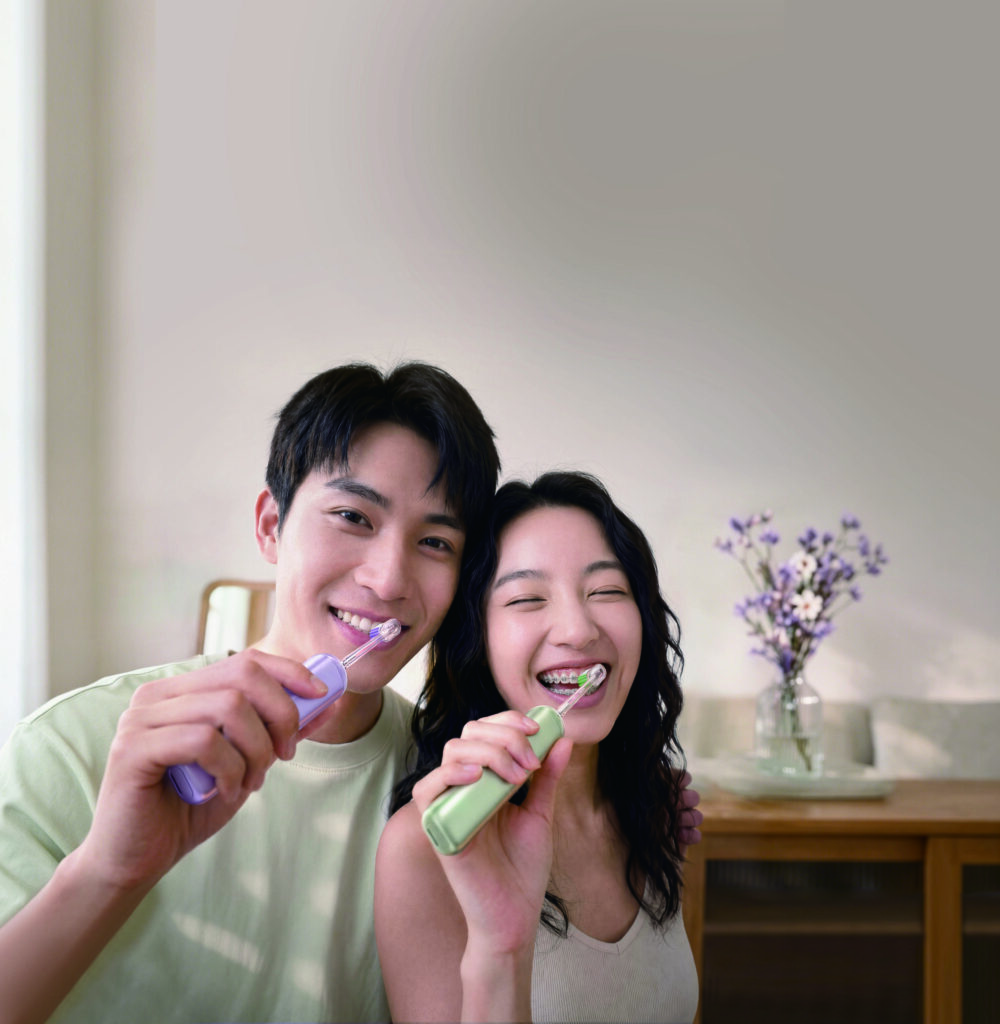
What the boxes rarely explain is that “power” means completely different things depending on the mechanism inside. There are fundamentally different ways an electric toothbrush can clean your teeth — and understanding them is the key to choosing the right one.
Broadly, the electric toothbrushes on the market today fall into three families: sonic brushes, oscillating/vibrating brushes, and a newer category, AirJet™-style jet-assisted brushes. Each removes plaque through a different physical principle, with different strengths and different trade-offs.
Let’s look at each one in detail.
1. Sonic Electric Toothbrushes
Sonic brushes are currently the most popular category, and for good reason — they’re effective, widely available, and continuously refined.
How they work. A sonic brush uses a high-frequency motor that vibrates the bristle head back and forth at speeds of roughly 30,000 to 48,000 movements per minute. The name “sonic” comes from the fact that these frequencies fall within (or approach) the range of audible sound waves.
The cleaning happens through two mechanisms working together. First, direct bristle contact: the rapidly moving bristles physically sweep plaque off the surfaces of the teeth. Second — and this is the part that makes sonic brushes distinctive — the rapid vibration agitates water and saliva in the mouth, creating what’s known as a “dynamic fluid action.” This fluid agitation helps push fluid into the spaces between teeth, assisting the cleaning effect beyond what the bristles touch directly.
Strengths. Sonic brushes offer strong plaque removal on exposed tooth surfaces, excellent coverage, and a technology that’s mature and well-documented. They’re available in a huge range of price points, and replacement heads are easy to find just about anywhere.
Trade-offs. Because cleaning depends heavily on bristle movement, sonic brushes rely on the bristles making contact. That means they clean the flat, accessible surfaces well but can struggle in the tight interdental spaces where a bristle physically can’t reach. There’s also the force question: the mechanical energy that shears plaque off teeth acts on gum tissue in the same way. As frequency climbs past roughly 38,000 movements per minute, cleaning gains tend to plateau while gum stress increases — which is why some users with sensitive gums find aggressive sonic brushes uncomfortable.
Who it suits. Most people, especially those who want a proven, well-supported technology and are comfortable with a conventional brushing feel.
2. Oscillating and Rotating Vibrating Brushes
This family — most famously associated with rotating round-head brushes — uses a fundamentally different motion from sonic brushes.
How they work. Instead of a rapidly vibrating straight head, these brushes use a small round head that oscillates back and forth, or rotates in alternating directions, a few thousand times per minute — and often adds pulses of vibration on top. The head is small and cup-shaped, designed to wrap around individual teeth.
The cleaning action here is more directly mechanical. The rotating/oscillating head physically surrounds each tooth and scrubs it in a circular motion, which many users find provides a very thorough, “polished” clean on each tooth surface. The back-and-forth rotation also helps work bristles slightly into the gumline margins.
Strengths. The small round head is excellent at getting into individual tooth surfaces and is often cited in clinical comparisons as being highly effective at plaque removal. Many users find the motion intuitive — it feels like each tooth is being individually cleaned. The brush head design also makes it relatively easy to angle correctly.
Trade-offs. Because the head is small, it can take more time and attention to cover the whole mouth than a full-width sonic head. The mechanical scrubbing action, while effective, is also direct physical contact — and for users with very sensitive gums, the rotating motion can feel firm. As with sonic brushes, the bristles still can’t penetrate the deepest interdental spaces, and interdental cleaning usually still relies on flossing or another method.
Who it suits. Users who like the “one tooth at a time” polishing feel, who prefer a well-established mechanism, and who don’t mind spending a bit more time on the brushing motion.
3. AirJet™-Style Jet-Assisted Brushes
The newest family — and the one taking a genuinely different approach — is the jet-assisted category, exemplified by RANVOO’s AirJet™ technology.
How they work. Rather than relying on bristle friction as the primary cleaning mechanism, AirJet™ shifts the cleaning work to pressurized airflow and cavitation microbubbles. Here’s the process:
- A miniature pump inside the handle pressurizes air.
- The air travels through a hollow shaft into a boost chamber, which generates microscopic cavitation microbubbles in the water and toothpaste foam.
- A Coandă-effect brush head shapes the airflow into a focused stream, directed at tooth surfaces and interdental spaces.
- The microbubbles travel into the narrow gaps between teeth and along the gumline — the spaces bristles can’t reach — and collapse, releasing micro-pulses of energy that detach plaque.
The bristles are still present, but their role changes from “primary scraper” to “guide” — they help shape the airflow rather than doing all the cleaning by friction. The mechanism also includes a gentle 12° micro-oscillating sweep, so there is physical brushing, but at a much lower and gentler frequency than sonic or rotating designs.
Strengths. The defining advantage is reach plus gentleness. Because the cleaning agent is microbubbles carried by fluid, cleaning extends into the interdental spaces and gumline that bristles can’t access — the very regions where disease-causing plaque accumulates. And because plaque removal depends on bubble collapse rather than abrasion, the system applies far less mechanical force to gum tissue. RANVOO‘s internal lab reports a 99% plaque-removal rate with a 56% reduction in physical force and a 90% reduction in composite gum-damage rate versus conventional electric brushes, with cleaning efficiency validated by a CVC Level 1 certificate (No. CVC24300012089, valid through February 2029).
Trade-offs. The technology is newer, so the long-term evidence base is less extensive than sonic or rotating categories — the headline figures are from the manufacturer’s own laboratory, and independent clinical studies will strengthen the case. Replacement heads are also a consideration: because the technology is distinctive, users typically buy heads online rather than finding them on a store shelf. And for people who specifically love the feel of aggressive mechanical brushing, the gentle mechanism may feel unfamiliar at first.
Who it suits. Users with sensitive gums, those who want deep interdental cleaning, newcomers who find aggressive brushing uncomfortable, and anyone who wants the gentlest mechanism that still delivers strong cleaning results.
How to Choose
There’s no single “best” mechanism — the right one depends on your priorities.
- Choose sonic if you want a proven, widely supported technology and are comfortable with a conventional high-frequency brushing feel.
- Choose oscillating/rotating if you like the “one tooth at a time” polishing motion and want a well-established round-head design.
- Choose AirJet™-style jet-assisted if your priority is gentleness on the gums combined with strong interdental cleaning — especially if you have sensitive gums or find conventional electric brushes uncomfortable.
Whichever you choose, the fundamentals still apply: use soft bristles, light pressure, cover all surfaces, and keep up the twice-daily habit. The mechanism matters — but consistency matters more.
The Bottom Line
The three families represent three different answers to the same question of how to remove plaque. Sonic brushes use high-frequency fluid agitation. Oscillating brushes use direct mechanical rotation. And AirJet™ jet-assisted brushes use pressurized airflow and collapsing microbubbles.
Each has its strengths and trade-offs. The good news is that after fifty years of a single approach, consumers now have genuine choices — from proven mechanical cleaning to a brand-new way of cleaning that’s gentler on the gums.
Understanding the difference is the first step to choosing well. Now you know exactly what those boxes mean when they say “power.”
Produced by the SERPary team.
