

New Delhi, Aug 25: ACER India recently launched Outstanding Schools, an innovative school improvement tool for wellbeing & future readiness, at an event supported and hosted by the Australian High Commission in India, and powered by Brainfeed.
Outstanding Schools is a comprehensive, evidence-based improvement initiative that helps schools strengthen teaching quality, enhance student wellbeing, and prepare learners for the future. Built on ACER’s internationally recognised School Improvement Tool and adapted for the Indian context, the initiative supports schools in moving beyond compliance, rankings, and recognition towards a culture of continuous improvement and sustained excellence.
Grounded in decades of research on effective schools and leadership, the SIT was originally developed in collaboration with the Queensland Department of Education and has been implemented and refined across diverse international contexts. It provides a structured framework for schools to reflect on their practices, identify priorities for improvement, and strengthen learner outcomes through a focus on wellbeing, leadership, teaching quality, and evidence-informed decision-making.
The India edition of the SIT retains the tool’s robust research-based architecture while aligning it with the priorities of the National Education Policy 2020. The adaptation ensures strong alignment with India’s education reform agenda, including competency-based learning, foundational literacy and numeracy, teacher professional development, inclusive education, and strengthened school leadership.
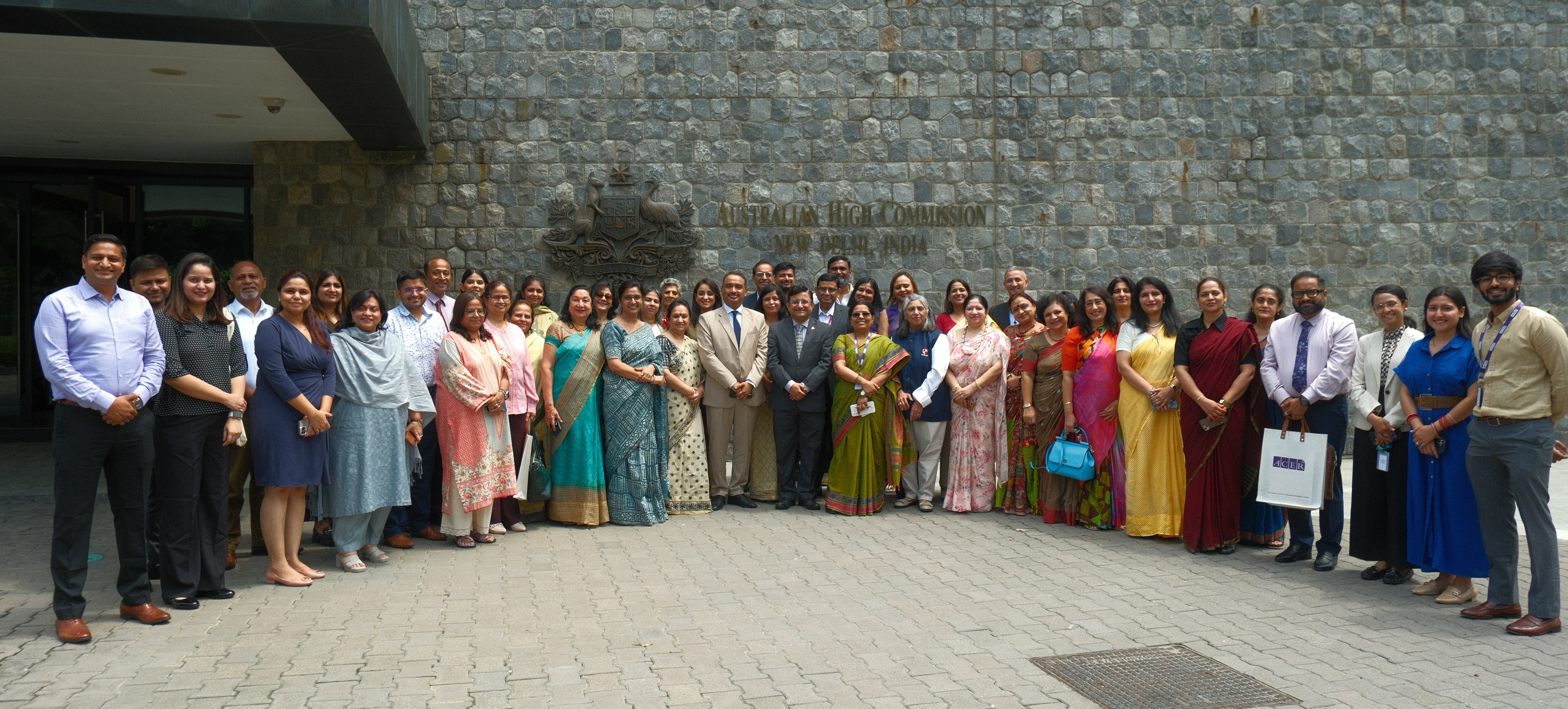
The launch brought together school leaders, educationists, and policymakers to explore how schools can build environments where every learner thrives, every teacher grows, and every school is future-ready. Representatives from more than 50 organizations participated in the launch event, exchanging perspectives on the initiative and on the role of evidence-based improvement in advancing educational excellence.
In his inaugural address, Trade Commissioner, Austrade India, reaffirmed the strong educational partnership between Australia and India and applauded ACER India’s efforts to bring proven, research-based innovations that contribute to improving the quality of education.Shri Kripa Shankar Upadhyay, Additional Director, Directorate of Education, Delhi and CEO, Delhi Board of School Education, expressed his views:
“Vision alone does not transform a system; leaders need tangible outcomes, honest diagnosis, and practical support in the implementation of an improvement plan. That is exactly what ACER’s initiative offers schools: a shared path from compliance to continuous improvement, evidence-informed practice, and sustained excellence. In my years of building schools from the ground up, I have seen that leaders need clarity on exactly where we stand and where we must go next.”
In her opening remark, Dr. Priyanka Sharma, CEO, ACER India, said,
“Without context, we never know where we truly stand; that is what benchmarking tools such as SIT give school leaders. This tool is not about a race to reach somewhere; it is about helping every school understand where it is on its own journey to becoming outstanding and how it can get there. That is the culture we hope to build in schools across the country.”
Dr. Ashok Pandey, Chair, Council for Global Citizenship Foundation, engaged in a deeper dialogue with guests and reflected,
“True excellence has never been about rising above others; it is about every school, every teacher, and every learner striving to reach their own highest possible potential. That is the spirit that Outstanding (Utkrisht) Schools brings to life.”
During a virtual address from ACER Melbourne, Dr Dan Edwards, Head of Division, Student Learning and Progress, emphasised that what sets outstanding schools apart is their ability to identify a few critical areas for improvement and pursue them with focus and discipline, rather than trying to address too many priorities at once. In her recorded message, Julie Murkins, Senior Research Fellow, Effective Practice in Education, ACER, drew on decades of international experience to highlight one of the most valued aspects of the School Improvement Tool. She shared that school leaders consistently appreciate the external capacity-building embedded within the review process, which has a significant and lasting impact on school improvement and teaching practice.
Through this initiative, ACER India reaffirms its commitment to transforming learning systems through research-informed practice, evidence-based innovation, and sustained capacity building.