
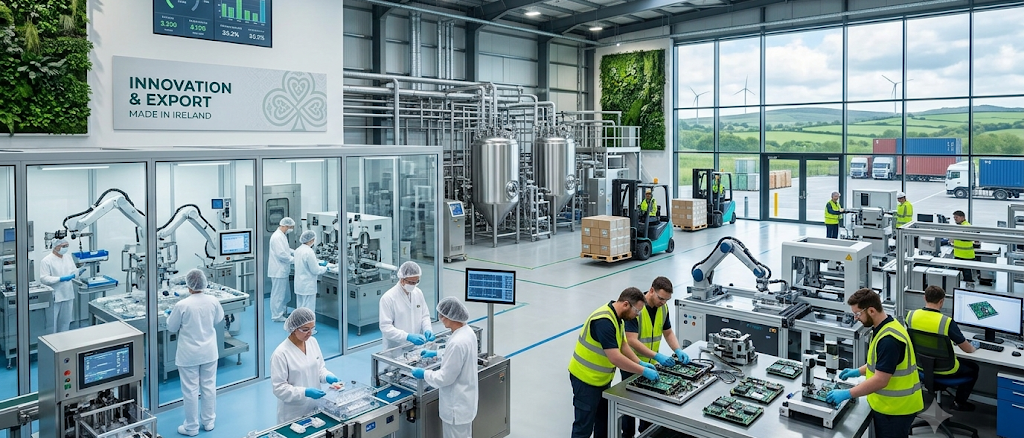
Ireland’s manufacturing exports are playing an increasingly important role in the country’s economic growth, with pharmaceuticals, medical technology and advanced engineering driving its presence in international markets. Over the years, Ireland has transformed itself into a major manufacturing destination for global businesses, supported by a skilled workforce, research capabilities, modern production facilities and access to European markets. Its export strength is not simply built on the volume of goods produced but on the high value, technical expertise and innovation behind them. As international demand for medicines, healthcare equipment and advanced industrial products evolves, Ireland’s manufacturing sector is creating new opportunities for investors, suppliers and businesses connected to global trade.
Pharmaceuticals: The Backbone of Ireland’s Export Economy
Ireland’s pharmaceutical industry is one of the strongest pillars of its export-oriented manufacturing economy. The country hosts manufacturing and research operations of several international pharmaceutical companies, making it an important production base for medicines and healthcare products supplied to global markets.
Its manufacturing capabilities cover pharmaceutical preparations, vaccines, biological products and specialised medicines. Producing these products requires advanced facilities, highly trained professionals and strict quality-control systems.
For multinational companies, Ireland offers an established business ecosystem that supports complex manufacturing operations and international distribution. These investments also generate demand for supporting industries, including laboratory services, industrial equipment, packaging, transportation and specialised engineering.
The benefits extend to smaller businesses as well. Local suppliers can participate in pharmaceutical supply chains by providing technical services, maintenance, materials and other operational support.
Medical Technology Is Expanding Ireland’s Global Reach
Beyond pharmaceuticals, medical technology has become another important contributor to Ireland’s international manufacturing reputation.
The country has developed a strong medical technology ecosystem, particularly around Galway, where manufacturers produce advanced devices and healthcare solutions for international markets.
Products manufactured across this industry include cardiovascular devices, diagnostic equipment, diabetes monitoring systems and other specialised medical technologies.
The growing demand for advanced healthcare solutions is encouraging companies to invest in product development, automation and more efficient manufacturing processes.
The shift towards connected healthcare, remote patient monitoring and minimally invasive medical procedures is also creating demand for specialised components and precision manufacturing.
For businesses, this presents opportunities in engineering, electronic components, software development, testing and medical equipment supply. Smaller technology companies can also benefit by providing specialised services to established medical device manufacturers.
Advanced Engineering and Electronics Strengthen Industrial Capabilities
Ireland’s manufacturing strength extends beyond the healthcare sector. Advanced engineering, electronics and precision manufacturing are helping diversify its industrial base.
Modern manufacturing increasingly depends on specialised components, automated equipment and technologies that improve production efficiency. Irish businesses operating in these areas contribute to international supply chains serving technology, industrial and other high-value sectors.
The growing demand for digital infrastructure, automation and advanced electronics is creating opportunities for manufacturers with specialised technical capabilities.
Investment in robotics, digital production systems and precision engineering can help companies improve product consistency, reduce manufacturing errors and manage operating costs.
This transition is also creating demand for skilled engineers, technology professionals and industrial service providers.
Foreign Investment Connects Ireland to Global Supply Chains
Foreign direct investment has played a significant role in developing Ireland’s manufacturing industry. International companies have established production facilities, research centres and regional operations, helping the country become closely connected to global business networks.
Access to the European Union’s single market, a skilled workforce, an established regulatory environment and a strong international business ecosystem have supported its attractiveness as an investment destination.
However, the impact of foreign investment goes beyond the operations of multinational corporations. It creates business opportunities for domestic suppliers involved in construction, logistics, equipment maintenance, packaging, professional services and technology.
For small and medium-sized enterprises, becoming a supplier to larger manufacturers can provide access to long-term business relationships and international standards.
Strengthening these domestic supply-chain connections will be important for ensuring that manufacturing growth benefits a wider range of Irish businesses.
Research and Innovation Drive High-Value Manufacturing
One of Ireland’s major advantages in international manufacturing is its ability to combine industrial production with research and innovation.
Pharmaceutical manufacturers depend on scientific research and advanced production techniques, while medical technology companies continuously develop new devices and improve existing healthcare solutions.
Innovation also plays an important role in engineering and electronics, where businesses are investing in automation, digital monitoring and advanced manufacturing equipment.
Collaboration between companies, universities and research institutions helps develop technical expertise and supports the introduction of new products.
For manufacturers, this investment is essential to remain competitive in international markets where product quality, reliability and technological performance influence purchasing decisions.
It also creates opportunities for research-driven startups and specialist technology firms to work alongside established industrial companies.
Opportunities for Small Businesses Across the Manufacturing Ecosystem
Ireland’s export economy offers opportunities beyond large-scale manufacturing. As international companies expand their operations, they require a wider network of suppliers and service providers to support production.
Some important business opportunities include:
- Industrial engineering: Providing precision components, machinery maintenance, automation and technical support.
- Packaging and logistics: Supporting the storage, handling and transportation of pharmaceutical and medical technology products.
- Digital manufacturing: Developing software, production monitoring systems and data-management solutions.
- Quality assurance: Offering testing, inspection, documentation and compliance-related services.
- Sustainable manufacturing: Providing energy management, waste reduction and resource-efficiency solutions.
These activities allow smaller businesses to participate in high-value industrial supply chains and develop specialised capabilities that can serve customers beyond Ireland.
Global Trade Risks Put Supply-Chain Resilience in Focus
Despite its strong export position, Ireland’s manufacturing sector is exposed to changes in the global economic environment.
Geopolitical tensions, international trade restrictions, supply-chain disruptions and fluctuations in energy costs can affect production expenses and delivery schedules.
The concentration of manufacturing activity among multinational companies also creates exposure to changes in international investment decisions and corporate production strategies.
For pharmaceutical and medical technology manufacturers, maintaining regulatory compliance and consistent product quality adds another layer of operational responsibility.
Businesses are therefore placing greater emphasis on supply-chain diversification, inventory management, reliable sourcing and operational efficiency.
Developing stronger relationships with domestic suppliers can help manufacturers reduce certain supply risks while supporting the wider industrial economy.
Sustainable Production Becomes a Business Priority
Environmental responsibility is becoming an important part of international manufacturing competitiveness.
Companies are under increasing pressure to improve energy efficiency, manage industrial waste and reduce the environmental impact of their production activities.
For Irish manufacturers, investing in cleaner technologies and efficient production systems can offer both environmental and commercial benefits.
Renewable energy adoption, water conservation, sustainable packaging and better waste management can help reduce resource consumption and strengthen business performance.
This shift is also creating opportunities for smaller companies specialising in environmental technology, industrial energy management and sustainable manufacturing services.
Ireland’s Position in the Next Phase of Global Manufacturing
Ireland’s manufacturing exports reflect the growing importance of specialised, technology-driven industries in international trade. Pharmaceuticals, medical devices and advanced engineering have helped the country build a strong export base while attracting investment from major global businesses.
The next phase of growth will depend on the industry’s ability to adapt to technological changes, manage international risks and maintain its competitive advantages.
For businesses, the opportunity extends beyond exporting finished products. Stronger domestic supplier networks, research partnerships, digital manufacturing and sustainable production can create additional sources of industrial growth.
Ireland’s long-term manufacturing competitiveness will ultimately depend on how effectively it combines global investment with local expertise, innovation and resilient supply chains. This combination can help the country strengthen its role in international trade while creating wider opportunities for businesses and skilled workers.
