
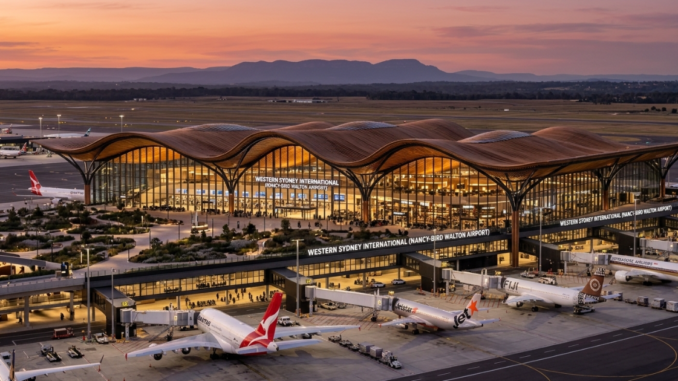
Nov 04: Australia’s newest international airport could reshape the country’s tourism and hospitality landscape by opening up easier access to Western Sydney and creating fresh opportunities for businesses across the region. The Western Sydney International Airport (WSI), which began passenger operations on October 25, 2026, is designed to serve a growing population while strengthening Australia’s international aviation network.
With 24-hour operations, expanding airline connections and major infrastructure developments planned around it, the airport represents more than an alternative arrival point for Sydney. It could help establish Western Sydney as a destination in its own right, attracting tourists, corporate travellers and investors.
For hotels, restaurants, travel companies, event organisers and transport operators, the development presents an opportunity to reach new customer groups. The scale of that opportunity will depend on how effectively the region converts improved connectivity into longer stays, visitor spending and sustained business activity.
Western Sydney International Airport Opens New Opportunities for Tourism
The airport’s opening comes at a time when Australia’s international visitor economy is expanding. Tourism Research Australia’s International Visitor Survey for the year ending June 2026 recorded 8.4 million international trips, an increase of 9% over the previous year. International visitors spent A$40.5 billion in Australia, up 16%.
Holiday travel accounted for 3.7 million trips and A$13.4 billion in spending. These figures underline the commercial importance of international tourism and the demand it can generate for accommodation, dining, attractions, transport and travel services.
Western Sydney International Airport could help distribute some of this activity beyond Sydney’s established visitor districts. Travellers arriving in the west may choose to stay nearby, explore local attractions or use the region as a starting point for journeys to other parts of New South Wales.
This creates an opportunity for Western Sydney to capture a greater share of visitor spending rather than functioning only as a transit point.
Expanding Airline Connectivity Could Attract More International Visitors
The growth of the airport’s airline network will be central to its tourism potential. Jetstar began passenger operations on October 25, 2026, with domestic connections to Melbourne, Brisbane and the Gold Coast. Air New Zealand’s first international passenger service from Auckland arrived on October 26.
Singapore Airlines is scheduled to introduce daily Singapore services from November 23, 2026. Qantas is expected to begin domestic services in March 2027, while Fiji Airways is also scheduled to launch services in March 2027. These connections could make the airport increasingly relevant to both leisure and business travellers.
For international travellers, additional route choices may improve convenience. For local businesses, they provide an opportunity to reach customers who might otherwise arrive through Sydney’s existing airport and spend most of their time elsewhere.
Hotels Near Western Sydney Airport Could See New Demand
Accommodation is likely to be among the first sectors to benefit as passenger traffic develops. Travellers arriving late at night or departing early in the morning may prefer hotels close to the airport. Business visitors, airline personnel and passengers with connecting journeys could also create demand for convenient short stays.
Areas such as Penrith, Liverpool, Blacktown and the wider Western Sydney region could become more attractive to hotel operators and accommodation investors. Demand may extend across different property formats, including business hotels, serviced apartments, budget accommodation and extended-stay properties.
The opportunity, however, will depend on more than proximity to the airport. Travellers increasingly look for convenience and a smooth experience. Hotels that offer airport transfers, flexible check-in, online reservations, local travel assistance and packages with nearby attractions could be better positioned to attract visitors.
Travel agencies and destination management companies can also develop itineraries that combine accommodation with local sightseeing, regional excursions and transport services.
Restaurants, Retail and Local Tourism Businesses Could Benefit
The airport’s commercial impact is not expected to remain within its terminal. As more visitors enter Western Sydney, demand could grow for restaurants, cafés, shopping destinations, entertainment venues and local experiences.
The region’s cultural diversity provides an opportunity to develop tourism products that reflect its communities. Food trails, cultural tours, local markets, heritage experiences and community-led activities could give international visitors reasons to explore the area.
Restaurants and hospitality businesses can benefit by developing menus and services for international travellers, while retailers can target passengers looking for shopping and leisure options before or after their flights.
Tour operators could also create short-stay itineraries connecting Western Sydney with destinations such as the Blue Mountains and other regional attractions. Encouraging visitors to spend an additional night or two in the region could help increase local tourism revenue.
Business Travel and Events Could Strengthen the Hospitality Market
The airport could also support the growth of corporate travel and the business events industry. Improved connectivity may make Western Sydney more accessible for international companies, investors, trade delegations and professionals attending meetings or conferences.
This could create opportunities for hotels with conference facilities, event venues, catering companies, transport operators and business travel agencies. Companies organising exhibitions, industry gatherings and corporate meetings may also consider locations in Western Sydney as the region’s infrastructure and commercial districts develop.
For hospitality businesses, the corporate market can provide demand beyond traditional holiday seasons. However, attracting this segment will require reliable transport, suitable meeting facilities, strong service standards and convenient access to business centres.
A$34.6 Billion Aerotropolis Investment Could Drive Regional Growth
The airport forms part of a wider development strategy centred on the Western Sydney Aerotropolis. According to the NSW Government, private investment in the Aerotropolis reached A$34.6 billion by October 2026, surpassing the A$29 billion in public infrastructure investment reported alongside it.
The emerging district around Bradfield is intended to support a range of industries, including advanced manufacturing, technology, logistics and professional services. As businesses establish operations and employment opportunities expand, demand could increase for accommodation, restaurants, corporate transport and other hospitality services.
This wider investment is significant because the airport’s economic impact will not depend solely on tourist arrivals. Business expansion, workforce movement, commercial partnerships and corporate travel could all contribute to demand for local services.
For investors and entrepreneurs, the development may create opportunities in hotel projects, food services, transport, retail, property development and visitor experiences. The pace of growth will depend on how quickly planned projects progress and how effectively businesses respond to emerging demand.
Road and Rail Connectivity Will Shape the Visitor Experience
Convenient access to the airport will be essential to its long-term success. The 16-kilometre M12 Motorway, completed in March 2026, provides a toll-free road connection between the airport and Sydney’s wider motorway network.
Bus services also support access to nearby centres, including Penrith, Liverpool, Campbelltown, Mount Druitt and Leppington. The planned Sydney Metro–Western Sydney Airport line is expected to provide a 23-kilometre rail connection with six stations between St Marys and Bradfield.
However, the metro is not yet operational. Until the service opens, passengers will continue to rely on road transport and bus connections to reach the airport and surrounding destinations.
For tourism and hospitality operators, this makes transport planning an important part of the customer experience. Hotels and travel companies that provide clear transfer information, shuttle arrangements and coordinated local tours could make their services more attractive to visitors.
Employment Growth Could Support the Wider Visitor Economy
The airport is also expected to contribute to employment across Western Sydney. More than 13,000 workers were involved in its construction, with significant participation from local businesses and employees.
Australian Government forecasts indicate that the airport could support approximately 8,500 jobs in daily operations when annual passenger numbers reach 10 million in the 2030s. These roles are expected to span aviation, security, retail, maintenance, logistics, transport and customer services.
A 2026 Western Sydney University study, Region in Ascent: Western Sydney International Airport and the Economic Future of Western Sydney, examines the potential for the airport and surrounding development to influence employment across the region. Its long-term modelling identifies growth opportunities in service industries, including accommodation, food services, retail, healthcare and professional services.
These projections are not guaranteed outcomes. Their realisation will depend on passenger growth, new international connections, infrastructure delivery and the ability of businesses to attract investment and skilled workers. Nevertheless, they highlight how aviation infrastructure can support a wider regional economy.
Challenges That Could Influence the Airport’s Growth
Despite its potential, the airport’s contribution to tourism will depend on how effectively several challenges are addressed.
Public transport access remains an important consideration. Until the planned metro connection becomes operational, some passengers may find road transfers less convenient, particularly during peak traffic periods. This could influence their accommodation choices and willingness to explore destinations further from the airport.
Airline expansion is another factor. Announced routes and planned services need to translate into consistent passenger demand. Competitive fares, reliable schedules and convenient connections will influence whether the airport attracts a sustained flow of international and domestic travellers.
Western Sydney will also need to develop its visitor infrastructure. More accommodation, quality restaurants, attractive experiences, trained hospitality workers and efficient local transport will be important if the region wants visitors to stay longer.
Businesses that plan ahead, invest in customer experience and build partnerships with airlines, travel agencies and local attractions may be better positioned to benefit from the airport’s expansion.
What Western Sydney International Airport Means for Australia’s Tourism Industry
Western Sydney International Airport could become a significant driver of tourism, hospitality and regional business growth in Australia. Its 24-hour operations, developing airline network and connection to a major investment programme provide a strong foundation for new commercial activity.
For hotel operators, restaurants, travel agencies, tour companies, retailers and transport providers, the opportunity lies in recognising that the airport could change where visitors arrive, stay and spend their money. Western Sydney has the potential to develop beyond an aviation gateway into a destination with its own accommodation, dining, cultural and business offerings.
The transformation will take time. Airline capacity, public transport, supporting infrastructure and the development of local visitor experiences will determine how much economic value the region ultimately captures.
As passenger operations get underway, the airport represents an important opportunity for businesses to participate in the next phase of Australia’s tourism and infrastructure growth.
