
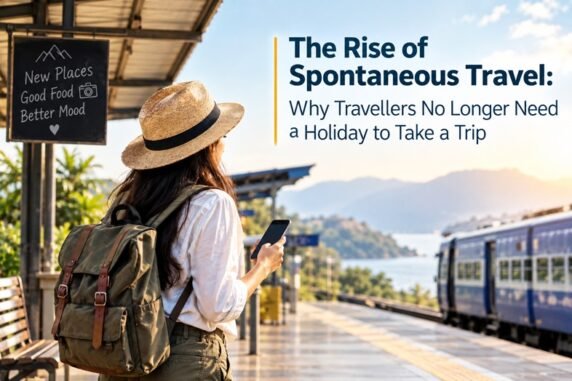
Sept 11: A holiday used to require a reason.
There had to be enough leave, enough time to plan, a destination worth the effort and, preferably, a long weekend to make it all work. Travel was something many people looked forward to once or twice a year.
That is changing.
Today, a free weekend can be enough to pack a bag and leave. A destination spotted on social media can become a travel plan. An unexpected break from work can turn into a road trip. Even a couple of days can feel like a good enough reason to get away.
Travel is slowly moving from being an occasional event to becoming part of everyday life.
Travellers Are Choosing More Frequent Getaways
The shift is not simply about travelling more. It is about travelling differently.
Instead of saving all their travel plans for one major vacation, people are increasingly finding smaller windows in their schedules.
A two-day break may be enough for a mountain escape, a beach stay, a heritage walk or simply a quiet weekend away from the city.
This is creating a new travel rhythm in which frequency can matter as much as duration. Rather than waiting for the perfect holiday, travellers are finding opportunities to get away whenever time allows.
The Rise of the Short Break
Long holidays are not disappearing, but shorter trips are becoming easier to fit into modern lifestyles.
For professionals dealing with demanding schedules, taking a week off may not always be practical. A two- or three-day trip, however, can feel much more achievable.
This is where weekend travel comes in.
A Friday or Monday holiday can transform an ordinary weekend into a mini vacation. It can also make nearby destinations more attractive, allowing travellers to spend less time commuting and more time actually enjoying the trip.
The result is a new kind of holiday: shorter, easier and often decided at the last minute.
Micro-Escapes Are Redefining What Counts as a Trip
Not every journey needs to be a full-fledged holiday.
A growing appetite for micro-escapes is making 24- to 48-hour trips increasingly appealing. A quick drive to the countryside, an overnight stay at a boutique property or a short visit to a nearby heritage town can offer the change of scenery travellers are looking for without requiring extensive planning.
The value of a trip is no longer necessarily measured by its length. A short break can provide enough time to disconnect, discover somewhere new and return refreshed.
This is also creating opportunities for destinations within a few hours of major cities. Places that might once have been overlooked in favour of famous holiday destinations can become attractive when travellers are specifically searching for short trips and weekend getaways.
Social Media Can Turn Inspiration Into a Travel Plan
The traditional travel journey often started with a destination in mind.
Now, it can start with a short video.
A reel showing a beautiful homestay, a quiet beach, a mountain road or a little-known café can create the sudden urge to visit. Travellers can discover places they had never considered and immediately start checking prices, reviews and availability.
Expedia Group’s Unpack ’25 report, based on insights from more than 25,000 travellers across 19 countries, found that 63% of consumers were likely to visit a lesser-known, less-crowded destination on their next trip. The report also identified “One-Click Trips” as an emerging trend, reflecting how social platforms and technology are making it easier to move from inspiration towards booking.
That makes travel discovery far more spontaneous.
A destination no longer needs to be on someone’s bucket list for years. Sometimes, it only needs to appear at the right moment.
Technology Has Made Last-Minute Travel Easier
Spontaneous travel would be difficult if booking remained complicated.
Today, much of the process can happen from a smartphone. Flights can be compared, hotels reviewed, rooms booked and transportation arranged within minutes.
Expedia’s 2025 Traveler Value Index found that 61% of travellers now find trip ideas through social media, up from 35% in 2022. The research, which covered more than 11,000 consumers across 11 global markets, also found that 73% had been influenced by recommendations from influencers when making travel decisions.
This convenience has changed the relationship between inspiration and action.
A traveller who discovers a destination today does not necessarily have to wait weeks before turning that idea into a plan. The gap between “That looks beautiful” and “Let’s go” has become considerably smaller.
Technology, in effect, has made spontaneity more practical.
Road Trips Fit Perfectly Into This New Travel Culture
Not every spontaneous trip needs a flight.
Road trips have become one of the easiest ways to turn a free weekend into an adventure. They offer flexibility that fixed itineraries often cannot.
Travellers can choose when to leave, make unplanned stops, change their route or discover places along the way.
This has also expanded the idea of what makes a destination worth visiting.
A quiet village, a lakeside property, a forest retreat or a small coastal town can be just as appealing as a famous tourist destination when the objective is simply to get away for a few days.
Experiences Matter More Than Ticking Off Destinations
There is another reason spontaneous travel is gaining momentum: travellers are increasingly looking for experiences rather than simply collecting destinations.
That could mean trying local food, staying in a heritage property, attending a cultural festival, exploring a craft tradition or simply spending a weekend somewhere peaceful.
Expedia’s Unpack ’25 research also highlighted the growing appeal of destinations and experiences that take travellers away from crowded tourist centres. Its “Detour Destinations” trend reflects a desire to explore lesser-known places that can be visited alongside, or instead of, major attractions.
For such travellers, the destination is only part of the story.
The experience is what makes the trip memorable.
Spontaneous Does Not Mean Careless
There is a difference between travelling spontaneously and travelling without thinking.
Even last-minute travellers still want a comfortable place to stay, reliable transportation, good reviews and some idea of what the trip will cost.
What has changed is the amount of time they are willing to spend planning.
Instead of researching a trip for several weeks, they may do it over a few evenings. Instead of building a detailed itinerary months in advance, they may book the essentials and decide the rest once they arrive.
The new traveller is not necessarily less organised.
They are simply more comfortable with flexibility.
Travel Is Becoming a Lifestyle Choice
Perhaps the biggest shift is that travel is increasingly being treated as part of personal lifestyle spending.
It can be a way to recharge after a demanding month, spend time with friends, celebrate a birthday, explore something new or simply escape a familiar routine.
Expedia Group’s 2025 Traveler Value Index found that 50% of consumers considered travel more important than it was five years earlier, while 88% planned to take a leisure trip within the following year.
That growing importance could encourage travellers to prioritise frequency over duration.
Instead of one major holiday every year, the future may involve several smaller journeys spread across the calendar.
What This Means for the Travel Industry
The rise of spontaneous travel is also changing what travellers expect from the industry.
Hotels and homestays need to be discoverable online. Tourism destinations need to create content that can inspire travellers quickly. Booking platforms need simple mobile experiences. Travel companies can also benefit from promoting short-break packages rather than focusing exclusively on traditional week-long holidays.
The opportunity extends beyond established tourist centres.
If travellers are increasingly searching for weekend getaways and short trips, destinations within easy reach of major cities can compete for attention alongside better-known holiday spots.
For local tourism businesses, this means being visible at the exact moment a traveller begins thinking, “Where can I go this weekend?”
Travellers No Longer Need a Holiday to Travel
The biggest change may be a simple one: travellers are no longer waiting for the perfect opportunity to travel.
A long weekend is enough.
A free Sunday is sometimes enough.
A beautiful place appearing on a phone screen can be enough.
Travel is becoming less about waiting for a holiday and more about finding a reason to step away from everyday life, even if that reason lasts only two or three days.
As digital booking becomes easier, short getaways become more popular and travellers seek experiences over conventional sightseeing, spontaneous travel could become one of the defining characteristics of the evolving travel culture.
The next trip may not be the one that has been planned for months.
It could simply be the one someone decides to take this weekend.
