
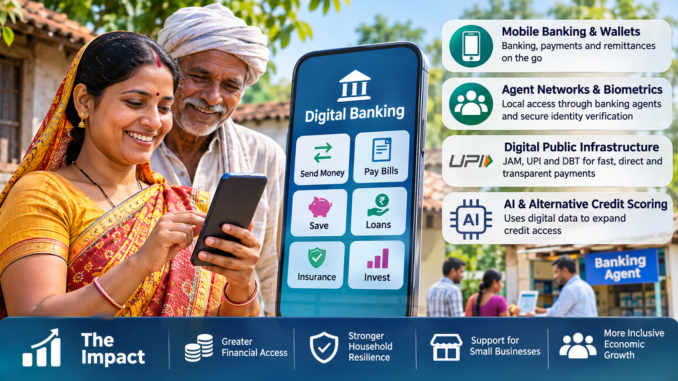
For millions of people, access to basic banking services has traditionally depended on how close they live to a bank branch, whether they can afford transaction charges and whether they have the documents or financial history required to open an account or obtain credit. In rural communities and low-income households, these barriers have often made saving, borrowing, making payments and accessing insurance more difficult.
Digital banking is changing this situation. By bringing financial services to mobile phones and local communities, technology is helping people participate in the formal financial system without depending entirely on traditional bank branches. From mobile wallets and instant payments to biometric authentication and digital lending, new tools are creating opportunities to reach individuals and businesses that have historically remained underserved.
This shift is about more than making banking convenient. It is about expanding economic participation, supporting household financial security and creating new opportunities for small businesses and rural communities.
Mobile Banking Is Bringing Financial Services Closer to People
Mobile banking has become one of the most important drivers of financial inclusion. With a basic mobile phone or smartphone, customers can access services such as money transfers, balance enquiries, bill payments and digital transactions without travelling long distances to a bank branch.
Mobile wallets and digital payment applications also make everyday transactions easier. Workers can receive wages, families can transfer money to relatives and small traders can accept digital payments without relying entirely on cash.
For people living in remote areas, the benefits can be significant. Reduced travel time and lower transaction costs make financial services more accessible, particularly for individuals who may not have the time or resources to visit a bank regularly.
Digital banking can also help small businesses maintain transaction records, receive payments more efficiently and build a financial footprint that may support future access to formal financial services.
Agent Banking and Biometrics Are Bridging the Rural Gap
Although mobile banking has expanded access, not everyone has a smartphone, reliable internet connectivity or the confidence to carry out financial transactions independently.
Agent banking helps address this challenge by bringing basic services closer to local communities. Banking agents equipped with mobile devices or point-of-sale systems can support services such as cash deposits, withdrawals and money transfers.
In remote villages, these agents can provide an important connection between customers and formal financial institutions without requiring banks to establish full-scale branches in every location.
Biometric authentication can further support access by helping verify customers through approved identity systems. This can make certain transactions more convenient for people who may struggle with passwords, PINs or traditional documentation processes.
Together, agent networks and digital verification systems can help extend banking services to communities that remain difficult to serve through conventional infrastructure.
India’s Digital Public Infrastructure Is Transforming Banking Access
India offers an important example of how digital public infrastructure can support financial inclusion.
The JAM trinity—Jan Dhan bank accounts, Aadhaar and mobile connectivity—has helped create the foundation for wider access to formal financial services. By connecting identity, bank accounts and mobile communication, this infrastructure supports the delivery of financial services to a much broader population.
The Unified Payments Interface (UPI) has also transformed the way individuals and businesses make payments. Its real-time payment capabilities allow users to transfer money and complete transactions through supported banking applications.
Direct Benefit Transfer (DBT) has strengthened this digital ecosystem by enabling government benefits and subsidies to be transferred directly into eligible beneficiaries’ bank accounts. This can reduce dependence on intermediaries, improve payment delivery and help households receive financial support more efficiently.
These developments demonstrate how digital infrastructure can support not only individual banking access but also the wider delivery of public services.
Artificial Intelligence Is Opening New Credit Opportunities
Access to credit remains one of the major challenges for people who do not have formal employment records, conventional credit histories or sufficient collateral.
Traditional lending systems often depend on established financial records to evaluate borrowers. As a result, small entrepreneurs, informal workers and first-time borrowers may find it difficult to qualify for loans.
Artificial intelligence and alternative credit-scoring methods are creating new possibilities. With appropriate consent and safeguards, lenders can use relevant digital financial information and other permitted data to develop a broader understanding of a borrower’s financial behaviour.
Machine learning models can help analyse patterns in transaction records and other eligible data to support credit assessments. This may allow lenders to evaluate some individuals who have limited traditional credit histories.
India’s Account Aggregator framework is another important development. It enables consent-based sharing of financial information between participating institutions, helping customers provide relevant financial data for services such as lending and financial planning.
The Unified Lending Interface (ULI) is also intended to simplify access to digital information for lenders and support more efficient credit delivery. Together, these developments could help make formal credit more accessible to individuals and small businesses that have previously faced difficulties.
However, alternative credit assessment must be transparent and responsible. Digital data should not become a basis for unfair exclusion, excessive borrowing or decisions that customers cannot understand or challenge.
Digital Banking Can Strengthen Household Savings and Financial Security
Financial inclusion is not simply about opening bank accounts. It also involves giving people practical tools to save, manage money and deal with unexpected expenses.
Digital savings facilities can make it easier for individuals to set aside small amounts regularly. Digitised government payments and electronic transfers can also improve the reliability of income received by eligible households.
For families with irregular earnings, easier access to savings and payment services can help manage expenses during periods of financial difficulty. It can also reduce the risks and inconvenience associated with carrying large amounts of cash.
Small businesses benefit as well. Digital transaction records can help traders monitor income and expenses, manage payments and demonstrate aspects of their business activity when seeking formal financial support.
As digital banking becomes more accessible, it can create a stronger foundation for household resilience and local economic activity.
Lower Costs Are Making Small Loans and Insurance More Accessible
Traditional banking infrastructure can be expensive to operate, particularly in areas with low population density and limited commercial activity. Digital platforms can reduce some of these operating costs by automating routine processes and enabling services to be delivered remotely.
This creates opportunities for financial institutions to serve customers who may require small-value loans, microfinance, savings products and insurance.
For low-income households, even relatively small financial products can make a difference when they are suitable, affordable and clearly explained. Access to appropriate insurance, for example, can help families manage certain financial risks, while responsible credit can support small businesses seeking to purchase equipment, increase inventory or expand operations.
For banks and fintech companies, reaching underserved customers can also create new business opportunities. Digital delivery models can help institutions expand their customer base while developing products suited to different income groups and local needs.
Digital Literacy and Connectivity Remain Major Challenges
Despite its progress, digital banking cannot guarantee financial inclusion on its own.
Access to smartphones, reliable internet connectivity and electricity remains uneven in many communities. Some customers may also lack the digital skills needed to use banking applications safely and confidently.
Language barriers can create additional difficulties, particularly when applications and customer support services are not available in languages people understand comfortably.
Financial literacy is equally important. Customers need to understand transaction charges, loan conditions, interest rates, repayment schedules and the risks associated with digital financial products.
Banks, fintech companies and public institutions therefore need to invest in customer education, accessible interfaces, local-language support and assistance for first-time digital banking users.
The objective should not simply be to move customers from physical branches to digital platforms. It should be to ensure that they can use financial services independently, safely and effectively.
Cybersecurity and Consumer Protection Must Keep Pace
As financial transactions move online, protecting customers and their money becomes increasingly important.
Cybercrime, phishing, identity theft, fraudulent applications and unauthorised transactions can weaken public confidence in digital banking. The misuse of bank accounts for fraudulent transfers, including through mule accounts, also presents serious risks.
Data privacy is another major concern. Financial institutions must handle customer information responsibly, obtain appropriate consent and maintain strong security systems.
There is also a need to protect borrowers from unsuitable lending practices. Easy access to digital loans should not encourage excessive borrowing or leave customers facing repayment obligations they cannot manage.
Clear disclosures, effective grievance redressal systems, responsible lending practices and strong regulatory oversight are essential to building trust.
A New Opportunity for Banks, Fintech Firms and Small Businesses
The expansion of digital banking is creating a changing business environment for financial institutions. Banks can use technology to reach new customers, reduce routine service costs and develop more accessible products. Fintech companies can build specialised platforms for payments, lending, savings and financial management.
Small businesses can benefit from easier payment collection, digital transaction records and potentially improved access to formal credit. Local agents, technology providers and financial service partners may also find new opportunities as digital financial networks expand.
However, commercial growth must go hand in hand with responsible service delivery. Financial institutions that combine accessible technology with transparent pricing, customer support and strong security are better positioned to build lasting relationships with underserved communities.
Conclusion: Technology Can Make Financial Inclusion a Reality
Digital banking is reshaping access to financial services by reducing geographical barriers, lowering transaction costs and creating new ways to connect people with formal financial institutions. Mobile banking, agent networks, biometric systems, UPI, direct benefit transfers and emerging digital lending frameworks are helping expand the reach of financial services.
For India and other developing economies, the opportunity extends beyond digital payments. It includes helping households save, supporting small businesses, improving access to responsible credit and enabling more people to participate in economic activity.
The next stage of financial inclusion will depend on making these services affordable, secure, understandable and accessible to everyone. Technology can provide the infrastructure, but meaningful inclusion will ultimately depend on trust, consumer protection and ensuring that no community is left behind.
