
Enterprise software is entering a new phase as businesses look for smarter, more flexible and cost-effective ways to manage their operations. Companies are moving away from expensive software licences and increasingly choosing subscription-based services that offer regular updates, technical support and easier access to new features.
However, the industry is now facing another major shift. The growing use of artificial intelligence (AI) is changing how businesses use software and how technology companies charge for their services.
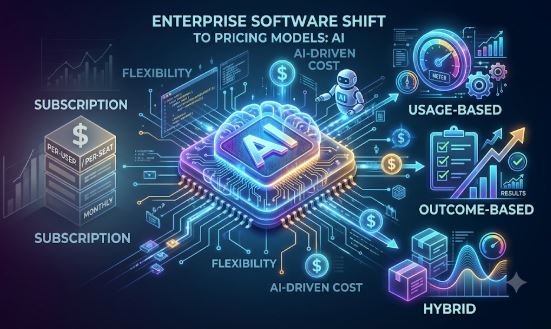
From monthly subscriptions to usage-based payments, software providers are exploring new business models to meet changing customer needs. This shift is expected to influence how companies purchase, manage and invest in technology in the coming years.
Subscription Models Have Changed the Software Market
In the past, businesses often had to pay a large amount upfront to purchase enterprise software. They also faced additional expenses for maintenance, upgrades and technical support.
Subscription-based services have made this process easier. Companies can now pay monthly or annually to access software without making a major initial investment.
This model gives businesses greater flexibility. They can choose services according to their requirements, add more users when operations expand and receive regular software updates.
For small and medium-sized businesses, subscription software has also made advanced business tools more accessible. Companies no longer need to invest heavily in software infrastructure to manage accounting, customer relationships, communication and daily operations.
For software providers, recurring subscriptions create more predictable revenue and opportunities to maintain long-term customer relationships.
AI Is Changing the Traditional Pricing System
Artificial intelligence is now creating new challenges for the subscription software industry.
Traditionally, many software companies charged businesses according to the number of employees using their platforms. This pricing method, commonly known as per-user or per-seat pricing, worked well when software was mainly used by human employees.
But AI-powered tools are changing that approach. AI agents can now assist with customer service, prepare reports, analyse information and complete routine business tasks.
This means businesses may need fewer human users to perform certain activities while increasing their use of automated software services.
At the same time, running AI systems involves costs related to computing power, data processing and technology infrastructure. Software companies must therefore find pricing structures that reflect both customer usage and their own operating expenses.
Usage-Based Pricing Is Gaining Attention
One of the emerging trends is usage-based pricing. Under this model, businesses pay according to how much they use a software service rather than relying only on a fixed monthly fee.
For example, a company may be charged based on the number of transactions, API requests or AI tasks completed through a platform.
Another approach is outcome-based pricing, where payments are linked to measurable results. This could include completed automated tasks or customer support requests successfully resolved.
Some software providers are also combining fixed subscriptions with additional usage charges. This hybrid approach allows businesses to maintain a regular service plan while paying extra when their requirements increase.
These pricing options could give companies more flexibility and help them connect software spending with actual business activity.
Businesses Are Looking for Better Value
As software costs become an important part of business budgets, companies are paying closer attention to the value they receive from technology investments.
Businesses increasingly want software that solves practical problems, improves employee productivity and reduces unnecessary work.
They are also becoming more selective about large software packages. Instead of purchasing a complete system with features they may not need, many companies prefer modular platforms that allow them to choose specific services.
This approach can help businesses control costs and connect different software applications through digital systems and APIs.
For finance and technology teams, monitoring software usage will become increasingly important. Companies will need to understand their subscriptions, track additional charges and ensure that technology spending remains within budget.
New Opportunities and Challenges for Software Companies
The shift towards flexible pricing is creating opportunities for enterprise software providers to develop services that better match customer requirements.
Companies that offer transparent pricing, useful AI features and reliable customer support may find it easier to attract and retain business clients.
However, the transition also brings challenges. Software providers must manage rising AI infrastructure costs while keeping their services affordable.
They also need accurate systems to measure customer usage and calculate payments. Outcome-based pricing can be particularly difficult because businesses may have different expectations about what counts as a successful result.
Clear contracts and transparent billing will therefore become increasingly important for building customer trust.
What Lies Ahead for Enterprise Software?
The future of enterprise software is likely to involve a combination of subscription, usage-based and outcome-driven pricing models.
Traditional subscriptions will continue to serve many businesses, but AI adoption is encouraging software companies to explore more flexible ways of charging customers.
For businesses, this change could provide greater control over technology expenses and access to services that better match their needs. For software providers, it offers an opportunity to build stronger customer relationships by focusing on performance and measurable value.
As AI becomes more closely connected with everyday business operations, enterprise software will continue to evolve. The companies that understand changing customer expectations and offer practical, affordable solutions will be better positioned to succeed in this competitive market.
