
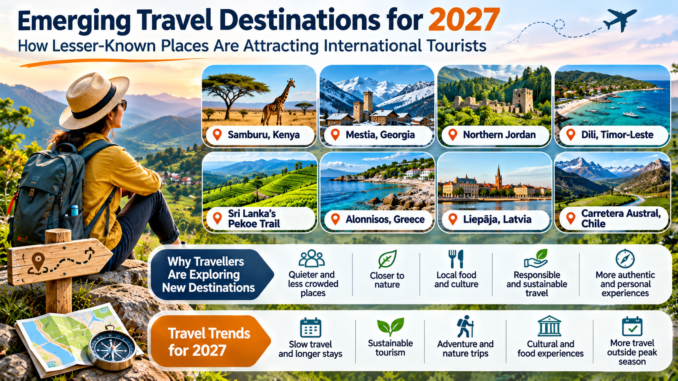
The way people travel is changing. While popular destinations such as Paris, Bali and Dubai continue to attract visitors, many travellers are now looking for places that are quieter, less crowded and different from the usual holiday choices.
Instead of visiting only famous cities and tourist attractions, people are showing more interest in small towns, remote beaches, mountain regions and places with rich local culture. They want to enjoy nature, try local food, meet people and experience something new.
This change is creating opportunities for lesser-known destinations around the world. Better travel connections, online booking platforms and social media are helping these places become more visible to international tourists.
In 2027, these destinations could attract more attention from travellers looking for memorable experiences. This growing interest may also benefit local hotels, restaurants, tour operators, transport services and small businesses.
Why Travellers Are Choosing Lesser-Known Destinations
Many travellers want more than a standard holiday. They are looking for experiences that allow them to understand local culture, explore natural surroundings and spend time away from busy tourist areas.
Crowded attractions and rising travel costs are also encouraging people to consider different options. Smaller destinations can offer a more relaxed atmosphere and opportunities to enjoy a place at a slower pace.
Social media has also changed how people discover new places. Travel videos, photographs and online recommendations can introduce destinations that were previously unfamiliar to international visitors.
Another reason is the growing interest in responsible travel. Some tourists prefer experiences that support local communities, protect nature and benefit small businesses.
Travel Destinations to Watch in 2027
Several lesser-known places are attracting interest because of their natural beauty, culture and unique travel experiences.
1. Samburu, Kenya
Kenya is famous for its wildlife safaris, but many tourists visit the country’s best-known national parks. Samburu offers a different experience for travellers interested in wildlife and nature.
The area is known for its beautiful landscapes and unique animals, including the reticulated giraffe, Grevy’s zebra and gerenuk. Visitors can enjoy safari trips, nature photography and opportunities to learn about local culture.
The destination also creates opportunities for local guides, small hotels and community-based tourism businesses.
2. Mestia, Georgia
Mestia is a mountain town in Georgia’s Caucasus region. It is known for its beautiful mountain views, traditional stone towers and peaceful surroundings.
The destination is suitable for people who enjoy hiking, photography and outdoor activities. Visitors can explore mountain villages, walking trails and local cultural attractions.
During winter, the region also attracts people interested in snow-based activities. As more travellers discover the area, local hotels, restaurants and tour operators could benefit from increased tourism.
3. Northern Jordan
Jordan is well known for Petra, Wadi Rum and the Dead Sea. However, its northern region offers another side of the country.
Areas such as Ajloun and Dibeen are known for forests, walking trails, historical sites and rural communities. These places offer a different experience from the country’s famous desert attractions.
Visitors can explore nature, enjoy local food and learn about regional history. Small accommodation providers, restaurants and local guides may benefit as interest in the region grows.
4. Dili, Timor-Leste
Timor-Leste is still less familiar to many international travellers, but it has several attractions for people who enjoy coastal holidays and outdoor activities.
Its capital, Dili, offers access to beaches, diving locations and beautiful natural surroundings. Visitors can also explore local markets, culture and nearby mountain areas.
The country has potential to attract tourists looking for a quieter alternative to some of Southeast Asia’s more crowded island destinations.
Better transport, accommodation and visitor facilities will be important if the country wants to welcome more international tourists.
5. Sri Lanka’s Pekoe Trail
Sri Lanka is already a popular holiday destination, but many tourists follow the same routes when visiting the country.
The Pekoe Trail offers a different way to explore Sri Lanka. It passes through tea plantations, mountain villages and beautiful highland landscapes.
The walking route is ideal for people who enjoy nature, hiking and local experiences. Visitors can spend time in small communities, learn about tea production and enjoy the scenery.
This type of tourism can also support local guesthouses, restaurants, guides and transport businesses.
6. Alonnisos, Greece
Greece is known for its beautiful islands, but some smaller locations offer a quieter holiday experience.
Alonnisos is part of the Sporades island group and is known for its beaches, clear waters and natural surroundings. It is suitable for travellers interested in swimming, sailing, walking and relaxing away from busy tourist centres.
The island also has an important marine environment, making nature protection a key part of its tourism appeal.
Local businesses can benefit from visitors who prefer smaller hotels, local restaurants and outdoor activities.
7. Liepāja, Latvia
Liepāja is a coastal city in Latvia that offers a mix of beaches, historic buildings, music and cultural attractions.
It provides an alternative to Europe’s more crowded city-break destinations. Visitors can explore the coastline, enjoy local food and discover the city’s creative and cultural life.
Liepāja’s role as a European Capital of Culture in 2027, alongside Évora in Portugal, is also expected to bring additional cultural attention to the city.
This may create opportunities for hotels, restaurants, local businesses and cultural organisations.
8. Carretera Austral, Chile
For travellers who enjoy adventure and nature, Chile’s Carretera Austral offers an exciting travel experience.
This scenic route passes through the Patagonia region, with mountains, forests, rivers, glaciers and small villages along the way.
Visitors can enjoy road trips, hiking, kayaking and photography. The area is especially attractive to people who want to explore remote landscapes and spend time outdoors.
Tourism growth could support local accommodation providers, guides and outdoor activity businesses. Protecting the natural environment will be important as visitor numbers increase.
Travel Trends That Could Shape 2027
The growing interest in lesser-known destinations is connected to several changes in travel habits.
Slow Travel
Many people are choosing to spend more time in one place instead of visiting several destinations during a short holiday.
This gives travellers more time to explore local communities, enjoy regional food and understand the culture. It can also bring more regular business to local hotels and restaurants.
Sustainable Tourism
Travellers are becoming more aware of how tourism affects the environment and local communities.
Some prefer destinations that support local businesses, protect wildlife and encourage responsible travel. Small hotels, local guides and community-run tourism services can benefit from this interest.
Adventure and Nature Tourism
Hiking, wildlife watching, cycling, diving and camping are attracting people who want active holidays.
Mountain regions, forests, beaches and wildlife reserves can benefit from this demand. These experiences also create opportunities for specialist tour operators and local guides.
Food and Cultural Experiences
Local food, traditional crafts, festivals and cultural activities are becoming important parts of holiday planning.
Travellers often want to experience the everyday life of a destination rather than only visit famous attractions. Food tours, cooking classes and local cultural events can help smaller destinations attract visitors.
Travelling Outside Peak Season
Some tourists are choosing to travel outside the busiest holiday periods. This can help them avoid crowds and sometimes find better accommodation options.
It can also help local tourism businesses earn income over a longer period instead of depending only on peak-season visitors.
How Tourism Can Support Local Businesses
The growing popularity of lesser-known destinations can create new business opportunities.
More visitors can increase demand for hotels, guesthouses, restaurants, local transport and guided tours. Small shops, craft makers and food producers may also gain new customers.
Tourism can encourage investment in roads, public facilities, digital services and accommodation. These improvements can benefit local residents as well as visitors when they are planned properly.
Travel companies can also develop new holiday packages based on local culture, walking routes, wildlife experiences and nature-based activities.
For smaller destinations, the best approach is to offer experiences that reflect their local identity rather than simply copy the tourism model of larger cities and resorts.
Challenges That Destinations Need to Address
Growing tourism brings opportunities, but it also creates challenges.
Some lesser-known places have limited transport connections, fewer hotels and basic visitor facilities. Travellers may find it difficult to reach these locations or arrange reliable services.
Local communities may also need better training, digital booking facilities and support to manage tourism businesses.
Environmental protection is another major concern. More visitors can create pressure on forests, beaches, wildlife and water resources. Poorly managed tourism can damage the very attractions that bring people to these places.
Local residents should also benefit from tourism growth. Businesses and governments need to ensure that development supports local jobs and does not place unnecessary pressure on housing, land or daily living costs.
Careful planning will help destinations grow without losing their natural beauty and cultural identity.
What the Travel Industry Can Expect in 2027
The growing interest in new destinations could create opportunities across the travel industry.
Tour operators may introduce more trips focused on small towns, nature, local food and cultural experiences. Hotels may invest in boutique properties, eco-friendly accommodation and locally inspired services.
Online travel companies can also help lesser-known destinations reach international customers through better information and booking options.
Airlines and transport providers may explore new routes where visitor demand and infrastructure support expansion.
Travel businesses that understand changing customer preferences and build strong relationships with local communities could benefit from this shift.
Conclusion
Travel in 2027 could be about discovering places that offer something different from the usual holiday experience. More international tourists are showing interest in peaceful destinations, natural landscapes, local culture and activities that allow them to connect with the places they visit.
From the mountains of Georgia to the beaches of Greece, the wildlife areas of Kenya and the highlands of Sri Lanka, lesser-known destinations are creating new opportunities for travellers and the tourism industry.
For local communities, this interest can bring jobs, business opportunities and investment. However, tourism growth must be managed carefully to protect nature, respect local culture and ensure that residents share in the benefits.
The future of travel will not be defined only by famous cities and popular resorts. Many memorable holidays may come from discovering places that are still waiting to be explored.
